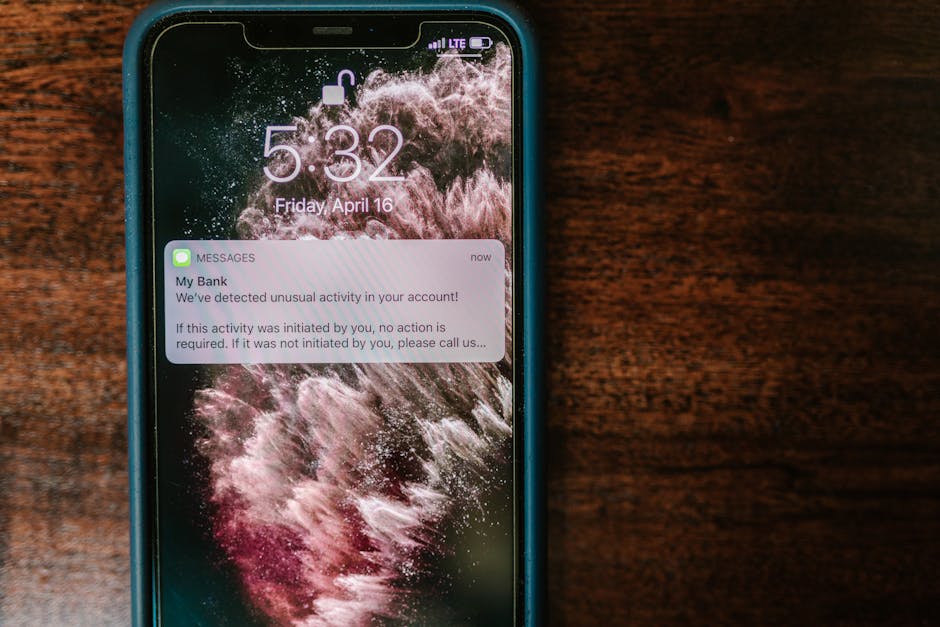
The Technological Arms Race: AI, MFA Bypass, and Novel Attack Vectors
While human psychology remains the bedrock of successful phishing, the technological landscape is rapidly evolving, providing attackers with increasingly potent tools to craft and deliver their deceptive schemes. We are in a full-blown technological arms race, where every defensive innovation is met with an offensive countermeasure, pushing the boundaries of what's possible in digital fraud. The advent of artificial intelligence, the discovery of vulnerabilities in multi-factor authentication (MFA), and the emergence of entirely new attack vectors are transforming the threat landscape at an alarming pace, making the job of staying secure a constant, uphill battle even for those deeply immersed in the world of cybersecurity.
Artificial Intelligence and Machine Learning are no longer just buzzwords in the realm of advanced technology; they are becoming powerful weapons in the hands of cybercriminals. AI can now be used to generate incredibly convincing phishing emails, crafting text that is grammatically perfect, contextually relevant, and tailored to specific targets, making it virtually indistinguishable from legitimate communication. Gone are the days of poorly translated, typo-ridden scam messages. AI language models can mimic specific writing styles, personalize content based on scraped data, and even generate entire conversational flows for chatbots used in social engineering. Beyond text, AI-powered deepfakes are enabling hyper-realistic visual and audio impersonations, as discussed earlier. Imagine an AI generating a fake video call from your CEO, complete with their voice and mannerisms, instructing you to take an urgent, malicious action. The technology is rapidly approaching this chilling reality, making traditional methods of verification increasingly unreliable and challenging our very perception of digital truth.
Perhaps one of the most concerning developments is the rise of sophisticated Multi-Factor Authentication (MFA) bypass techniques. For years, MFA has been hailed as the gold standard in online security, adding a crucial layer of protection beyond just a password. However, attackers have developed cunning methods to circumvent even this robust defense. One prominent technique is Adversary-in-the-Middle (AiTM) phishing, also known as Man-in-the-Middle (MitM) phishing. In an AiTM attack, the attacker positions themselves between the victim and the legitimate website. When the victim attempts to log in, their credentials and even their MFA codes are intercepted by the attacker in real-time. The attacker then uses these stolen credentials and the valid, one-time MFA code to log into the legitimate service before the code expires, effectively hijacking the user's session. These attacks are particularly insidious because they leverage legitimate authentication mechanisms against the user, making them incredibly difficult to detect from the user's perspective, as the login process appears to function normally. Major tech companies have seen their employees fall victim to these advanced AiTM campaigns, proving that even the most secure organizations are not immune.
Exploiting New Pathways: QR Codes, Browser Tricks, and Supply Chains
The ingenuity of cybercriminals knows no bounds, constantly seeking new and overlooked pathways to deliver their malicious payloads. The ubiquitous QR code, once seen as a harmless convenience, has become a novel vector for phishing, giving rise to "Quishing." Attackers are now placing malicious QR codes in public spaces, on fake invoices, or even embedding them in emails. When scanned, these codes redirect users to highly convincing phishing sites designed to steal credentials or install malware. The speed and convenience of QR codes, coupled with a general lack of user scrutiny, make them an effective tool for attackers to bridge the physical and digital worlds with malicious intent. Users, accustomed to QR codes leading to menus or legitimate information, often scan without a second thought, opening themselves up to immediate compromise.
Another clever technical trick is the "Browser-in-the-Browser" (BitB) attack. This technique involves creating a fake browser window within a legitimate browser window, often mimicking a single sign-on (SSO) prompt from a trusted service like Google, Microsoft, or Facebook. The fake window looks identical to a genuine pop-up, complete with address bar, padlock icon, and even a favicon. When the user enters their credentials into this seemingly legitimate pop-up, the information is sent directly to the attacker. The underlying trick is that this "browser window" is just a cleverly designed HTML/CSS overlay, not a real browser window, making it incredibly difficult for users to distinguish from an authentic login prompt. This technique preys on our visual cues and muscle memory, as we've been conditioned to trust these types of pop-up authentication windows, especially for enterprise applications and cloud services.
"The perimeter is gone. The new battleground is the human mind and the trust we place in our digital interactions. Technology alone cannot solve this; it requires a fundamental shift in our digital literacy." - Dr. David Clark, Cybersecurity Innovator and Author
Perhaps one of the most alarming new trends is the increasing focus on supply chain phishing. Attackers are no longer just targeting end-users directly; they are compromising smaller, less secure vendors or partners in an organization's supply chain to gain access to the larger target. A successful phishing attack on a third-party vendor can provide attackers with legitimate credentials, network access, or even the ability to inject malicious code into software updates or services used by the primary target. This indirect approach allows attackers to leverage trusted relationships and established channels, making their intrusions far more difficult to detect. The SolarWinds attack, while not solely phishing-based, highlighted the devastating potential of supply chain compromises. Phishing plays a crucial role in initial access for many of these complex, multi-stage attacks, demonstrating that the scope of this threat extends far beyond individual email inboxes and into the very interconnected fabric of our global digital infrastructure, demanding a holistic and proactive defense strategy that considers every link in the chain.