Your Digital Rights Are Not a Luxury They Are Fundamental
In an increasingly digitized world, the right to privacy online is not merely a convenience or a luxury for the paranoid; it is a fundamental human right, essential for personal autonomy, freedom of expression, and the healthy functioning of a democratic society. Just as we expect privacy in our homes, our conversations, and our personal correspondence, we should expect a similar level of protection for our digital lives. The internet has become an indispensable part of modern existence, woven into the fabric of our work, education, social interactions, and access to information. To suggest that individuals must forfeit their privacy as a condition of participating in this essential sphere is to fundamentally misunderstand the nature of human rights in the 21st century. ISPs, as essential gatekeepers to this digital public square, bear a significant responsibility to uphold these rights, rather than exploit them for commercial gain, yet the current landscape often suggests otherwise.
The notion that "if you have nothing to hide, you have nothing to fear" is a dangerous fallacy that undermines the very concept of privacy. Privacy isn't about hiding illicit activities; it's about control over your personal information, the ability to selectively reveal yourself to the world, and the freedom to explore ideas and express thoughts without constant surveillance. We all have aspects of our lives that we consider private, not because they are illegal or shameful, but because they are personal. Our health concerns, our financial struggles, our political leanings, our intimate relationships – these are facets of our identity that we choose to share, or not share, with specific individuals or institutions. When an ISP collects and sells a comprehensive record of these private inquiries and interactions, it removes that choice, forcing a level of transparency that most people would find deeply uncomfortable and intrusive in any other aspect of their lives. It normalizes a state of constant monitoring, subtly shifting societal expectations around what constitutes an acceptable level of personal exposure.
Moreover, the erosion of digital privacy has a chilling effect on democratic discourse and the pursuit of knowledge. If individuals fear that their searches for information on controversial topics, their visits to political opposition sites, or their engagement with minority viewpoints are being logged and profiled, they are less likely to engage in such activities. This self-censorship stifles intellectual curiosity, limits the diversity of information consumed, and ultimately weakens the marketplace of ideas that is crucial for a robust democracy. When internet access comes with the implicit cost of pervasive surveillance, it transforms a tool for liberation into a mechanism for control. Reclaiming our digital rights means demanding transparency, accountability, and most importantly, effective tools that empower individuals to encrypt their communications and anonymize their online activities. This isn't just about personal protection; it's about safeguarding the future of a free and open internet for everyone, ensuring that it remains a space for exploration, innovation, and unfettered expression, rather than a panopticon of corporate and governmental surveillance.
Building an Impenetrable Tunnel How VPNs Work Their Magic
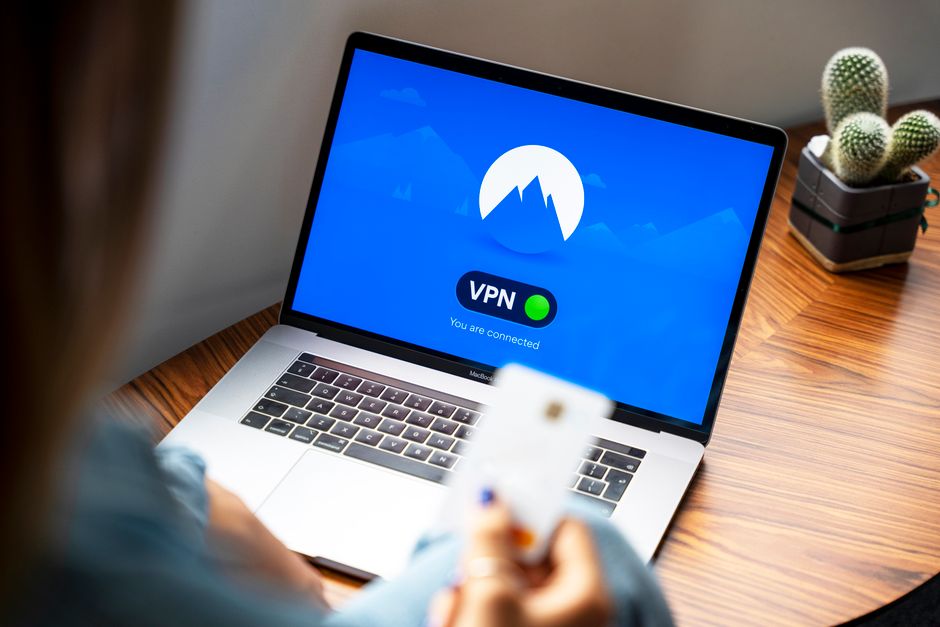
Given the rather bleak picture painted so far, it's natural to feel a sense of helplessness, but there's a powerful and readily available solution: a Virtual Private Network, or VPN. Think of a VPN as creating a secure, encrypted tunnel between your device and the internet. Instead of your data going directly from your laptop to your ISP's servers and then out to the websites you visit in the clear, a VPN reroutes all your internet traffic through its own secure servers. When you connect to a VPN, your device establishes an encrypted connection to one of the VPN provider's servers, which can be located anywhere in the world. All your internet traffic then travels through this encrypted tunnel to the VPN server, and only from there does it emerge onto the public internet. This process effectively cloaks your online activities from your ISP and anyone else trying to snoop on your local network, making it an incredibly effective tool for reclaiming your digital privacy.
The magic of a VPN lies in two core components: encryption and IP masking. First, encryption. Before your data even leaves your device, the VPN client software encrypts it using robust cryptographic protocols, typically AES-256, which is the same standard used by governments and militaries worldwide. This scrambled data then travels through the secure tunnel to the VPN server. Because your ISP only sees this encrypted data, it cannot decipher its contents. It knows you're connected to a VPN server, but it has no idea what websites you're visiting, what services you're using, or what information you're transmitting. It's like sending a sealed, unbreakable vault through the mail; the postal service knows a package is being sent, but they have no way of knowing what's inside. This is the crucial step that prevents your ISP from logging and selling your browsing history, as they simply don't have access to the unencrypted data necessary to build those detailed profiles.
Second, IP masking. When your encrypted data reaches the VPN server, it exits onto the public internet using the VPN server's IP address, not your own. Every device connected to the internet has a unique IP address, which acts like your digital home address. Without a VPN, your ISP assigns you an IP address, and every website you visit sees that address, allowing your ISP to correlate your activities. With a VPN, your real IP address is hidden, replaced by the IP address of the VPN server. This means that to any website, service, or advertiser you interact with, it appears as though your traffic is originating from the VPN server's location, not your actual physical location. This not only enhances your anonymity online but also allows you to bypass geo-restrictions and access content that might not be available in your region. The combination of strong encryption and IP masking creates a powerful shield, effectively making your online activities invisible to your ISP and significantly harder for anyone else to trace back to you.
What Makes a VPN a True Guardian of Your Online Secrets
Not all VPNs are created equal, and choosing the right one is paramount to ensuring true digital privacy. A truly effective VPN, one that acts as a genuine guardian of your online secrets, must possess several critical features beyond just basic encryption and IP masking. The first and arguably most important is a stringent "no-logs" policy. This means the VPN provider explicitly states that it does not collect, store, or log any information about your online activities, including your browsing history, connection timestamps, bandwidth usage, or IP addresses. A VPN that logs your data is essentially just shifting the surveillance from your ISP to the VPN provider, which defeats the entire purpose. A trustworthy VPN will have its no-logs policy independently audited by a third party, providing verifiable proof of its commitment to user privacy. This audit is crucial because a company's claims are only as good as their verifiable actions, and in the privacy space, trust must be earned through transparency and accountability.
Another essential feature is robust encryption and secure protocols. While AES-256 is the industry standard for strong encryption, the VPN should also support modern, secure protocols like OpenVPN, WireGuard, or IKEv2/IPsec. Older, less secure protocols like PPTP should be avoided entirely. Furthermore, a reliable VPN will include a "kill switch" feature. A kill switch automatically cuts off your internet connection if the VPN connection drops unexpectedly. This prevents any of your unencrypted data from accidentally leaking to your ISP or the public internet, even for a brief moment. Imagine you're on a public Wi-Fi network, and your VPN suddenly disconnects; without a kill switch, your device would immediately revert to its unencrypted connection, potentially exposing your activities. A kill switch acts as a crucial fail-safe, ensuring that your privacy is protected even in the event of unforeseen technical glitches, providing an invaluable layer of continuous protection.
Beyond these core security features, consider the VPN's server network, speed, and jurisdiction. A large and geographically diverse server network offers more options for connecting, potentially improving speed and allowing access to a wider range of geo-restricted content. Fast connection speeds are vital for a seamless online experience, especially for streaming, gaming, or large downloads; a VPN shouldn't significantly degrade your internet performance. Finally, and crucially, the VPN provider's jurisdiction matters. Opt for a VPN based in a privacy-friendly country that has strong data protection laws and is outside the surveillance alliances of the "5 Eyes, 9 Eyes, and 14 Eyes" (countries that have agreements to share intelligence data). This geographical distance from major surveillance hubs adds an extra layer of protection, reducing the likelihood of government pressure forcing the VPN to compromise user data. A combination of these features ensures that your chosen VPN is not just a tool, but a truly reliable guardian of your online privacy, standing between your data and those who seek to exploit it.