Beneath the Surface Exploring Core Internet Vulnerabilities
While we often focus on the human element and sophisticated malware, it's crucial to remember that the internet itself, as a complex system of hardware and software, harbors fundamental vulnerabilities that could be exploited to cause widespread disruption. These aren't just about individual devices or networks; they are about the very architecture and protocols that allow the internet to function. A 'wrong click' that grants an attacker access to a system managing one of these core components could trigger a cascade of failures, leading to an internet-wide event that makes localized outages pale in comparison. Understanding these deep-seated weaknesses is vital for appreciating the true fragility of our digital backbone.
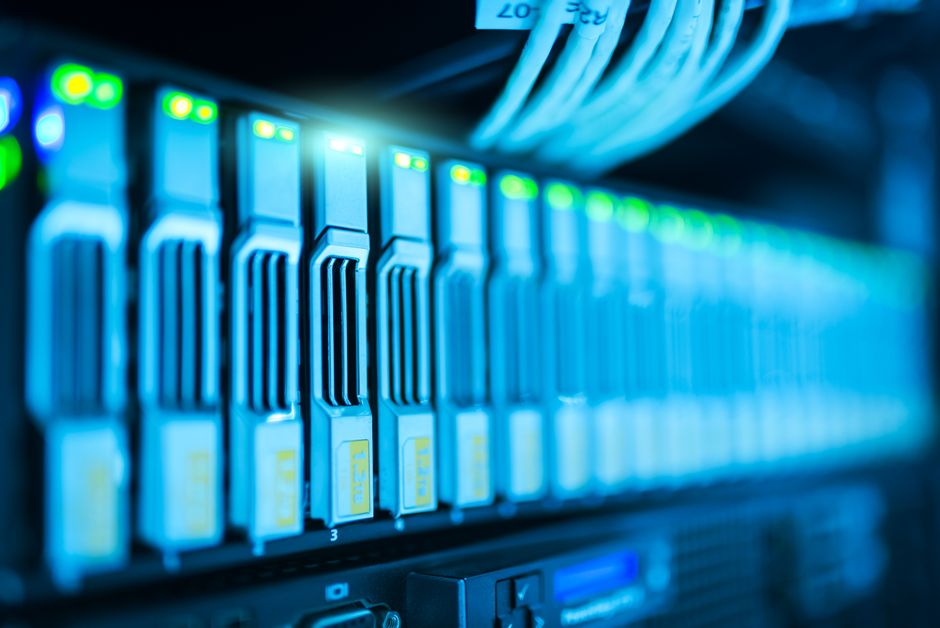
We've discussed BGP and DNS, but let's delve a bit deeper into the physical and logical layers that support them. The internet relies on a global network of internet exchange points (IXPs) where different ISPs connect to exchange traffic. These IXPs are critical hubs, and their compromise or physical incapacitation could sever connectivity for vast regions. Imagine a coordinated cyberattack, perhaps initiated by a 'wrong click' within an IXP's operational network, that disrupts the routing infrastructure or physically damages the equipment at several major IXPs simultaneously. The internet's routing tables would become corrupted, traffic would grind to a halt, and large segments of the world would be effectively cut off from each other. While redundancy exists, a sufficiently widespread and synchronized attack could overwhelm these fail-safes, leading to prolonged and systemic outages.
Another often-overlooked area of vulnerability lies in the time synchronization protocols, particularly Network Time Protocol (NTP). Accurate timekeeping is absolutely critical for the proper functioning of virtually all networked systems, from security protocols (like TLS/SSL certificates) to database transactions and logging. If an attacker could compromise critical NTP servers, perhaps through a sophisticated exploit or by gaining access via a 'wrong click' on a phishing email targeting an NTP administrator, they could manipulate time across vast swathes of the internet. This wouldn't immediately bring down the internet, but it would wreak havoc on encrypted communications, authentication systems, and data integrity, slowly but surely eroding trust and functionality, leading to widespread system failures and an eventual collapse of services that rely on precise time synchronization.
"The internet is a marvel of engineering, but it's also a house of cards built on trust. Break that trust, or compromise a foundational pillar, and the whole structure trembles." – Professor Anya Sharma, Network Architecture Specialist.
Furthermore, the physical infrastructure that carries our data is constantly under threat. While undersea cables are designed to be resilient, they are not invulnerable. Beyond accidental damage, a malicious actor, particularly a state-sponsored entity, could theoretically target these cables or their landing stations with physical attacks, or more subtly, with cyberattacks that disable their monitoring and management systems. A 'wrong click' that compromises a control system for a cable landing station, for instance, could lead to a prolonged outage even without physical damage, as engineers would be unable to diagnose or reroute traffic effectively. The intricate dance between physical infrastructure and its digital control systems means that a single point of failure in one can quickly translate into a global crisis for the other, pushing us ever closer to a scenario where the internet becomes fragmented or entirely unavailable.
The Swarm Effect How Billions of Devices Become a Weapon
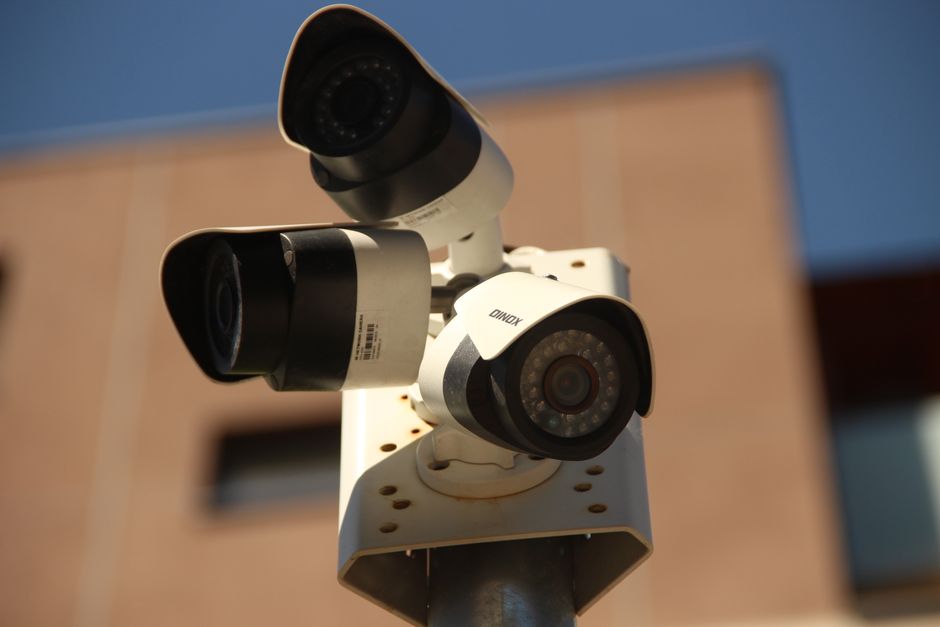
The Internet of Things (IoT) has brought unprecedented convenience and innovation, connecting everything from smart homes and wearable devices to industrial sensors and critical infrastructure components. However, this proliferation of connected devices, often manufactured with minimal security considerations, presents a colossal and rapidly growing attack surface. Each insecure IoT device, whether it's a smart camera, a connected thermostat, or a network-enabled light bulb, represents a potential entry point for attackers. When billions of these devices are compromised, they can be weaponized into massive botnets, capable of launching distributed denial-of-service (DDoS) attacks of unprecedented scale, turning the internet’s own distributed nature against itself.
Remember the Mirai botnet from 2016? It famously leveraged default credentials and insecure configurations on millions of IoT devices, primarily IP cameras and DVRs, to launch massive DDoS attacks. One such attack took down Dyn, a major DNS provider, making large portions of the internet inaccessible for hours, including popular sites like Twitter, Reddit, and Netflix. The Mirai botnet didn't require a sophisticated 'wrong click' by a human; it exploited the inherent 'wrong configuration' of millions of devices and their owners' negligence. Imagine a more advanced version of Mirai, perhaps initiated by a single 'wrong click' that infects a master server controlling a vast network of compromised IoT devices. The resulting DDoS attack could be orders of magnitude larger, potentially overwhelming not just individual services, but core internet infrastructure itself, such as major IXPs or root DNS servers.
The problem is exacerbated by the sheer volume and diversity of IoT devices. Many are 'set and forget,' rarely patched, and often run outdated firmware with known vulnerabilities. They lack robust security features, making them easy targets for automated scanning and exploitation. Furthermore, the supply chain for IoT devices is incredibly fragmented, with components and software often sourced from numerous vendors, making it difficult to ensure end-to-end security. A 'wrong click' by an employee at one of these component manufacturers, leading to the compromise of a firmware update, could introduce a backdoor into millions of devices before they even reach consumers, creating a ticking time bomb of potential weaponization.
The swarm effect isn't just about DDoS. Compromised IoT devices can also be used for espionage, creating vast surveillance networks. They can be leveraged as proxy servers for other malicious activities, making it incredibly difficult to trace the true origin of an attack. In a worst-case scenario, a highly sophisticated attacker could leverage a global IoT botnet to conduct coordinated attacks against critical infrastructure, perhaps simultaneously targeting multiple power grids, transportation systems, or communication networks. The sheer scale and distributed nature of such an attack, originating from billions of devices, could overwhelm defensive capabilities and lead to widespread, systemic failures across the internet, transforming our convenient smart devices into instruments of global disruption. The collective 'wrong clicks' of manufacturers who prioritize speed over security, and consumers who neglect basic device hardening, are quietly building an army of digital zombies, ready to be unleashed.
The Ripple Effect Imagining a World Without the Net
To truly grasp the gravity of a potential internet collapse, we need to move beyond technical discussions and imagine the profound, far-reaching ripple effects across every facet of human society. It's not just about losing access to social media or streaming services; it's about a fundamental disruption to the way we live, work, govern, and interact. A widespread, prolonged internet outage, triggered by that ultimate 'wrong click,' would plunge us into a digital dark age, with consequences that are difficult to fully comprehend.
Economically, the impact would be catastrophic. Global financial markets, which rely on instantaneous digital transactions, would grind to a halt. Banks would be unable to process payments, ATMs would stop working, and credit card transactions would fail. Supply chains, meticulously managed through networked logistics systems, would break down, leading to widespread shortages of essential goods. Businesses, unable to communicate, process orders, or conduct commerce, would face immediate insolvency. The global economy, already fragile, would experience a depression unlike anything seen in modern history, with trillions of dollars in losses and widespread unemployment. Imagine trying to conduct trade or manage international investments when the fundamental communication layer is gone.
Socially, the breakdown would be equally devastating. Communication would revert to pre-internet methods, if those systems even remained functional. Emergency services, heavily reliant on internet-enabled dispatch systems and data, would be severely hampered. Hospitals, unable to access electronic health records, order supplies, or operate advanced medical equipment, would struggle to provide basic care. Public safety would be compromised as law enforcement loses access to critical databases and communication tools. People would be cut off from loved ones, creating immense psychological stress and potentially leading to social unrest as basic services falter and information becomes scarce. The illusion of constant connectivity would be shattered, leaving a void that would be difficult to fill.
Politically, a global internet collapse could destabilize governments and international relations. Critical government services, defense systems, and intelligence agencies all rely on the internet. Disinformation and panic could spread unchecked in the absence of reliable news sources. International cooperation, essential for addressing global challenges, would become incredibly difficult. Nations might turn inward, or worse, engage in conflict as trust erodes and communication breaks down. The very mechanisms of democratic governance, from voter registration to public service delivery, would be severely impaired. The 'wrong click' that triggers such an event isn't just a technical failure; it's an attack on the foundational pillars of modern civilization, forcing us to confront a reality where our dependence has become our greatest vulnerability.
Are We Prepared for a Digital Dark Age
The question of preparedness for a major internet disruption is sobering. While governments and major corporations have contingency plans for localized outages, the scale of a truly global internet collapse presents challenges that go far beyond typical disaster recovery scenarios. Many of these plans assume some level of underlying network functionality, or the ability to communicate and coordinate recovery efforts. A complete internet blackout would render many of these assumptions moot, leaving us in uncharted territory where even basic coordination becomes a monumental task. The reality is, we are likely not adequately prepared for a prolonged digital dark age, and this lack of preparedness makes the threat of that 'wrong click' even more terrifying.
One of the biggest hurdles is the sheer complexity and interconnectedness of modern systems. Recovery from a widespread BGP hijack or DNS poisoning event isn't as simple as flipping a switch. It would require global cooperation, trust between competing entities, and the ability to verify the integrity of core internet infrastructure, all while communication channels are severely degraded. The time it would take to restore full functionality could stretch into weeks or even months, depending on the nature and scope of the attack. During this period, the aforementioned economic, social, and political ramifications would deepen, making recovery efforts even more challenging amidst widespread panic and resource scarcity.
Furthermore, the skills and resources required for such a recovery are not evenly distributed globally. Developing nations, heavily reliant on a fragile internet infrastructure, would suffer disproportionately. Even developed nations would struggle, as the specialized expertise needed to rebuild core internet services might be isolated or unable to communicate effectively. There's also the question of trust: if a major internet collapse is attributed to a nation-state, would other nations be willing to cooperate in recovery efforts, or would suspicion and geopolitical tensions hinder progress? The human element, once again, becomes a critical factor, not just in causing the problem, but in the ability to solve it.
While efforts like the development of secure routing protocols (e.g., RPKI for BGP) and the distribution of DNS root servers provide some layers of resilience, they are not foolproof. Many organizations have yet to fully implement these best practices, and new vulnerabilities are constantly emerging. The global cybersecurity workforce faces a massive talent shortage, meaning there simply aren't enough skilled professionals to defend against the evolving threats, let alone recover from a truly catastrophic event. So, when we ask if we are prepared, the honest answer is a resounding 'no.' We are operating on a knife-edge, with the fate of our digital world precariously balanced on the vigilance of individuals and the robustness of systems that are constantly under siege. The next 'wrong click' could be the one that truly tests our unpreparedness, forcing us to confront a world where the internet is no longer a given, but a ghost of a once-connected past.