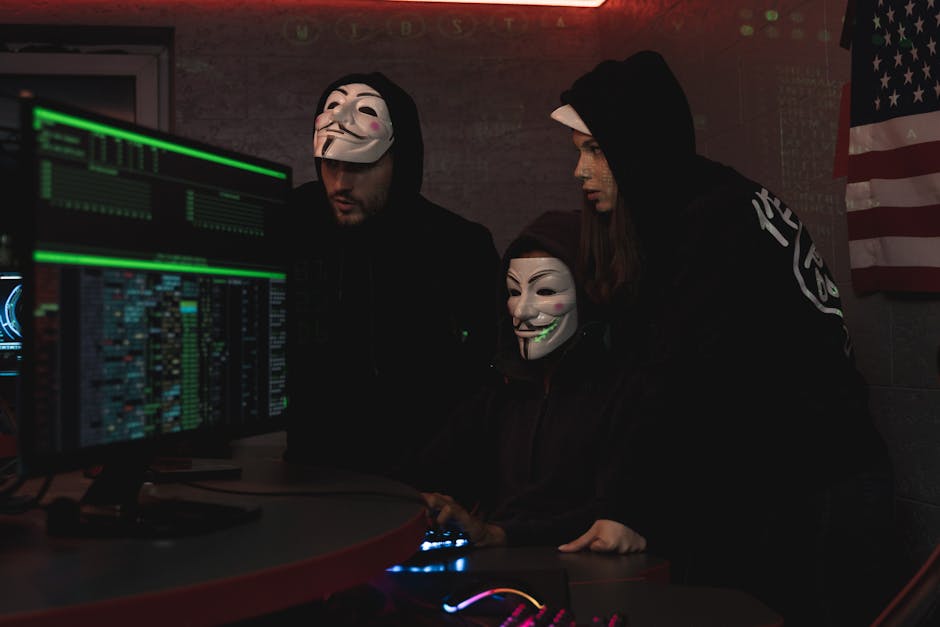
Imagine a scenario: your phone buzzes, an unknown number. You answer, and a voice, calm and authoritative, introduces itself as someone from your bank's fraud department. They sound legitimate, articulate, and even a little urgent. They tell you about a suspicious transaction, a large sum, and that they need your immediate cooperation to prevent further losses. Your heart pounds. You’re worried about your savings, your financial security. They guide you through a series of steps, perhaps asking you to confirm some details, maybe even download an app or click a link. In that moment of panic, confusion, and trust in authority, you comply. The next day, your account is empty, your identity compromised, and the "bank official" has vanished into the digital ether. This isn't a scene from a Hollywood thriller; it’s a chillingly common reality, a testament to the most insidious form of cyberattack: social engineering, the mind-control hack that bypasses firewalls and anti-virus software to target the most sophisticated system of all – the human brain.
For years, the cybersecurity industry has poured billions into fortifying digital defenses, creating impenetrable networks, and developing AI-driven threat detection systems. We've built towering digital castles with moats of encryption and walls of multi-factor authentication. Yet, time and again, these bastions fall not to brute-force attacks or zero-day exploits, but to a simple phone call, a cleverly worded email, or a seemingly innocuous conversation. The weakest link in any security chain has always been, and likely always will be, the human element. Social engineering preys on our inherent trust, our desire to be helpful, our fear of authority, and our fundamental psychological vulnerabilities. It’s a craft perfected by con artists throughout history, now supercharged by the interconnectedness of the digital age, turning everyday interactions into potential gateways for exploitation.
The Human Firewall is Failing: Why We're So Susceptible to Digital Deception
The allure of social engineering lies in its elegant simplicity and devastating effectiveness. Unlike complex technical hacks that require deep programming knowledge and exploit software flaws, social engineering exploits human nature itself. It's about manipulation, persuasion, and psychological trickery, turning ordinary people into unwitting accomplices in their own downfall. From the earliest confidence tricks to the sophisticated spear-phishing campaigns of today, the core principles remain unchanged: build rapport, create urgency, exploit trust, and bypass critical thinking. This makes it a particularly difficult threat to combat with purely technical solutions, as no antivirus software can flag a convincing lie or an empathetic voice on the phone as malicious code.
Understanding this phenomenon is no longer just for security professionals; it's a critical life skill for anyone navigating the modern world. Every email, every phone call, every unexpected message carries the potential for a social engineering attempt. The stakes are incredibly high, ranging from personal financial ruin and identity theft to massive corporate data breaches, intellectual property theft, and even national security compromises. Major corporations have seen their entire networks compromised not by sophisticated malware, but by a single employee clicking a deceptive link or sharing a password over the phone. The impact cascades, affecting millions of customers, eroding trust, and costing billions in damages and recovery efforts. It’s a stark reminder that our digital lives are only as secure as our human judgment.
The Shadowy Evolution of Digital Deceit
The history of social engineering isn't confined to the digital age; its roots stretch back to ancient times with tales of tricksters and con artists using guile and charm to achieve their aims. However, the internet and connected technologies have provided a fertile new ground for these tactics to flourish and scale exponentially. What once required face-to-face interaction or laborious phone calls can now be executed globally with the click of a button, targeting millions simultaneously. The anonymity of the internet allows attackers to impersonate anyone, from a CEO to a distant relative, making verification incredibly challenging. Furthermore, the sheer volume of information available online through social media and public databases provides social engineers with an unprecedented amount of data to craft highly personalized and believable pretexts, moving beyond generic scams to highly targeted attacks.
Think about how much personal information we unwittingly share online. Our job titles, our interests, our connections, even our daily routines can be pieced together by a determined attacker. This public data, often referred to as Open-Source Intelligence (OSINT), becomes the foundation upon which elaborate lies are built. A social engineer might know your boss's name, your company's internal jargon, or even details about your recent vacation, all gleaned from publicly available sources. This level of personalization makes their stories incredibly convincing, disarming your natural skepticism and making you believe you are interacting with someone genuinely familiar or trustworthy. The lines between what's real and what's manipulated become increasingly blurred, creating a dangerous landscape where trust is a liability.
"Technology can fix many things, but it cannot fix human fallibility. Social engineering exploits that fundamental truth." - Kevin Mitnick, renowned former hacker and security consultant.
The stakes have never been higher, and the methods never more sophisticated. As our lives become inextricably linked to digital platforms for banking, communication, work, and entertainment, the attack surface for social engineering expands dramatically. It's no longer just about protecting your computer; it's about protecting your mind, your judgment, and your ability to discern truth from deception in a world saturated with information and misinformation. The battle for cybersecurity has shifted from the realm of code to the realm of psychology, making understanding and defending against these "mind-control hacks" an absolute imperative for every individual and organization. We need to build a robust mental firewall, one that can withstand the most persuasive and manipulative tactics thrown our way, and that journey begins with understanding the enemy's playbook.