The email blinked on your screen, a seemingly innocuous notification from your bank. "Urgent security alert," it declared, demanding immediate action to prevent your account from being locked. Your heart rate quickens; a knot forms in your stomach. You’re busy, perhaps juggling work emails, family messages, and the relentless stream of digital life. A quick click, a few details entered, and the crisis is averted, right? Or is it? This seemingly routine interaction, replicated millions of times every single day across the globe, is precisely the moment when your digital life hangs by a thread, a hair’s breadth from being irrevocably compromised. Phishing isn't some abstract threat confined to dark corners of the internet; it's the insidious, ever-present danger lurking in your inbox, your text messages, your social media feeds, and even your phone calls, meticulously designed to exploit your trust, your urgency, and your human fallibility. It's a digital con game, and the stakes are your money, your identity, your peace of mind, and ultimately, your entire online existence.
For years, as a journalist and senior web content writer immersed in the labyrinthine world of cybersecurity, I've witnessed firsthand the devastating aftermath of these attacks. I've heard the stories, read the reports, and analyzed the sophisticated tactics employed by threat actors who relentlessly evolve their craft. What began as crude, easily identifiable "Nigerian prince" scams has morphed into a highly professionalized, multi-billion-dollar industry, deploying sophisticated social engineering techniques and technological wizardry to mimic legitimate communications with astonishing accuracy. The digital landscape has become a minefield, where every click, every tap, every interaction demands a heightened sense of vigilance, a critical eye trained to spot the subtle tells that betray a malicious intent. This isn't just about protecting your bank account; it's about safeguarding your entire digital footprint, from your social media presence to your medical records, from your professional reputation to the intimate details of your personal life, all of which are valuable commodities in the dark web's thriving marketplaces.
The Invisible Threat Lurking in Your Inbox and Beyond
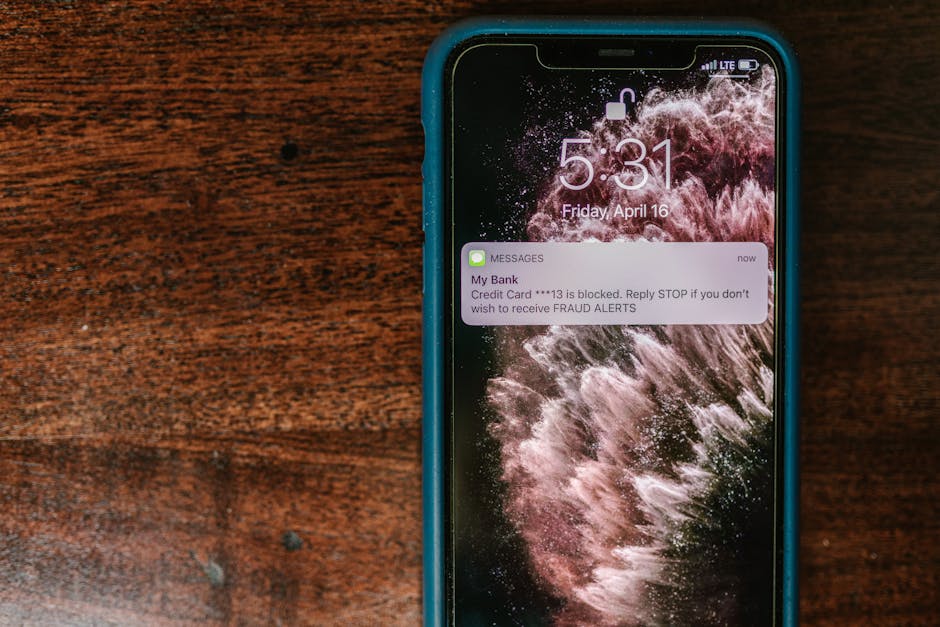
The sheer scale of the phishing problem is staggering, a silent epidemic that continues to outpace our collective defenses despite advancements in security technology. According to Verizon's annual Data Breach Investigations Report, phishing remains one of the most prevalent initial attack vectors, accounting for a significant percentage of all data breaches. It's a numbers game for attackers: send out millions of emails, and even if only a fraction of a percentage falls for it, the return on investment can be astronomical. We're not just talking about email anymore; the threat has diversified dramatically, moving into SMS (smishing), voice calls (vishing), and even sophisticated social media impersonations. Imagine receiving a text message that appears to be from your mobile carrier, informing you of a package delivery issue, complete with a link that looks perfectly legitimate. Or a voice call from someone claiming to be from tech support, guiding you to a malicious website to "fix" a non-existent problem. These are not isolated incidents; they are daily occurrences, meticulously crafted to catch us off guard during moments of distraction or perceived urgency, leveraging our inherent trust in institutions and familiar brands.
The evolution of phishing attacks from rudimentary attempts to highly sophisticated, targeted campaigns is a testament to the adaptability and resourcefulness of cybercriminals. Early phishing attempts were often riddled with grammatical errors, awkward phrasing, and obvious visual discrepancies, making them relatively easy to spot for anyone paying even a modicum of attention. However, the game has changed dramatically. Today's phishing emails are often grammatically perfect, visually indistinguishable from legitimate communications, and sometimes even personalized with information gleaned from public sources or previous data breaches. This level of sophistication means that traditional advice like "check for bad spelling" is no longer sufficient. We need a more granular, systematic approach, a visual tutorial that empowers individuals to dissect every element of a suspicious communication, to unmask the deception before it has a chance to inflict damage. This isn't about becoming a cybersecurity expert overnight, but rather about cultivating a 'phishing-proof mindset' where skepticism and critical analysis become second nature, a vital layer of personal defense in an increasingly hostile digital environment.
Why Your Eyes Are Your First and Most Crucial Firewall
In the complex architecture of cybersecurity, from firewalls and intrusion detection systems to advanced endpoint protection, there's one critical component that often gets overlooked: the human eye, coupled with a vigilant mind. No matter how many layers of technological defense an organization implements, the human element remains the most vulnerable link in the chain. A single click on a malicious link, an unwitting download of an infected attachment, or the entry of credentials into a fake login page can bypass even the most robust security infrastructures. This is precisely why a "visual tutorial" approach to unmasking phishing scams is not just helpful, but absolutely indispensable. We need to train our eyes to see beyond the superficial veneer of legitimacy, to scrutinize the minute details that reveal the true, malicious intent lurking beneath. It's about developing an almost forensic level of attention to detail, recognizing that every pixel, every character, every subtle design choice in a digital communication can be a clue, a breadcrumb leading us either to safety or into the clutches of a cybercriminal. This proactive, visually-driven detection method transforms you from a passive potential victim into an active participant in your own digital defense.
Consider the psychological aspect: phishing preys on our cognitive biases and heuristic shortcuts. We're wired to process information quickly, especially in our fast-paced digital lives. When an email or text appears to be from a trusted source – our bank, a familiar online retailer, a government agency – our brains often default to trust, skipping the critical analysis phase. This is where the visual cues become paramount. By consciously slowing down and systematically examining specific elements – the sender's email address, the URL embedded in a link, the quality of logos, the grammatical accuracy, the tone of urgency – we can override that initial impulse to trust and engage our critical thinking. It’s a deliberate act of digital self-preservation, transforming a reactive moment of panic into a proactive moment of analysis. This training equips you with the mental tools to pause, observe, and question, turning your natural human skepticism into a powerful shield against the relentless onslaught of digital deception. Ultimately, the goal is to make these visual checks an intuitive part of your online interactions, a subconscious habit that protects you even when your conscious mind is distracted.
"Phishing is a human problem, not just a technical one. The most sophisticated firewalls are useless if a user willingly opens the gate." - Bruce Schneier, renowned security expert.
The importance of this visual literacy cannot be overstated in an era where deepfakes, AI-generated content, and increasingly sophisticated mimicry are becoming commonplace. What we see online, whether it’s an image, a video, or a simple email, can no longer be blindly trusted. Our collective digital survival hinges on our ability to critically evaluate the authenticity of digital communications. This article aims to be that comprehensive guide, a visual lexicon of deception, dissecting the anatomy of phishing scams piece by painstaking piece. We'll explore the subtle tricks, the common traps, and the unmistakable red flags that, once recognized, will empower you to unmask even the most cunning attempts to compromise your digital life. From scrutinizing the sender's identity to dissecting suspicious links, from identifying emotional manipulation to recognizing phony attachments, we will arm you with the knowledge and the visual acuity to navigate the treacherous waters of the internet safely. Your digital life is worth saving, and the first step is learning to see the unseen threats.