In our hyper-connected world, the constant barrage of digital notifications has become a pervasive, often insidious, force, subtly hijacking our attention and fragmenting our focus. Every ping, every buzz, every flashing icon is a tiny interruption, a demand for our precious cognitive resources. What began as a helpful mechanism to alert us to genuinely important events has morphed into an incessant stream of digital noise, driven by an "attention economy" where applications and services are explicitly designed to capture and retain our engagement. We’re living in an era of notification fatigue, a state of chronic overstimulation where our brains are constantly processing non-essential cues, leading to diminished concentration, heightened stress, and a pervasive sense of being perpetually distracted. This isn't just about annoyance; it's about the erosion of our capacity for deep work and sustained focus, essential ingredients for creativity, problem-solving, and meaningful productivity.
The Silent Saboteurs Notification Overload and App Avalanche
The psychological impact of this perpetual notification cycle is profound. Each notification, whether it's a new email, a social media like, or a news alert, triggers a small release of dopamine, creating a mini-reward loop that can quickly become addictive. Our brains are wired to seek novelty and potential reward, making us susceptible to these digital pings. This leads to a compulsive checking habit, where we instinctively reach for our devices even when there's no urgent need, breaking our concentration and pulling us away from the task at hand. The constant context-switching required to process these interruptions is incredibly taxing; studies suggest it can take upwards of 20 minutes to regain full focus after a significant interruption. Over the course of a day, these small, seemingly innocuous pings accumulate into a massive drain on our mental energy and overall productivity, leaving us feeling frazzled and less accomplished than we should be. It’s a death by a thousand cuts for our attention spans.
Furthermore, this relentless stream of notifications often blurs the lines between urgent and trivial. When every app demands equal attention, our ability to prioritize effectively diminishes. A critical work email might receive the same notification sound as a promotional message from a retail store, diluting the perceived importance of truly essential communications. This can lead to missed deadlines, forgotten appointments, and a general feeling of being overwhelmed by the sheer volume of information. For those deeply concerned with cybersecurity and privacy, notification overload presents another layer of risk. When your attention is constantly fragmented, you’re less likely to critically evaluate the source or content of a notification, making you more susceptible to phishing attempts disguised as legitimate alerts. A notification from a seemingly familiar app could, in fact, be a cleverly crafted social engineering tactic designed to trick you into revealing sensitive information or clicking on a malicious link. The less discerning you are due to cognitive overload, the more vulnerable you become to these subtle digital traps.
The App Avalanche Unused Software and Hidden Vulnerabilities
Beyond the notification cacophony, our devices, both personal computers and smartphones, are often burdened by an "app avalanche" – a proliferation of installed applications, many of which are rarely, if ever, used. We download apps on a whim, for a single purpose, or simply because they were recommended, and then allow them to languish, taking up valuable storage space and, more importantly, potentially introducing security vulnerabilities. Each installed application, regardless of how frequently it's used, represents a potential entry point for attackers. Outdated apps, in particular, are a significant concern. Developers regularly release security patches to fix vulnerabilities discovered in their software, but if you're not actively using and updating an app, it becomes a static target, a known weak point that can be exploited by malicious actors. This is especially true for apps that request extensive permissions, as they might have access to your camera, microphone, contacts, or location data, even when dormant.
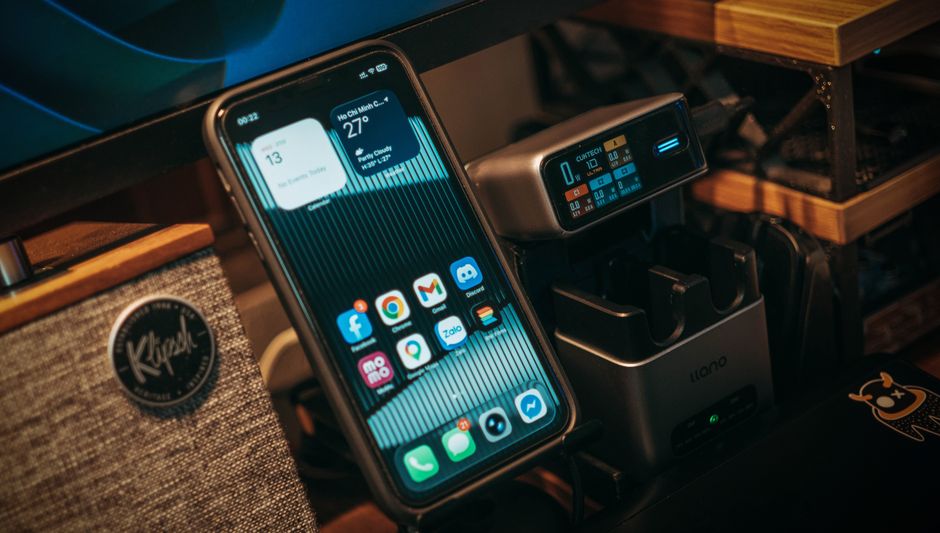
The sheer volume of unused apps also contributes to a general sense of digital bloat and disorganization. On smartphones, this manifests as endless home screens, cluttered app drawers, and a constant struggle to find the app you actually need amidst a sea of forgotten icons. This visual clutter mirrors the mental clutter created by notifications, contributing to decision fatigue and making the user experience less efficient. On desktop computers, unused applications can consume significant disk space and, in some cases, run background processes that silently drain system resources, impacting performance. More critically, from a privacy perspective, many apps are designed to collect data – usage patterns, personal information, location data – even when not actively in use. The more apps you have installed, the larger your digital footprint and the greater the number of entities potentially collecting and sharing your personal information, often without your full awareness or informed consent. This passive data collection is a significant concern for anyone prioritizing their online privacy.
"Every notification you receive is a tiny interruption, a subtle hijack of your attention. In an age where focus is currency, reclaiming control over your notifications is paramount to preserving your cognitive capital and, by extension, your mental peace." - Adam Alter, Author of 'Irresistible: The Rise of Addictive Technology and the Business of Keeping Us Hooked'
The problem of unused apps is compounded by the ease of installation and the difficulty of uninstallation. App stores make it incredibly simple to download and try out new software, but the process of thoroughly removing an app, including all its associated files and data, can sometimes be more complex, especially on desktop operating systems. This asymmetry encourages accumulation, as the path of least resistance is to simply ignore an app once its utility has passed. This leads to a digital graveyard of forgotten programs, each potentially a dormant security risk or a silent data collector. The solution lies in a more intentional approach to app management, treating each installation as a conscious decision and regularly auditing your devices to remove anything that no longer serves a clear, beneficial purpose. This not only cleans up your digital space but also significantly reduces your exposure to potential vulnerabilities and unwanted data collection.
Embracing Digital Minimalism Intentionality Over Accumulation
The antidote to notification overload and app avalanche isn't just about decluttering; it's about adopting a philosophy of "digital minimalism," a concept popularized by Cal Newport. This approach advocates for being intentional about your technology use, consciously deciding which digital tools and services genuinely add value to your life and ruthlessly eliminating the rest. It's a shift from passive consumption to active curation, from allowing technology to dictate your attention to deliberately shaping your digital environment to serve your goals and values. Digital minimalism isn't about shunning technology entirely; it's about using it purposefully and sparingly, recognizing that not all digital engagement is created equal. It encourages a critical evaluation of every app, every notification setting, and every digital habit, asking whether it truly enhances your well-being or simply drains your time and attention.
Practically, embracing digital minimalism involves a multi-pronged approach. First, it means conducting a rigorous audit of all your installed applications and services, both on your computer and your mobile devices. For each app, ask yourself: "Does this app genuinely serve a high-value purpose in my life? Do I use it regularly and intentionally, or is it merely a source of distraction or passive consumption?" If the answer isn't a resounding yes, then it's a candidate for uninstallation. Second, it involves a systematic overhaul of your notification settings. Turn off all non-essential notifications by default. Only enable notifications for critical communications from real people or for truly time-sensitive alerts that directly impact your safety or responsibilities. This requires a conscious effort to resist the urge to be constantly connected and to create boundaries around your attention. It's about taking back control of your focus, rather than letting algorithms and app designers dictate it.
Finally, digital minimalism extends to how you interact with your devices and the internet itself. This might involve scheduling specific times for checking email and social media, rather than allowing constant access. It could mean designating "focus blocks" where your devices are in "do not disturb" mode, allowing for uninterrupted deep work. It might also involve curating your online feeds and subscriptions, unfollowing accounts that don't add value, and unsubscribing from newsletters that simply add to the noise. The ultimate goal is to create a digital environment that is calm, purposeful, and conducive to your well-being, rather than one that constantly overstimulates and distracts. By being intentional about what you allow into your digital life, you not only declutter your devices but also reclaim your mental space, reduce your vulnerability to digital distractions, and foster a more secure and mindful relationship with technology. This shift in mindset is perhaps the most profound and lasting benefit of tackling the app avalanche and notification overload.