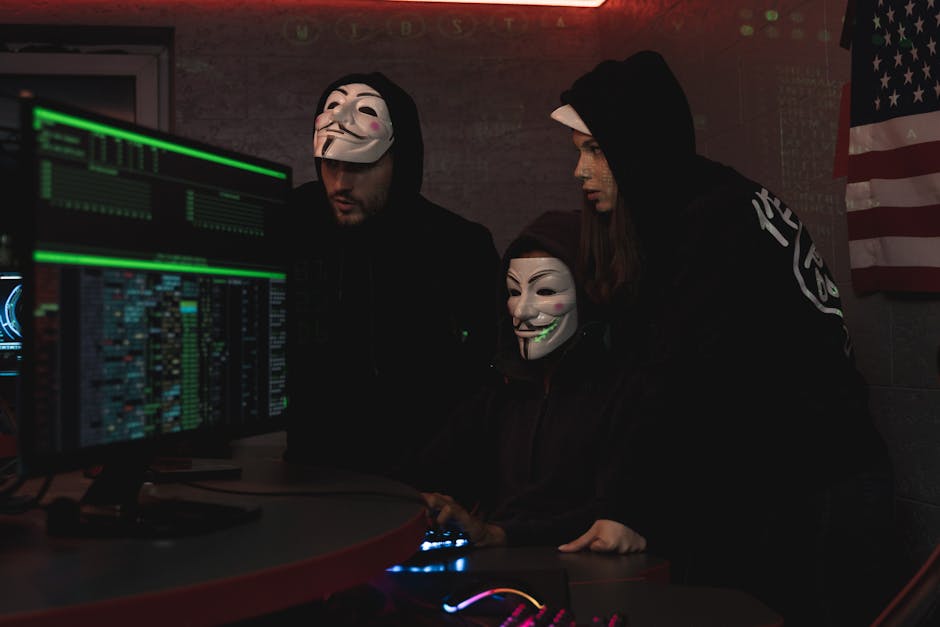
The digital world, an intricate tapestry woven from countless lines of code and interconnected networks, has become an indispensable part of our lives, shaping everything from global commerce to our most intimate personal interactions. Yet, beneath this veneer of seamless connectivity lies a constant, often invisible, battleground. Cyber threats are not just abstract headlines anymore; they are the insidious ransomware attacks crippling hospitals, the sophisticated phishing campaigns draining bank accounts, and the pervasive data breaches eroding trust in institutions we once held sacred. In this increasingly hostile landscape, the demand for guardians, for those who can think like the adversary to protect the innocent, has never been more urgent. This isn't just about patching vulnerabilities; it's about understanding the very psyche of digital malice, predicting its moves, and fortifying our digital fortresses before they’re ever breached. It’s a calling that requires a unique blend of technical prowess, relentless curiosity, and, most critically, an unwavering ethical compass.
For too long, the term "hacker" conjured images of shadowy figures lurking in basements, intent on disruption and destruction. Popular culture, with its sensationalized portrayals, often painted a distorted picture, blurring the lines between malicious intent and legitimate security research. However, a seismic shift has occurred, bringing to the forefront a new breed of digital warriors: the ethical hackers. These are the unsung heroes, the white-hat professionals who wield the same formidable tools and techniques as their nefarious counterparts, but with a singular, noble purpose: to identify weaknesses, expose vulnerabilities, and ultimately strengthen our collective digital defenses. They are the frontline defenders in a war without borders, constantly evolving their strategies to stay one step ahead of an ever-adapting enemy. Their work is not just a job; it’s a vital service, safeguarding privacy, protecting critical infrastructure, and ensuring the continued stability of our hyper-connected world.
Embracing the White Hat Philosophy: Why Ethical Hacking Matters More Than Ever
The transition from a purely reactive cybersecurity posture to a proactive, offensive-minded defense is not merely a strategic preference; it’s an absolute necessity in the current threat landscape. Gone are the days when simply installing an antivirus and a firewall sufficed. Modern cyberattacks are sophisticated, multi-layered, and often exploit human psychology as much as technical flaws. Ethical hacking, or penetration testing, is the disciplined art of simulating these real-world attacks in a controlled and authorized environment. It’s about putting on the adversary’s shoes, probing systems, networks, and applications from every conceivable angle to uncover weaknesses before malicious actors do. Think of it as inviting a highly skilled burglar to test your home security, not to steal your valuables, but to point out the flimsy lock on the back door, the easily jimmied window, or the blind spot in your surveillance system. This proactive approach saves organizations billions in potential damages, preserves reputations, and, most importantly, protects sensitive data from falling into the wrong hands.
The statistics paint a stark picture of the escalating cyber threat. According to IBM's Cost of a Data Breach Report 2023, the global average cost of a data breach reached an all-time high of $4.45 million, a 15% increase over three years. This isn't just about financial loss; it encompasses regulatory fines, reputational damage, customer churn, and even operational paralysis. Ransomware attacks, in particular, have surged, holding entire organizations hostage and often forcing them to pay exorbitant ransoms to regain access to their critical data. The Colonial Pipeline attack in 2021, which disrupted fuel supplies across the southeastern United States, served as a chilling reminder of how easily cyberattacks can spill over from the digital realm into the physical world, impacting critical infrastructure and everyday lives. In such an environment, waiting for an attack to happen is a recipe for disaster. Ethical hackers provide that essential pre-emptive strike, identifying and mitigating risks before they materialize into catastrophic incidents, thereby bolstering resilience and ensuring business continuity.
Beyond the immediate financial and operational implications, ethical hacking plays a crucial role in fostering a culture of security awareness. When vulnerabilities are discovered through ethical penetration tests, it's not just about patching a flaw; it's an opportunity for learning and growth within an organization. It highlights areas where security training might be lacking, where processes need refinement, or where architectural decisions might inadvertently introduce risk. This feedback loop is invaluable, transforming security from a mere technical chore into an integral part of an organization's DNA. Moreover, the demand for skilled ethical hackers far outstrips supply. Cybersecurity Ventures predicts that there will be 3.5 million unfilled cybersecurity jobs globally by 2025. This creates an incredible opportunity for individuals passionate about technology and justice to forge a rewarding and impactful career, contributing directly to the safety and stability of our increasingly digital society. It’s a field that constantly challenges you, demands continuous learning, and offers the profound satisfaction of knowing you’re making a tangible difference.
Your Digital Sandbox Awaits: Why a Dedicated Lab is Non-Negotiable
Embarking on the journey of ethical hacking without a dedicated, isolated lab environment is akin to learning to drive a race car on a busy highway during rush hour – it’s reckless, dangerous, and almost certainly going to end badly. The tools and techniques employed by ethical hackers are powerful, designed to probe, exploit, and often disrupt systems. While these are wielded with authorization in professional settings, experimenting with them on live networks or production systems, even inadvertently, can lead to severe consequences, including legal repercussions, data loss, and network outages. This isn't a game where you can just "oops" your way through; the stakes are incredibly high. A properly configured lab provides a safe, controlled, and entirely isolated space where you can freely experiment, make mistakes, learn from them, and hone your skills without any risk of causing real-world damage or violating any laws. It’s your personal digital dojo, a place where you can practice your moves, fall down, and get back up, all within a padded environment.
Think of your ethical hacking lab as a scientific laboratory for cybersecurity. Just as a chemist wouldn't mix volatile compounds on their kitchen table, you shouldn't test potentially disruptive scripts or explore vulnerabilities on your home router or your neighbor's Wi-Fi. Your lab is where you can deploy vulnerable operating systems, set up simulated target networks, and unleash powerful penetration testing tools like Nmap, Metasploit, and Wireshark without a shred of worry. You can intentionally break things, understand why they broke, and then learn how to fix them. This iterative process of experimentation, failure, analysis, and refinement is fundamental to mastering any complex skill, and ethical hacking is no exception. It allows for a hands-on, immersive learning experience that theoretical knowledge alone simply cannot replicate. Furthermore, a well-structured lab allows you to replicate real-world attack scenarios, from initial reconnaissance to post-exploitation, giving you invaluable practical experience that is highly sought after in the cybersecurity industry. It’s where theoretical concepts transform into tangible skills.
"The only way to truly understand a system's weaknesses is to attack it yourself, ethically and within a controlled environment. A proper lab is not a luxury; it's an absolute necessity for any aspiring security professional." - Bruce Schneier, renowned security expert.
Moreover, the beauty of a virtual lab is its infinite malleability. You can take snapshots of your systems at various stages, allowing you to revert to a clean state instantly after a botched experiment. Want to try a new exploit that might crash your target machine? No problem, just revert to the previous snapshot. This capability is incredibly empowering, removing the fear of irreversible damage and encouraging fearless exploration. You can build complex network topologies, spinning up multiple virtual machines representing different roles (attacker, victim, firewall, server) to simulate sophisticated multi-stage attacks. This level of control and flexibility is simply unattainable on a live production network or even a simple home setup. As you progress in your journey, your lab will evolve with you, becoming more complex and mirroring the intricate networks you’ll encounter in the professional world. It’s not just a learning tool; it’s an indispensable asset for continuous skill development and research in the dynamic field of cybersecurity.