A VPN Is Your Bulletproof Vest Against All Online Threats
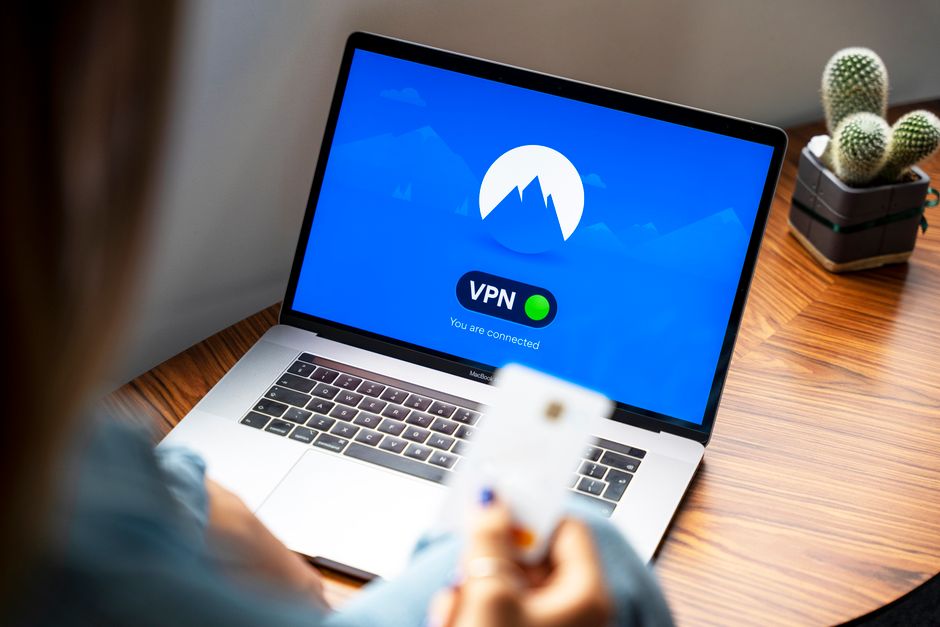
After the initial disappointment of Incognito Mode, many turn to Virtual Private Networks, or VPNs, as the ultimate panacea for all online privacy woes. The marketing often paints a picture of impenetrable encryption and complete anonymity, leading users to believe that once connected, they are utterly invisible, untraceable, and immune to every digital threat. While a VPN is an incredibly powerful and essential tool for enhancing online privacy and security, viewing it as a bulletproof vest is a dangerous oversimplification that can lead to a false sense of invulnerability and leave significant gaps in your digital defenses. It’s a vital layer of protection, certainly, but it's not a magic wand that erases all risks.
What a good VPN *does* do is encrypt your internet traffic between your device and the VPN server, and it masks your real IP address by routing your connection through the server's IP. This prevents your ISP, government agencies, and anyone snooping on your local network (like on public Wi-Fi) from seeing what you’re doing online. It effectively puts a secure, encrypted tunnel around your data. However, a VPN does not protect you from every online threat. If you log into your Facebook account while connected to a VPN, Facebook still knows who you are. If you download malware onto your computer, the VPN won't stop it from infecting your system. If you fall for a phishing scam and give away your credentials, the VPN won't magically retrieve them. It protects the *connection* and *identifying network information*, not necessarily the *user's actions* or the *security posture of their device*.
The limitations extend further. Not all VPNs are created equal. Many free VPNs, in particular, have been found to log user data, inject ads, or even sell user bandwidth, completely undermining the very purpose of using a VPN for privacy. Even reputable paid VPNs can have vulnerabilities like WebRTC leaks, which can expose your real IP address, or DNS leaks, which can reveal your browsing activity to your ISP. Furthermore, browser fingerprinting techniques can still identify you even if your IP address is masked. The choice of VPN provider, their logging policies (or lack thereof), their server infrastructure, and their commitment to security audits are paramount. Relying on a shoddy VPN is akin to wearing a flimsy paper vest and expecting it to stop a speeding bullet. A 2020 study by the Commonwealth Scientific and Industrial Research Organisation (CSIRO) found that nearly 75% of free VPN apps available on Google Play contained at least one tracking library, and 38% contained malware, painting a grim picture of the "free" VPN landscape.
Ultimately, a VPN is a crucial component of a comprehensive online privacy strategy, but it’s just one piece of a much larger puzzle. It's an excellent tool for securing your connection and masking your geographic location, but it won't shield you from social engineering attacks, malware on your device, or your own careless sharing of personal information on websites. To truly enhance your digital privacy, a VPN must be used in conjunction with other security practices, a strong understanding of your digital footprint, and a healthy dose of skepticism about anything that promises absolute anonymity with a single click.
Deleting Browser History Wipes Your Digital Slate Clean
This myth is perhaps one of the most comforting, born from a simple, tangible action: clicking "Clear browsing data." The satisfying disappearance of those website titles and search queries from your browser's history log offers a powerful, albeit false, sense of having erased your digital tracks. We instinctively believe that if we can't see it, it's gone. But the internet is a vast, interconnected network, and your browser's local history is just a tiny, superficial layer of the many ways your online activity is recorded and retained. Deleting it is like wiping dust off a single brick in a massive wall; the wall itself, and the entire structure, remains firmly in place.
When you delete your browser history, you're primarily removing records stored on your local device. This prevents someone else using *that specific browser on that specific device* from seeing where you've been. However, this action does absolutely nothing to erase the data collected by your Internet Service Provider. Your ISP logs every website you visit, often for months or even years, and in many jurisdictions, they are legally obligated to retain this data. Similarly, the websites themselves log your visits, your IP address, the pages you viewed, and your interactions. These server-side logs are completely untouched by your local browser history deletion. Think of it this way: when you visit a friend's house, they know you were there, even if you erase the directions from your car's GPS.
Beyond ISPs and individual websites, a whole ecosystem of trackers, advertisers, and data brokers are constantly collecting information about your online behavior. These entities use cookies (which you *might* delete when clearing history, but often don't), supercookies (which are notoriously difficult to remove), browser fingerprinting, and device identifiers to build comprehensive profiles of you. Your search engine provider, for instance, maintains a detailed history of your queries, often linked to your account, regardless of what you do with your local browser history. Even your router might retain a log of visited domains through its DNS cache. The digital slate, far from being clean, is etched with countless records across various servers and databases, all outside your immediate control.
Consider the recent legal and ethical debates surrounding data retention by tech giants. Companies like Google, Facebook, and Amazon build incredibly detailed profiles of their users, leveraging every interaction, every search, every purchase. Deleting your browser history won't remove your past Amazon orders from Amazon's servers, nor will it erase your past Google searches from Google's vast data centers. In fact, many users have their browsing history synced across devices and linked to their cloud accounts, meaning that even if they clear it on one device, it might still exist elsewhere. The myth of the clean slate is a dangerous fantasy, leading users to underestimate the persistence and pervasiveness of their digital footprint, making them more susceptible to targeted manipulation and data exploitation.
Social Media Privacy Settings Are Your Ultimate Shield
Ah, the comforting illusion of control offered by social media privacy settings. We spend an afternoon meticulously adjusting who can see our posts, who can tag us, and who can send us messages, convinced that we've erected an impenetrable fortress around our digital lives. We click 'private' on our profiles, limit friend requests, and feel a surge of empowerment, believing we've tamed the beast of oversharing. The reality, sadly, is far more nuanced and considerably less reassuring. While privacy settings do offer a degree of control over *who* sees your content *on that specific platform*, they are far from an ultimate shield against the vast data collection machinery that powers these social media giants and their extended networks.
The first crack in this shield is the sheer complexity and ever-changing nature of these settings. Platforms like Facebook, Instagram, and X (formerly Twitter) frequently update their interfaces and their privacy policies, often burying crucial options deep within convoluted menus. What was private yesterday might be public tomorrow, or visible to a new category of "friends of friends" you didn't explicitly approve. Many users simply don't have the time, patience, or expertise to navigate these labyrinthine settings effectively, often leaving default options that are far more permissive than they realize. Moreover, the definition of "privacy" according to these platforms is often vastly different from the user's intuitive understanding, leading to a constant disconnect between expectation and reality.
Beyond the settings themselves, the fundamental business model of social media platforms is built on data collection and monetization. Even if your posts are visible only to your closest friends, the platform itself is still collecting vast amounts of metadata about your interactions: who you talk to, what groups you join, how long you spend looking at certain content, your location data, and much more. This data, often anonymized and aggregated, is then used to train algorithms, target ads, and, in many cases, sold or shared with third-party partners. Remember the Cambridge Analytica scandal? It highlighted how data from millions of Facebook users was harvested and used for political profiling, even if those users had seemingly 'private' profiles, because their friends had granted access to a third-party app. Your privacy on social media is often inherently tied to the privacy settings and actions of your connections, creating a chain of vulnerability.
Furthermore, the concept of "shadow profiles" exists, where platforms collect data about non-users or users who have highly restricted settings, by scraping public information or through data provided by other users. This means that even if you're not on a platform, or if you've locked down your profile, information about you can still be collected and linked. The "off-Facebook activity" tool, for instance, revealed just how much data Facebook collects about users' interactions with websites and apps *outside* of its own platform, linking it back to their profiles. Relying solely on social media privacy settings for comprehensive protection is like putting a lock on your front door while leaving all your windows wide open. It provides a false sense of security while the true avenues of data leakage remain unaddressed and largely unknown to the average user.
Antivirus Software Provides Comprehensive Digital Fortification
For decades, antivirus software has been the undisputed champion in the minds of many when it comes to digital security. The image of a robust shield, diligently scanning and eradicating digital nasties, is deeply ingrained. Many users install an antivirus program, perhaps even pay for a premium subscription, and then breathe a sigh of relief, convinced that their digital life is now comprehensively fortified against all threats. This belief, while understandable given the historical role of antivirus, is a dangerous anachronism in today's complex threat landscape. Antivirus is a necessary tool, yes, but it is by no means a comprehensive digital fortification, and relying solely on it is akin to bringing a knife to a gunfight in the modern cybersecurity arena.
Traditional antivirus software excels at detecting and removing *known* malware signatures. It maintains a vast database of digital fingerprints belonging to viruses, worms, Trojans, and other malicious code, and it scans your system for matches. This is incredibly valuable for preventing widespread, well-documented threats. However, the world of cybercrime has evolved dramatically. Attackers are no longer just relying on old, easily detectable viruses. They employ sophisticated techniques like zero-day exploits (vulnerabilities unknown to software vendors), fileless malware (which resides only in memory and leaves no traces on the hard drive), and highly targeted phishing campaigns that leverage social engineering to trick users into divulging information or installing malicious software themselves. A significant portion of modern attacks bypass signature-based detection entirely, rendering traditional antivirus less effective against these cutting-edge threats.
Consider the rise of ransomware, which encrypts your files and demands payment, or sophisticated phishing campaigns that trick you into giving away your bank login details. Antivirus software, while it might catch some ransomware variants, often struggles with newer ones or with the human element of phishing. No antivirus can prevent you from willingly entering your credentials into a convincing fake website. Furthermore, the threat landscape now includes advanced persistent threats (APTs), supply chain attacks, and sophisticated spyware designed to operate stealthily for extended periods, often bypassing traditional defenses. The focus has shifted from merely detecting known viruses to identifying anomalous behavior, network intrusions, and user-level vulnerabilities, areas where traditional antivirus, on its own, often falls short.
To truly fortify your digital life, a multi-layered approach is absolutely essential. Antivirus is one crucial layer, but it needs to be complemented by a robust firewall, regular software updates for your operating system and all applications (to patch those zero-day vulnerabilities), a password manager for strong, unique credentials, multi-factor authentication, and, critically, ongoing user education about social engineering and phishing tactics. Believing that a single piece of software can protect you from the entire spectrum of modern cyber threats is a dangerous overestimation, a comforting delusion that leaves you exposed to the very real and rapidly evolving dangers of the digital world. The most sophisticated antivirus in the world can't save you if you click on every suspicious link or use 'password123' for your banking portal. Your own vigilance and informed habits are the most powerful defense.