Given the rather bleak picture we’ve painted of Incognito Mode's limitations and the pervasive nature of digital tracking, you might be feeling a touch of despair. But hold on a moment; this isn't a call to disconnect from the internet and retreat to a cabin in the woods (unless that’s your thing, of course!). Instead, it’s an invitation to empower yourself with the genuine tools and knowledge needed to navigate the digital world with a far greater degree of privacy and anonymity. The good news is that these tools exist, they are accessible, and when used correctly, they can dramatically reduce your digital footprint and shield you from the prying eyes of ISPs, trackers, and even more determined adversaries. This section will introduce you to the foundational elements of a robust anonymity strategy: Virtual Private Networks (VPNs) and The Onion Router (Tor).
Building Your Digital Fortress: Foundational Anonymity Tools
Achieving true online anonymity isn't about flipping a switch; it's about constructing a multi-layered defense. Think of it like building a fortress. You don't just put up one wall; you have multiple layers of defenses, moats, drawbridges, and guards. In the digital realm, our "walls" are encryption, traffic obfuscation, and identity masking. These tools work by rerouting your internet traffic through secure, encrypted tunnels, making it incredibly difficult for anyone to intercept, read, or trace your online activities back to your actual location or identity. It requires a shift in mindset from passive acceptance of default settings to active engagement with privacy-enhancing technologies.
The journey towards anonymity often begins with understanding that your IP address is your digital home address. To be anonymous, you need to obscure this address and make your traffic look like it's coming from somewhere else, or from nowhere identifiable at all. This is where VPNs and Tor come into play. They are distinct in their mechanisms and levels of anonymity offered, but both serve the crucial purpose of separating your true identity from your online presence. They represent two of the most effective and widely adopted technologies for anyone serious about reclaiming their privacy from the clutches of omnipresent tracking.
The Virtual Private Network (VPN) Your Digital Disguise
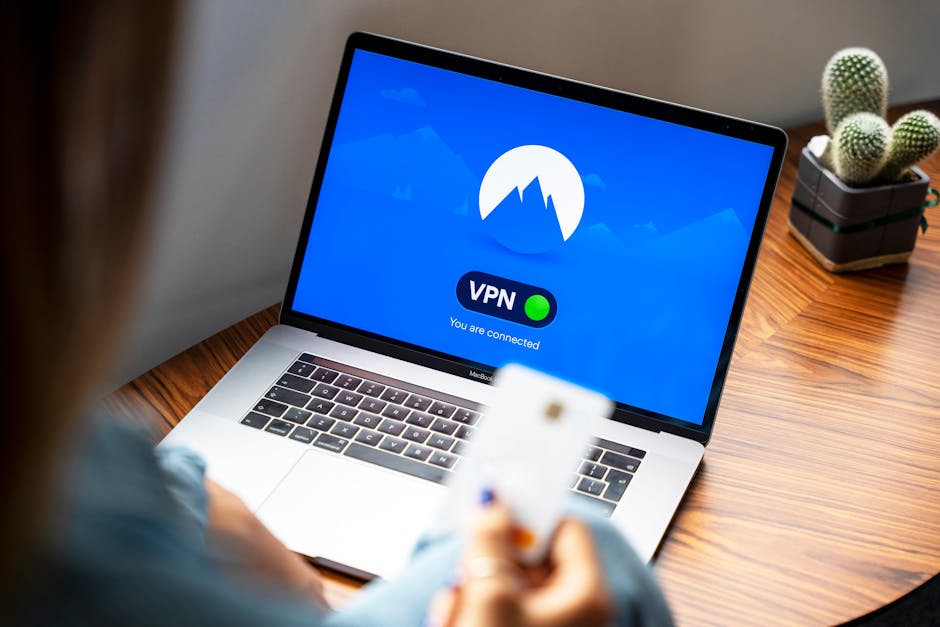
A Virtual Private Network, or VPN, is arguably the most popular and accessible tool for enhancing online privacy. At its core, a VPN creates an encrypted tunnel between your device and a server operated by the VPN provider. All your internet traffic then travels through this encrypted tunnel to the VPN server, and from there, it exits onto the public internet. Crucially, when your traffic reaches its destination (e.g., a website), it appears to originate from the IP address of the VPN server, not your actual IP address. This effectively masks your real location and identity from the websites you visit, your ISP, and anyone else observing your traffic.
Imagine you want to send a secret message. Without a VPN, you write the message on a postcard and send it. Everyone who handles the postcard (your ISP, postal workers, etc.) can read it. With a VPN, you put your message inside a locked, opaque box, and then you hand that box to a trusted courier (the VPN server). The courier takes the box, opens it at their location, reads your message, and then sends it on to the recipient. The recipient only sees the courier's address, not yours, and no one along the way could read the message inside the box. This analogy highlights two key benefits of a VPN: IP masking (the recipient only sees the courier's address) and encryption (no one can read the message inside the box).
Choosing a Trustworthy VPN A Matter of Life and Digital Breath
Not all VPNs are created equal, and choosing the right one is paramount. The market is flooded with providers, many of whom make grand promises of anonymity but fail to deliver. The most critical factor when selecting a VPN is its no-logs policy. A truly trustworthy VPN provider will explicitly state that they do not log your activities, connection times, IP addresses, or any other data that could be used to identify you. This policy should ideally be independently audited by a third-party security firm, providing concrete proof that the provider lives up to its claims. Without a strict no-logs policy, your VPN provider essentially becomes another ISP, capable of collecting and potentially selling your data.
Beyond logging policies, consider the VPN's jurisdiction. Countries with strong privacy laws and no data retention mandates (like Panama, the British Virgin Islands, or Switzerland) are generally preferred over those in intelligence-sharing alliances (like the 5, 9, or 14 Eyes countries). Look for robust encryption standards (AES-256 is the industry standard), modern protocols (OpenVPN, WireGuard), and essential features like a kill switch (which automatically disconnects your internet if the VPN connection drops, preventing accidental IP leaks) and DNS leak protection. While free VPNs might seem appealing, they often come with hidden costs, such as data logging, bandwidth throttling, or even injecting ads into your browsing. For serious anonymity, a reputable, paid, no-logs VPN service is a non-negotiable investment. My personal experience, and that of countless privacy advocates, has shown that you truly get what you pay for in the VPN world.
Tor The Onion Router Layers of Anonymity
If a VPN is a digital disguise, then Tor is a complete digital vanishing act, cloaked in multiple layers of misdirection. Tor, short for "The Onion Router," is a free, open-source software that enables anonymous communication. It works by routing your internet traffic through a worldwide volunteer overlay network consisting of thousands of relays. When you use Tor, your data is encrypted multiple times and then sent through at least three random relay servers (nodes) before reaching its destination. Each relay only knows the IP address of the node before it and the node after it, never the full path. It's like peeling back the layers of an onion, hence the name.
The entry node knows your real IP address but doesn't know your destination. The middle node knows neither your real IP nor your destination. The exit node knows your destination but doesn't know your real IP. This multi-layered encryption and routing makes it incredibly difficult, if not practically impossible for most adversaries, to trace your online activity back to your original IP address. Tor is the tool of choice for journalists, activists, whistleblowers, and anyone operating under oppressive regimes where freedom of speech or safety is at risk. It's also the gateway to the "dark web," a part of the internet not indexed by standard search engines, hosting both legitimate privacy-focused services and illicit activities.
The Trade-Offs and Considerations for Tor Use
While Tor offers a far greater degree of anonymity than a standalone VPN, it comes with its own set of trade-offs. The most noticeable is speed. Because your traffic is bouncing through multiple volunteer-run relays around the world, Tor connections are significantly slower than direct internet connections or even VPN connections. This makes it unsuitable for bandwidth-intensive activities like streaming high-definition video or large file downloads. Furthermore, while the Tor network itself is incredibly secure, the exit node (the final relay before your traffic reaches its destination) can be a point of vulnerability. If you're visiting an unencrypted HTTP website, the exit node operator could potentially see your traffic, though they still wouldn't know your original IP. This is why it's always crucial to use HTTPS-secured websites when browsing with Tor.
Another consideration is that using Tor can sometimes flag you as an individual of interest. Because Tor is often associated with activities that require strong anonymity (both legitimate and illicit), some websites, online services, or even ISPs might block or scrutinize traffic originating from Tor exit nodes. While using Tor is perfectly legal in most countries, the act of using it might draw unwanted attention. Despite these caveats, for activities demanding the highest level of anonymity, such as sensitive research, whistleblowing, or circumventing censorship, Tor remains an unparalleled tool. It's not a daily driver for casual browsing, but it's an indispensable component of a comprehensive privacy toolkit when the stakes are high. Combining Tor with a VPN, a technique we'll discuss later, can offer an even more robust shield.