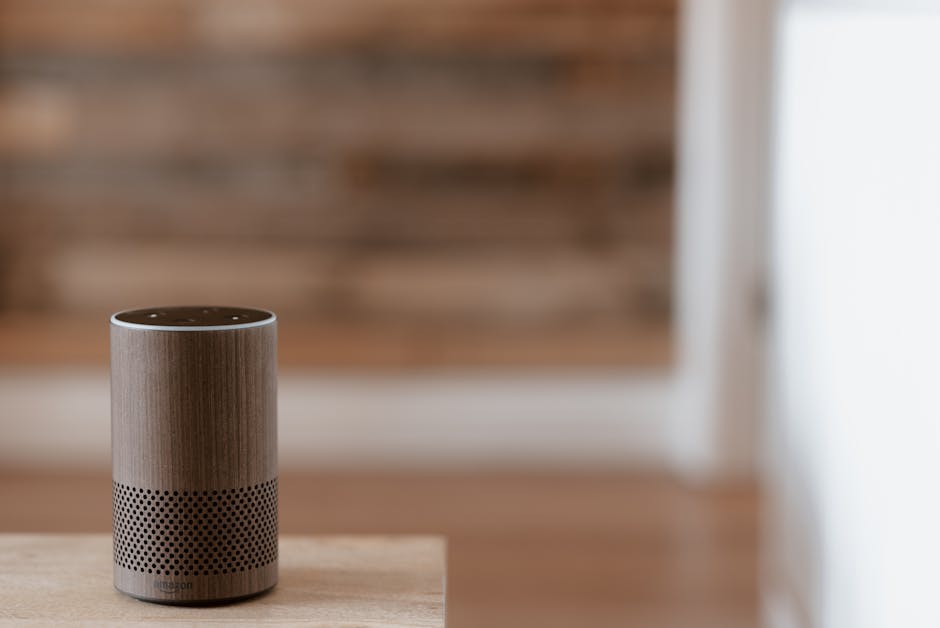
Imagine this: you're unwinding on the couch after a long day, the smart lights dim to your preferred ambiance, your smart speaker plays a soothing playlist, and the thermostat adjusts itself to the perfect temperature – all orchestrated with a simple voice command or tap on your phone. This seamless symphony of connected living, the promise of the smart home, has truly revolutionized our daily routines, offering unparalleled convenience and a touch of futuristic elegance that was once confined to science fiction novels. From automated security systems that watch over your property to refrigerators that order groceries when supplies run low, these devices are designed to make life easier, more efficient, and undeniably more comfortable, weaving themselves into the very fabric of our domestic existence with a quiet, almost invisible efficiency.
Yet, beneath this polished veneer of convenience and innovation lies a complex, often opaque, network of data collection and transmission that many of us simply overlook, or perhaps, choose to ignore in favor of immediate gratification. Every smart device, from the most sophisticated surveillance camera to the humblest smart plug, is essentially a tiny computer, constantly gathering information about your habits, your preferences, and even the most intimate details of your home environment. This data, often treated as the digital exhaust of our connected lives, is then sent across the internet, sometimes to servers halfway across the world, to power the very services we enjoy. The question that gnaws at the back of many minds, as it should, is: who else is privy to this digital stream of consciousness emanating from within your sanctuary, and what exactly are they doing with it?
The Siren Song of Convenience and the Echo of Surveillance
The allure of the smart home is undeniably powerful, drawing us in with promises of effortless control and enhanced living. We embrace smart thermostats that learn our schedules, smart doorbells that show us who’s at the front door even when we’re not home, and smart assistants that answer our every query, from the weather forecast to complex calculations. This technology, designed to anticipate our needs and simplify our lives, has become an integral part of modern living, transforming our houses into intelligent hubs that respond to our presence and preferences with uncanny accuracy. The convenience factor is often the primary driver for adoption, making tasks like locking doors, adjusting lighting, or even brewing coffee a matter of a few taps or a spoken word, freeing up precious minutes in our busy schedules.
However, this remarkable convenience comes with an often-unseen caveat: a subtle, persistent erosion of privacy that many users aren't fully aware of, or perhaps, don't fully comprehend the implications of. Each interaction with a smart device, every command given, every sensor reading taken, generates a data point, a tiny piece of information that, when aggregated, paints an incredibly detailed picture of your life. Your smart speaker, always listening for its wake word, inherently processes snippets of your conversations, even if those snippets are supposedly discarded afterward. Your smart camera, diligently recording motion, captures not just potential intruders but also your family's comings and goings, your pets playing, and the general rhythm of your home life. This constant stream of information, while seemingly innocuous on its own, can become a treasure trove for anyone with access, be it the device manufacturer, third-party advertisers, or even malicious actors.
The trade-off between convenience and privacy is a delicate balance that is increasingly tipping in favor of the former, largely because the privacy implications are often abstract or hidden deep within lengthy, rarely-read terms of service agreements. We readily grant permissions for apps to access our location, our photos, and our contacts, often without a second thought, because the immediate benefit of the app outweighs the perceived risk. In the smart home context, this dynamic is amplified, as the devices are embedded within our most personal spaces, continuously observing and recording. It’s not just about what you say, but also about when you leave, how long you're gone, what shows you watch, what music you listen to, and even your physiological responses if you happen to own a smart bed or health monitoring device. This comprehensive data profile, built brick by digital brick, becomes a valuable asset for companies looking to understand consumer behavior, tailor advertising, and even predict future trends, creating an economy where your personal information is the most sought-after commodity.
Unmasking the Data Harvesters How Your Smart Home Feeds the Beast
To truly understand the privacy risks inherent in our connected homes, we need to peel back the layers and examine precisely what kind of data these devices collect and how it’s transmitted. It's not just a vague notion of 'information' being gathered; it's a very specific, granular collection of data points that, when stitched together, can reveal an astonishing amount about your private life. Think about your smart thermostat, for instance, which doesn't just regulate temperature; it logs when you're home, when you're away, your preferred comfort settings at different times of day, and potentially even your sleep patterns if integrated with other systems. This seemingly benign data can inform energy companies, insurance providers, or even marketing firms about your lifestyle and habits, leading to targeted ads or even differential pricing based on your perceived behavior.
Then there are the more obvious data collection culprits, like smart speakers and security cameras. A smart speaker, always in 'listening' mode for its wake word, processes vast amounts of audio data. While companies claim these recordings are only sent to the cloud for processing after the wake word is detected, and that human review is limited, the sheer volume of incidental recordings and the potential for misinterpretations or accidental activation cannot be entirely dismissed. We've seen numerous reports of snippets of private conversations being inadvertently recorded and even shared. Security cameras, on the other hand, are designed specifically to record video and often audio, transmitting continuous streams or motion-triggered clips to cloud servers. This footage, which might capture sensitive moments, faces risks not only from the company's storage practices but also from potential hacking attempts, turning your private moments into a public spectacle for malicious actors or even voyeurs.
Beyond audio and video, smart home devices are also voracious collectors of metadata and behavioral patterns. Smart plugs track energy consumption, telling a story about which appliances are used when, and for how long. Smart lights record your presence, your preferred lighting schedules, and even your mood if they have color-changing capabilities. Smart doorbells log every visitor, every delivery, and every time someone approaches your property. Even your smart refrigerator might track what groceries you buy, how often you open the door, and your dietary habits. This tapestry of data, woven from countless seemingly insignificant interactions, forms a comprehensive profile of your daily life, detailing your routines, your preferences, and your presence (or absence) in your home. This information is incredibly valuable, not just for improving device functionality, but also for targeted advertising, market research, and in some cases, even for law enforcement requests, raising serious questions about data ownership and the scope of corporate and governmental access to our private spheres.
The ultimate destination of this data is often a complex web of servers owned by device manufacturers, cloud service providers, and various third-party partners. While manufacturers use this data to refine their products and offer new features, a significant portion is also leveraged for commercial purposes, including targeted advertising and data brokering. Your smart TV, for instance, might track what you watch, how long you watch it, and even what apps you use, sharing this information with advertisers to present highly personalized commercials. This ecosystem of data harvesting and sharing is often obscured by lengthy privacy policies that few users ever fully read or comprehend, leaving many unwittingly consenting to practices that compromise their digital autonomy. The sheer volume and granularity of the data collected mean that your smart home is not just a collection of convenient gadgets; it's a sophisticated data-gathering operation, constantly feeding information about your most personal space into a vast, interconnected digital beast.