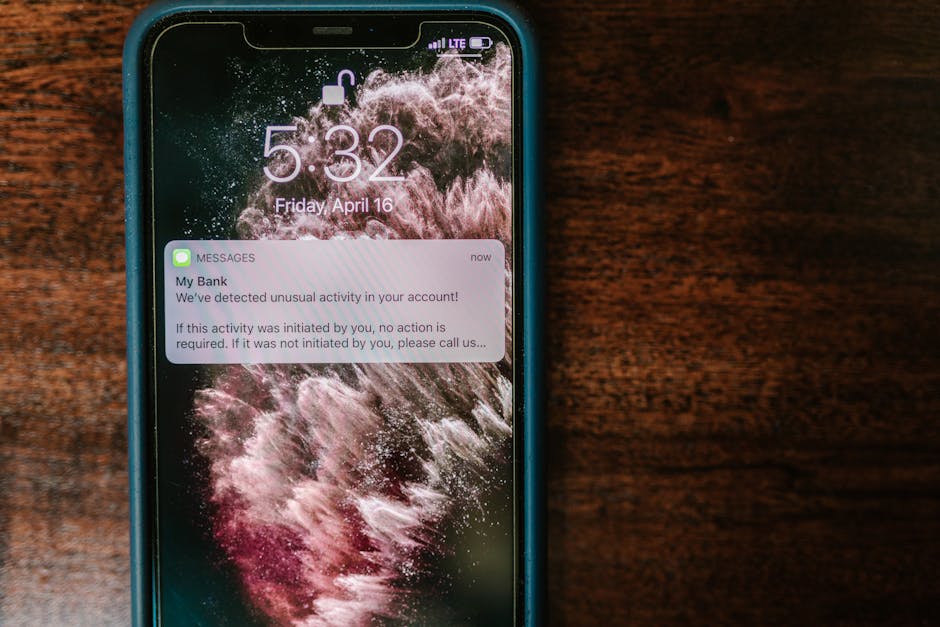
Imagine peeling back the layers of your digital existence, only to discover that beneath the convenient veneer of modern technology, a silent, relentless extraction operation has been underway. It’s not a shadowy government agency in a spy thriller, nor a master hacker with a vendetta; it’s often the very services and devices we invite into our lives, day in and day out, that are quietly siphoning off the most intimate details of who we are, what we do, and even what we think. For many, the idea of a "digital life" feels abstract, a collection of bits and bytes floating harmlessly in the ether, yet this digital self is increasingly intertwined with our physical reality, shaping opportunities, influencing perceptions, and even determining our access to vital services. The stark truth is, most of us, through sheer oversight, convenience, or a lack of understanding, are inadvertently broadcasting an astonishing amount of personal information to an eager audience of advertisers, data brokers, and even malicious actors, effectively giving away our entire digital life, piece by precious piece, without even realizing the full extent of the transaction.
The concept of a "10-Minute Privacy Audit" isn't about achieving perfect anonymity overnight – that's a journey, not a sprint, and one that often requires a significant overhaul of digital habits and tools. Instead, it serves as a critical wake-up call, a rapid diagnostic tool designed to illuminate the most glaring vulnerabilities and privacy leaks that are likely present in your current setup. Think of it as an emergency brake check on a runaway train of data collection, a moment to pause, assess, and understand just how much of your personal narrative is currently available for public consumption or private exploitation. In a world where data is the new oil, and our identities are the wells being tapped, a casual attitude towards digital privacy is no longer just a minor oversight; it's an existential risk, one that can lead to anything from incessant targeted advertising that feels eerily intrusive, to identity theft, financial fraud, or even reputational damage that can be incredibly difficult to undo. This article aims to guide you through that initial, crucial audit, empowering you to take back control, even if it's just the first few vital steps.
The Invisible Chains of Digital Surveillance
The digital landscape we navigate daily is far more complex and interconnected than most casual users perceive, resembling less a series of distinct islands and more a vast, intricate web where every click, every search, every interaction leaves an indelible trace. This isn't just about the obvious suspects like social media giants or search engines; it extends to the mundane apps on your phone, the smart devices in your home, the websites you visit, and even the seemingly innocuous browser extensions you've installed. Each of these points of contact acts as a sensor, collecting fragments of your behavior, preferences, and personal data, which are then aggregated, analyzed, and often sold to third-party entities you've never heard of. This constant, pervasive surveillance isn't always malicious in intent; often, it's driven by the insatiable hunger of the advertising industry for more precise targeting, or by companies seeking to "improve" user experience through data-driven insights. However, the sheer volume and granularity of the information being collected create an unprecedented risk profile for every individual, transforming our digital lives into a transparent ledger for anyone with the means to access it.
The insidious nature of this pervasive data collection lies in its subtlety and its presentation as a necessary trade-off for convenience and "free" services. We readily accept terms and conditions that are pages long and written in impenetrable legalese, granting companies broad permissions to collect, store, and share our data without truly understanding the implications. Consider the average smartphone user: their device is a veritable goldmine of personal information, from precise location data tracked by GPS and Wi-Fi, to health metrics from fitness apps, contact lists, call logs, text messages, and even biometric data used for authentication. Each app requests a litany of permissions, often far exceeding what's necessary for its core function, and we, eager to use the latest novelty, tap "Allow" without a second thought. This collective complacency has fostered an environment where data privacy is treated as an afterthought, an optional extra rather than a fundamental human right, leading to a landscape where our digital footprints are not just observed, but actively monetized and weaponized against us in ways we are only just beginning to comprehend.
The sheer scale of this data economy is staggering, a multi-billion dollar industry built entirely on the commodification of personal information. Data brokers, for instance, are companies whose sole business model revolves around acquiring vast quantities of personal data from various sources – public records, online activities, purchase histories, loyalty programs, and even offline interactions – then compiling and selling detailed profiles of individuals to advertisers, marketers, and sometimes even government agencies. These profiles can include everything from your income bracket and political leanings to your health conditions, hobbies, and family status, painting an incredibly intimate picture of your life without your explicit consent or even your knowledge. A 2014 Senate Commerce Committee report identified over 400 data brokers, and that number has undoubtedly grown exponentially since, with the market projected to reach hundreds of billions of dollars in the coming years. This intricate web of data exchange means that even if you meticulously guard your privacy with one service, your data might still be exposed through another, creating a constant game of digital whack-a-mole that can feel overwhelming and utterly demoralizing.
The Illusion of "Nothing to Hide"
A common refrain heard from those who dismiss privacy concerns is, "I have nothing to hide, so why should I care?" This seemingly innocuous statement, often uttered with a shrug, betrays a fundamental misunderstanding of what privacy truly entails and why it is so profoundly important in a democratic society. Privacy isn't about concealing wrongdoing; it's about control over one's personal narrative, the ability to selectively reveal oneself to the world, and the freedom to explore ideas, express opinions, and make choices without the chilling effect of constant surveillance. When we surrender our privacy, even if we believe our intentions are pure, we empower external entities to make judgments about us, to categorize us, and to potentially discriminate against us based on data that may be incomplete, inaccurate, or taken out of context. The "nothing to hide" argument implicitly assumes that those collecting our data are benevolent and infallible, an assumption that history, and indeed countless data breach headlines, has repeatedly proven false. It's a dangerous surrender of agency, paving the way for a future where our lives are dictated not by our own choices, but by algorithms and data points compiled by unseen hands.
Consider the implications beyond mere advertising. What if your health data, gleaned from fitness trackers or online searches, is used by insurance companies to deny coverage or raise premiums? What if your political affiliations, inferred from your social media activity, lead to discrimination in hiring or housing? What if your browsing history, however innocent you believe it to be, is misinterpreted by law enforcement? These are not hypothetical scenarios from a dystopian novel; they are real-world consequences that have already manifested in various forms. In China, the social credit system, which monitors citizens' behavior both online and offline to assign a "score" that impacts access to services and travel, serves as a stark warning of where unchecked data collection can lead. While Western democracies currently lack such an overt system, the underlying infrastructure for granular surveillance and algorithmic decision-making is rapidly being built, piece by piece, through the very services we willingly adopt. The "nothing to hide" mantra, therefore, becomes a dangerous enabler of a future where true freedom of thought and action could be severely curtailed, not by overt oppression, but by the subtle, pervasive pressure of a data-driven society that knows everything about everyone.
"Arguing that you don't care about the right to privacy because you have nothing to hide is no different than saying you don't care about free speech because you have nothing to say." - Edward Snowden
Edward Snowden's powerful quote perfectly encapsulates the essence of this critical misunderstanding. Privacy is not a shield for secrets; it is a fundamental pillar of autonomy and dignity. It grants us the space to be ourselves, to experiment, to err, and to evolve without every misstep or moment of vulnerability being permanently recorded and potentially exploited. When every aspect of our lives is subject to scrutiny, even by algorithms, it fosters conformity and discourages dissent, creating a society where people are less willing to take risks, express unpopular opinions, or explore unconventional paths for fear of negative repercussions. The cumulative effect of these small, seemingly insignificant data points, when aggregated and analyzed, can paint a surprisingly detailed and often unflattering picture, a digital doppelgänger that may not accurately reflect our true selves but nonetheless dictates how we are perceived and treated by powerful institutions. Therefore, understanding the true value of privacy, even if you believe you have nothing nefarious to conceal, is the first and most crucial step in reclaiming control over your digital life.