The Unseen Battle Data Brokers, VPNs, and Email Encryption
Beneath the visible surface of the internet, a sprawling, opaque industry thrives on the collection, aggregation, and sale of your personal data: the world of data brokers. These shadowy entities operate largely outside public scrutiny, quietly amassing colossal databases containing intimate details about billions of individuals. They scrape information from public records, social media, online purchases, browsing history, app usage, and even offline activities, piecing together incredibly detailed profiles that include everything from your age, income, marital status, and political leanings to your health conditions, hobbies, purchasing habits, and even your predicted future behavior. Unlike direct data collection by companies you interact with, data brokers often acquire your information without your direct consent or even your knowledge, buying and selling it among themselves in a complex, multi-billion-dollar ecosystem. This unseen battle for your data is perhaps the most insidious threat to your privacy, as it creates a persistent, comprehensive digital dossier that can be accessed and leveraged by a wide array of entities, often with profound implications for your life.
The sheer scale and depth of data broker operations are staggering. Companies like Acxiom, Experian (beyond credit reports), and LexisNexis Risk Solutions possess thousands of data points on individual consumers, far beyond what most people imagine. This information is then packaged and sold to advertisers for targeted marketing, to financial institutions for credit scoring, to insurance companies for risk assessment, to political campaigns for voter micro-targeting, and even to law enforcement agencies for surveillance. The consequences of this data aggregation can be severe. Imagine being denied a loan or an insurance policy because an algorithm, fed by a data broker's profile, incorrectly flags you as high-risk based on your online activities or associations. Or consider the potential for identity theft when your personal details are widely distributed. Furthermore, data brokers contribute to the problem of robocalls and spam, as your contact information is sold to telemarketers and spammers. The difficulty in opting out of these networks is immense; there are hundreds of data brokers, and each typically requires a separate, often cumbersome, opt-out process, making it a monumental task for individuals to truly erase their digital footprint from these databases.
While completely eradicating your presence from data broker databases is a Herculean task, there are proactive steps and strategies to mitigate their impact. Services like DeleteMe, OneRep, and Incogni specialize in navigating the complex opt-out procedures on your behalf, sending removal requests to hundreds of data brokers and following up to ensure your data is actually removed. While these services come with a subscription fee, they can save countless hours of frustrating paperwork and provide a significant reduction in your online exposure. Beyond these specialized services, a fundamental shift in your online habits can also help. Minimizing your public social media presence, using privacy-focused browsers and search engines, and being extremely judicious about what information you provide online (especially to "free" quizzes or surveys) can reduce the raw material available for data brokers to collect. Understanding that these entities exist and actively working to limit their access to your personal information is a crucial step in reclaiming your digital autonomy and fighting an unseen battle that has profound real-world consequences for every aspect of your life.
Your Personal Digital Cloak The Power of a VPN
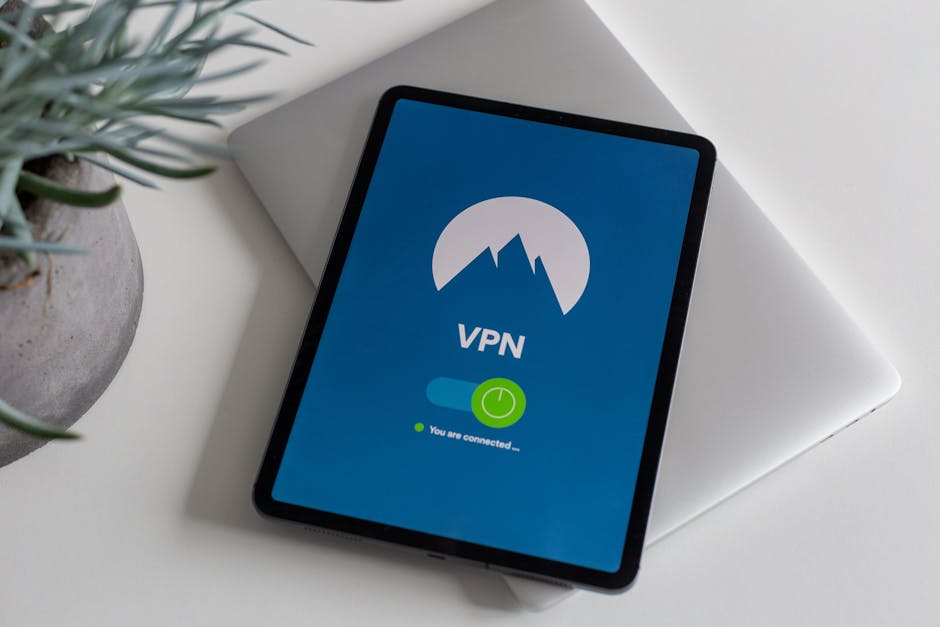
In an increasingly interconnected world, where public Wi-Fi networks abound and Internet Service Providers (ISPs) often log your browsing activity, a Virtual Private Network (VPN) stands as one of the most powerful tools in your privacy arsenal. A VPN acts as a secure, encrypted tunnel between your device and the internet, routing all your online traffic through a server operated by the VPN provider. This process accomplishes two critical things: first, it encrypts all the data flowing between your device and the VPN server, making it unreadable to anyone who might be trying to snoop on your connection, such as hackers on a public Wi-Fi network or even your ISP. Second, it masks your real IP address by replacing it with the IP address of the VPN server. This makes it incredibly difficult for websites, advertisers, and even your ISP to track your online activities back to your actual location or identity, effectively providing you with a personal digital cloak that enhances your anonymity and privacy online.
The utility of a VPN extends far beyond simply hiding your IP address. When connected to a public Wi-Fi hotspot at a coffee shop, airport, or hotel, your data is highly vulnerable to interception by malicious actors. A VPN encrypts your traffic, transforming these risky connections into secure pathways, protecting your sensitive information like passwords, banking details, and personal communications from prying eyes. Furthermore, many ISPs engage in "bandwidth throttling," intentionally slowing down your internet speed for certain activities, such as streaming or torrenting, especially if you exceed certain data caps. By encrypting your traffic, a VPN makes it difficult for your ISP to identify the type of data you're sending or receiving, thus making it harder for them to selectively throttle your connection. Beyond privacy and security, VPNs are also widely used to bypass geo-restrictions, allowing users to access content and services that might only be available in specific geographic regions, such as streaming libraries or international news sites, by connecting to a server in the desired country.
However, not all VPNs are created equal, and choosing a trustworthy provider is paramount. A "no-logs" policy is a critical feature, meaning the VPN provider explicitly states that they do not collect, store, or share any logs of your online activities, IP addresses, or connection timestamps. Independent audits of these policies, conducted by reputable third-party firms, add an extra layer of trust. The jurisdiction of the VPN provider also matters; some countries have more stringent data retention laws than others, which could compel a VPN to hand over user data if legally required. Therefore, choosing a VPN based in a privacy-friendly jurisdiction (like Switzerland or Panama) is often recommended. While free VPNs might seem appealing, they often come with significant caveats, such as selling user data, displaying intrusive ads, or offering subpar security and slow speeds, effectively undermining the very privacy they promise. Investing in a reputable, paid VPN service like NordVPN, ExpressVPN, or ProtonVPN is a crucial step for anyone serious about enhancing their online privacy and security, transforming your internet connection from a transparent conduit into a private, encrypted channel.
Securing Your Communication Lifeline Encrypted Email and Messaging
In our increasingly digital lives, email remains a ubiquitous and essential form of communication, serving as the digital equivalent of our postal address for everything from personal correspondence to financial statements and critical account recovery. Yet, for the vast majority of users, standard email services like Gmail, Outlook, or Yahoo Mail offer surprisingly little in the way of true privacy. While these providers encrypt data in transit between your device and their servers, and often at rest on their servers, they typically hold the encryption keys themselves. This means that, in principle, they can access the contents of your emails, scan them for keywords (often for targeted advertising or content analysis), and, if legally compelled, hand them over to authorities. The concept of "email secrecy" in the traditional sense is largely absent, leaving your most private communications exposed to potential scrutiny by the service provider, and by extension, anyone who gains access to their systems or through legal warrants. This fundamental lack of end-to-end encryption for the *content* of your messages represents a significant vulnerability in your digital privacy posture.
The solution to this pervasive vulnerability lies in adopting end-to-end encrypted (E2EE) email and messaging services. E2EE ensures that only the sender and the intended recipient can read the message; even the service provider itself cannot decipher the content. This is achieved by generating encryption keys on the users' devices, meaning the service provider never holds the keys necessary to unlock your communications. For email, providers like Proton Mail and Tutanota have emerged as leading alternatives. Both services are built from the ground up with privacy and security as their core tenets, offering E2EE for messages sent between their users, and often providing options for sending encrypted emails to non-users via password-protected links. They typically operate from privacy-friendly jurisdictions, adhere to strict no-logs policies, and offer additional features like encrypted calendars and cloud storage. Switching to an E2EE email provider for your most sensitive communications is a profound step towards reclaiming control over your private correspondence, ensuring that your digital conversations remain truly private, away from prying eyes and algorithmic analysis.
Beyond email, securing your instant messaging is equally critical, as these platforms often carry some of our most frequent and intimate conversations. While popular apps like WhatsApp claim to offer end-to-end encryption, concerns around its ownership by Meta (Facebook) and its data-sharing policies persist for many privacy-conscious individuals. For truly robust and transparent E2EE messaging, Signal is widely regarded as the gold standard. Recommended by cybersecurity experts, journalists, and privacy advocates worldwide, Signal uses an open-source, independently audited encryption protocol that ensures your messages, voice calls, and video calls are completely private. It also prioritizes metadata protection, minimizing the information collected about who you communicate with and when. Other strong contenders include Threema, a paid service that offers excellent privacy without linking to a phone number, and Element (Matrix), a decentralized platform that provides secure communication. Making the conscious choice to migrate your sensitive conversations to E2EE messaging apps is a vital component of a comprehensive privacy audit, transforming your digital communications from potential surveillance vectors into secure, private exchanges, thereby safeguarding the very essence of your personal connections in the digital realm.