There's a whisper in the digital wind, a subtle hum beneath the surface of our hyper-connected lives that many of us choose to ignore, or perhaps, are simply too busy to notice. It’s the sound of an invisible gaze, a constant, unblinking observation emanating from the very devices we invite into our homes, strap to our wrists, and carry in our pockets. This isn’t the stuff of dystopian science fiction novels anymore; it is the mundane, everyday reality of the modern world, where our smart devices, powered by increasingly sophisticated artificial intelligence, have become ubiquitous extensions of our senses, yet also, unsettlingly, extensions of an unseen network gathering every shard of our existence. We've eagerly embraced the convenience, the instant gratification, and the seamless integration these gadgets promise, often without truly pausing to consider the profound implications of what we've traded in return: a substantial portion of our personal privacy, meticulously cataloged, analyzed, and often monetized by entities we barely understand.
For over a decade, my work in the trenches of cybersecurity and online privacy has afforded me a front-row seat to the accelerating erosion of digital boundaries. What began with concerns about website cookies and intrusive ads has morphed into a far more pervasive and insidious form of surveillance, one powered by algorithms and machine learning that can not only interpret our commands but anticipate our desires, predict our behaviors, and even infer our emotional states. The "AI Eye" isn't a single monolithic entity; it’s a vast, distributed network of sensors, microphones, cameras, and data processors embedded in everything from our smart speakers and televisions to our refrigerators and children's toys. Each device, seemingly innocuous on its own, acts as a node in a grand, interconnected web, constantly collecting, transmitting, and analyzing data about our lives, 24 hours a day, 7 days a week. This isn't just about targeted advertisements anymore; it's about building comprehensive digital profiles that know us better than we might know ourselves, profiles that can be used for purposes far beyond selling us the next gadget.
The Pervasive Reach of Always-On Listening Devices
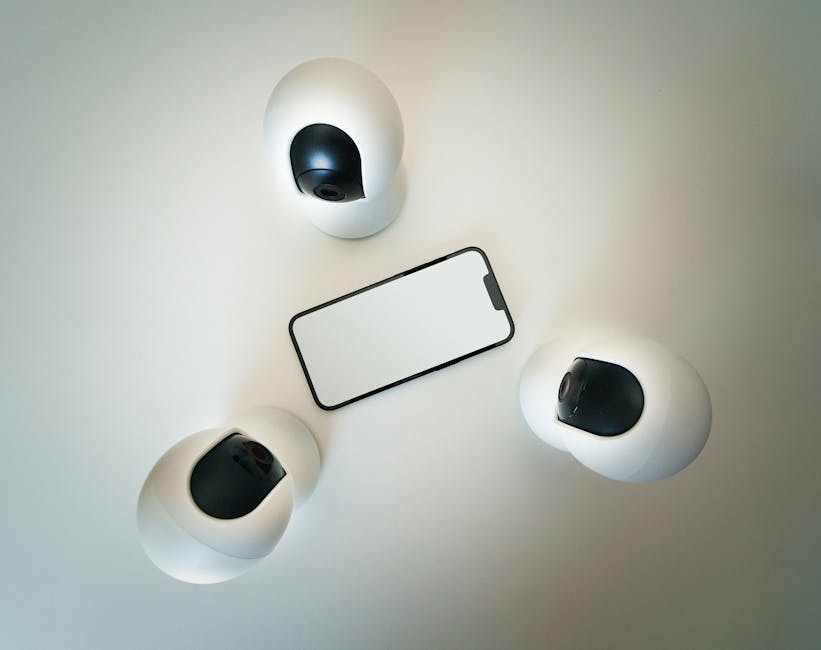
Consider for a moment the sheer number of intelligent devices that now populate our personal spaces. The smart speaker in your kitchen, ever-ready to play your favorite song or answer a trivia question, is equipped with an always-on microphone, perpetually listening for its wake word. Your smart TV, a sleek portal to entertainment, often boasts cameras and microphones, ostensibly for gesture control or voice commands, but frequently configured to track viewing habits with astonishing granularity, right down to who is watching and for how long. The fitness tracker on your wrist doesn't just count steps; it monitors your heart rate, sleep patterns, skin temperature, and sometimes even your blood oxygen levels, creating an intimate physiological diary. Even seemingly innocuous smart light bulbs or thermostats are part of this ecosystem, gathering data about your presence, preferences, and daily routines. This isn't accidental; it's a deliberate design choice, a fundamental aspect of how these devices function, often masked by the allure of convenience and cutting-edge technology.
The ubiquity of these devices means that the AI Eye is no longer confined to our computer screens or smartphones. It has infiltrated the most intimate corners of our homes, turning private spaces into data collection hubs. Think about the conversations you have within earshot of your smart speaker, the shows you binge-watch on your connected TV, the health aspirations you share with your wearable, or even the mundane rhythms of your daily life as observed by your smart home security system. All of this information, once considered intensely personal and private, is now routinely processed by algorithms, searching for patterns, extracting insights, and feeding into a vast data stream. The argument often made by manufacturers is that this data is anonymized, aggregated, or used solely to improve user experience. However, repeated incidents and expert analyses have shown that true anonymization is incredibly difficult, if not impossible, when dealing with such rich, behavioral datasets. The sheer volume and variety of data points, when combined, can uniquely identify individuals with surprising accuracy, painting a detailed portrait of our lives for anyone with access to the canvas.
This relentless data collection isn't merely a passive process; it's an active, intelligent endeavor. Modern AI algorithms are not just recording; they are interpreting. They can analyze the tone of your voice to infer your mood, detect specific objects or individuals in camera feeds, recognize faces, identify spoken commands, and even predict your next likely action based on past behavior. For example, a smart thermostat might learn your schedule and preferences, automatically adjusting temperatures. While this seems helpful, it also means it knows when you’re home, when you’re away, and when you’re sleeping. This level of granular insight into our daily lives presents a tempting target for advertisers, certainly, but also for less scrupulous actors, including data brokers, insurance companies, law enforcement, and even malicious hackers. The potential for misuse, discrimination, and even outright manipulation becomes increasingly significant as these AI systems grow more sophisticated and deeply integrated into the fabric of our existence, blurring the lines between convenience and constant surveillance.
The Fading Line Between Useful and Utterly Intrusive
The initial appeal of smart devices was undeniably strong. Who wouldn't want a virtual assistant to manage their calendar, a thermostat that learns their habits, or a security camera that monitors their home remotely? These innovations promised to simplify our lives, make our homes more efficient, and provide an unprecedented level of control and convenience. And for many, they have delivered on those promises, at least in part. However, the true cost of this convenience often remains hidden in the labyrinthine terms and conditions we mindlessly click "accept" on, or buried deep within privacy policies written in legalese that few have the time or inclination to decipher. We've been conditioned to accept that "free" services often come with a data cost, but the sheer scale and intimacy of the data now being collected by smart devices often far exceeds what most users implicitly understand or explicitly consent to.
Consider the stark reality that many smart devices are not just collecting data about your direct interactions with them, but also about your ambient environment and even your non-verbal cues. A smart speaker, designed to respond to voice commands, often processes snippets of conversation that are not addressed to it, even if they are quickly discarded. A smart TV might not only track what you watch but also analyze who is in the room through its camera, potentially identifying demographics or even individuals. This goes beyond simple data collection; it’s about creating a holistic, real-time digital twin of your life, a comprehensive dossier of your habits, preferences, health, and social interactions. This digital twin is then used to fuel recommendation engines, personalize experiences, and, most importantly for the companies involved, refine targeted advertising models to an unprecedented degree. The line between a helpful feature and an utterly intrusive surveillance tool has not just blurred; in many instances, it has vanished entirely, leaving us exposed in ways we are only just beginning to comprehend.
"The greatest trick the devil ever pulled was convincing the world he didn't exist." This classic line, often misattributed, perfectly encapsulates the subtle, almost imperceptible nature of modern digital surveillance. It's not a shadowy figure in a trench coat; it's the friendly voice from your smart speaker, the captivating images on your smart TV, the reassuring buzz of your fitness tracker. The threat doesn't announce itself; it integrates itself, becoming an indispensable part of our daily rhythm. We've allowed these devices into our most private spaces because they offer undeniable value, but the trade-off is often a tacit agreement to be observed, analyzed, and categorized. The true danger lies in this normalization, this acceptance of constant monitoring as an unavoidable consequence of technological progress, without a full understanding of the long-term implications for individual autonomy and societal privacy norms.
The purpose of this article is not to incite panic or to suggest that we abandon technology entirely and retreat to off-grid cabins, though the thought might be tempting on some days. Instead, it is a call to awareness, a deep dive into the mechanisms and motivations behind the AI Eye, and a practical guide to reclaiming some semblance of control over our digital lives. We need to understand precisely how these devices operate, what kind of data they collect, who benefits from it, and what the potential risks are, both immediate and long-term. Only with this knowledge can we make informed decisions about the technology we embrace, the data we share, and the privacy boundaries we are willing to enforce. As a seasoned observer of this rapidly evolving landscape, I believe it's imperative that we peel back the layers of convenience and marketing hype to confront the uncomfortable truth: our smart devices are indeed spying on us 24/7, and the time to understand the implications, and more importantly, to act, is now.