The evolution of digital threats, particularly with the rapid advancements in Artificial Intelligence, demands a corresponding revolution in our defensive strategies. It's no longer enough to simply encrypt data and mask an IP address; the algorithmic adversaries of today operate with an intelligence and scale that render yesterday's solutions increasingly quaint. As we delve deeper into what constitutes a truly "AI-proof" VPN, we must move beyond the conventional features and explore the bleeding edge of cybersecurity. This isn't just about incremental improvements; it's about a fundamental re-imagining of how privacy is architected in an interconnected world. The future of online anonymity hinges on embracing technologies and methodologies that actively confound AI, rather than merely attempting to hide from it. It requires a proactive stance, one that anticipates the next generation of algorithmic attacks and builds defenses designed to not just withstand, but to actively disrupt the very mechanisms by which AI seeks to compromise our privacy. The stakes couldn't be higher, and the urgency for innovation has never been more pronounced.
Beyond the Obvious Cutting-Edge Defenses Against Future AI Aggression
While advanced protocols and dynamic obfuscation form the bedrock of AI-resilient VPNs, the truly forward-thinking services are already looking further ahead, preparing for threats that are still on the horizon but rapidly approaching. One such existential threat is the advent of quantum computing. While fully fault-tolerant quantum computers capable of breaking current cryptographic standards are still some years away, the potential impact is so catastrophic that preparing for it now is not just prudent, but essential. Quantum computers, with their ability to perform certain calculations exponentially faster than classical computers, could theoretically shatter the RSA and ECC encryption algorithms that underpin much of our current digital security, including many VPN protocols. This is where Quantum-Resistant Cryptography (QRC), also known as Post-Quantum Cryptography (PQC), comes into play. An AI-proof VPN worth its salt will be actively researching, testing, and implementing PQC algorithms into its core infrastructure. These new cryptographic primitives are designed to withstand attacks from quantum computers, ensuring that even when these powerful machines become a reality, your encrypted data remains secure. It’s a complex and rapidly evolving field, with various candidate algorithms being evaluated by cryptographic experts worldwide, but integrating PQC is a non-negotiable step for any VPN aiming for true future-proofing. This isn't about today's threats; it's about ensuring your privacy shield remains impenetrable for decades to come, against an entirely new class of computational power. Imagine building a castle that isn't just strong against medieval siege engines, but also against future laser cannons – that's the ambition here.
In a fascinating turn of events, AI itself is emerging as a powerful tool in the fight against AI-driven threats. An AI-resilient VPN isn't just trying to hide from AI; it's leveraging AI for its own defense, particularly in the realm of real-time threat intelligence and anomaly detection. Imagine a VPN network that constantly monitors its own traffic, looking for unusual patterns, suspicious connection attempts, or indicators of sophisticated surveillance. An AI-powered anomaly detection system within the VPN infrastructure can do just that. It can learn what "normal" traffic looks like across its vast network and immediately flag any deviations, however subtle. This could include detecting AI-driven attempts to fingerprint protocols, identify server locations, or even launch targeted de-anonymization attacks. By using machine learning to analyze network flows, connection metadata, and even the behavior of individual users (in an anonymized, privacy-preserving way, of course), the VPN can proactively identify and block threats before they compromise user privacy. For instance, if a specific server starts experiencing an unusual influx of connection requests with highly specific, non-standard parameters, an AI could identify this as an attempted fingerprinting attack and dynamically reroute traffic away from that server, or even temporarily isolate it. This transforms the VPN from a passive shield into an active, intelligent defender, constantly adapting and learning from the adversarial landscape. It's a digital immune system, always vigilant, always learning, always protecting.
Another crucial element for future-proofing our digital fortresses is the integration of Zero-Trust Network Access (ZTNA) principles into consumer VPNs. Traditionally, VPNs operate on a perimeter-based security model: once you're "inside" the VPN tunnel, you're largely trusted. ZTNA, however, operates on the principle of "never trust, always verify." Applied to a consumer VPN context, this would mean that even after connecting to the VPN, every single request – every website visit, every application connection – is continuously authenticated and authorized. This isn't about making your browsing experience cumbersome; it's about adding micro-segmentation and granular access control *within* the encrypted tunnel. For example, instead of granting blanket access to the entire internet once connected, a ZTNA-enabled VPN might only allow access to specific applications or domains based on predefined policies, and each access attempt would require re-verification. This drastically limits the "blast radius" of any potential compromise. If an AI somehow manages to compromise a single session or infer activity, its ability to move laterally or gather further information would be severely curtailed. It's like having multiple locked doors and security checkpoints *inside* your house, rather than just one strong front door. This approach, while more complex to implement, offers an unparalleled level of security against persistent, adaptive AI adversaries who excel at exploiting even the smallest initial foothold to gain broader access and insight. It's a proactive, deeply layered defense that assumes compromise is inevitable and designs security around that assumption.
Hardware-Level Safeguards Enhancing Trust at the Core
As software becomes increasingly complex and thus prone to vulnerabilities, the focus for AI-resilient security is also shifting towards hardware-level safeguards. This means integrating security features directly into the physical components of the devices we use and the servers that host VPN services. Technologies like Trusted Platform Modules (TPMs) and Secure Enclaves, commonly found in modern computers and smartphones, can play a pivotal role. A TPM, for instance, is a dedicated microcontroller designed to secure hardware through integrated cryptographic keys. When a VPN client or server utilizes a TPM, it can ensure the integrity of the boot process, store cryptographic keys in a tamper-resistant environment, and provide secure execution environments for critical security operations. This makes it far more difficult for sophisticated AI-driven malware or state-sponsored attacks to compromise the underlying system, even if they manage to bypass software defenses. The cryptographic operations, the very heart of the VPN's security, are protected at a fundamental level, making them resilient to software-only attacks. It's like having a vault built into the very foundations of your home, rather than just relying on a very strong safe inside. This hardware-rooted trust provides a crucial layer of defense against AI that might otherwise exploit software vulnerabilities to gain control or extract sensitive information, protecting the integrity of the VPN connection even before the software layers come into play.
"True security begins at the silicon level. Without hardware-rooted trust, even the most sophisticated software defenses can be undermined by advanced persistent threats, especially those powered by AI." - Dr. Eleanor Vance, Hardware Security Engineer.
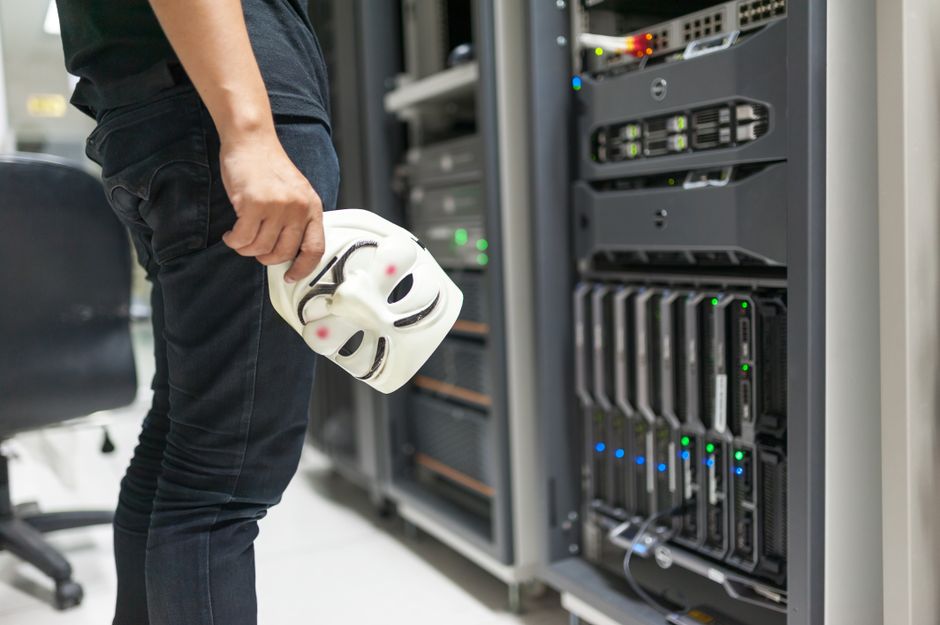
Furthermore, for VPN providers operating their own server infrastructure, the security of the physical hardware itself becomes paramount. This means using servers with secure boot capabilities, remote attestation, and even custom-designed hardware that minimizes attack surfaces. Some cutting-edge VPN services are exploring the use of bare-metal servers that are wiped clean after every session, or even diskless servers that load their operating system into RAM, leaving no persistent data behind. These measures, combined with physical security protocols for their data centers, create an environment where even if an adversary gains physical access, there's minimal data to compromise and the system can be quickly reset. For an AI-driven adversary, which thrives on persistent access and data accumulation, such ephemeral and hardware-hardened environments present a significant challenge. It forces the AI to start from scratch with every interaction, denying it the consistent foothold it needs to learn and exploit. The integration of hardware-level security, therefore, isn't just about protecting against physical tampering; it's about creating a fundamentally more resilient and ephemeral computing environment that actively thwarts the long-term, pattern-seeking strategies of advanced AI surveillance, making it exponentially harder for these digital predators to establish a lasting presence or gather actionable intelligence.