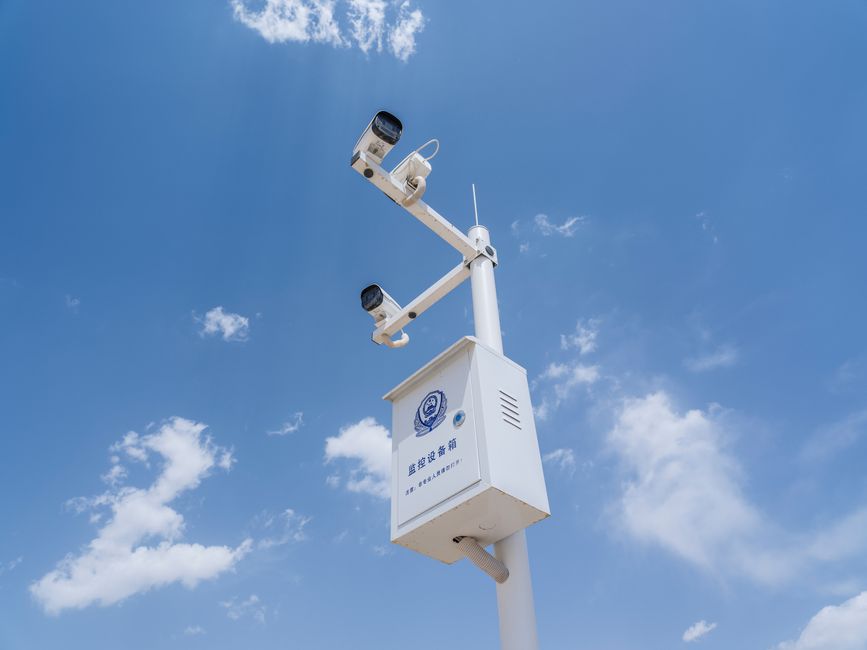
The shadow cast by ISP data collection extends far beyond corporate profiteering, reaching into the very core of our civil liberties and national security frameworks. While the economic incentives for harvesting user data are undeniable, the landscape becomes even more complex and, frankly, more unsettling when government agencies enter the picture. The relationship between internet service providers and state apparatuses is often shrouded in secrecy, operating under legal mandates that prioritize surveillance and national security over individual privacy. This dynamic transforms your ISP from a mere service provider into a potential arm of government oversight, capable of turning over vast swathes of your personal data without your knowledge or consent, under specific legal pretexts that are often broad and ill-defined.
When Governments Come Knocking Your ISP's Compliance
In many countries, legal frameworks exist that compel ISPs to retain user data for specified periods and to hand over this data to government agencies upon request. In the United States, for example, laws like the Electronic Communications Privacy Act (ECPA) and the Foreign Intelligence Surveillance Act (FISA) provide mechanisms for law enforcement and intelligence agencies to compel ISPs to disclose customer information, including browsing history, email metadata, and even real-time communications. While these requests often require warrants or court orders, the standards for obtaining such orders can vary, and their execution is almost always clandestine. This means your ISP could be providing detailed records of your online activities to the FBI, NSA, or other agencies, and you would likely never know about it. The sheer volume of such requests is staggering; transparency reports from major ISPs occasionally offer glimpses into these numbers, revealing hundreds of thousands of data requests annually, affecting millions of customers.
The situation is even more pronounced in countries with less robust privacy protections or more authoritarian regimes. Governments across the globe, from those in the Five Eyes intelligence-sharing alliance (US, UK, Canada, Australia, New Zealand) to those with more repressive tendencies, leverage ISPs as critical nodes in their surveillance networks. The UK's Investigatory Powers Act, often dubbed the "Snooper's Charter," mandates that ISPs store detailed browsing histories for up to a year and make them accessible to a wide range of government bodies. Similarly, in countries like China, ISPs are an integral part of the Great Firewall, actively monitoring, censoring, and reporting on user activity. This global patchwork of surveillance laws means that your online privacy is not just subject to your local jurisdiction but can also be influenced by international agreements and intelligence sharing protocols, creating a complex and often opaque web of potential oversight.
Furthermore, governments can issue National Security Letters (NSLs) in the US, which compel ISPs and other entities to hand over customer data without judicial review and often include a gag order preventing the recipient from disclosing the request. While reforms have been made to increase oversight, the fundamental power to demand data secretly remains. This ability to compel secrecy means that even if an ISP wanted to be transparent with its users about data requests, it might be legally prohibited from doing so. This creates a deeply troubling power imbalance where citizens are left completely in the dark about who is accessing their data and why. The argument for national security is often invoked to justify these broad powers, but the lack of transparency and independent oversight raises serious questions about potential abuses and the erosion of fundamental privacy rights for ordinary citizens who are not suspected of any wrongdoing. It's a delicate balance between security and liberty, and in the digital age, that balance often tips heavily towards the former, with your ISP acting as the unwitting, or sometimes complicit, intermediary.
The Unseen Backdoors and Digital Weaknesses
Beyond legal compulsion, the very infrastructure of the internet and the systems operated by ISPs can harbor vulnerabilities that expose your data to malicious actors. No system is perfectly secure, and ISPs, with their vast networks and repositories of sensitive user data, are prime targets for cybercriminals, state-sponsored hackers, and even disgruntled insiders. These vulnerabilities can range from unpatched software flaws in network equipment to misconfigured servers, weak encryption protocols, or even social engineering attacks targeting ISP employees. A single successful breach can expose millions of customer records, including personal identifying information, browsing histories, and even financial details, leading to widespread identity theft, fraud, and other serious consequences. The history of cybersecurity is littered with examples of major corporations, including ISPs, falling victim to such attacks, demonstrating that even sophisticated security measures are not foolproof.
The concept of "zero-day exploits" further complicates this landscape. These are vulnerabilities in software or hardware that are unknown to the vendor and therefore have no patch available. When such an exploit is discovered and leveraged by an attacker, it can grant them unfettered access to systems before anyone even knows there's a problem. ISPs, running complex and extensive networks, are inherently susceptible to these types of attacks. A well-placed zero-day exploit could allow an attacker to intercept, modify, or exfiltrate vast amounts of user data flowing through the ISP's network, all without leaving an immediate trace. This threat isn't just theoretical; intelligence agencies around the world are known to stockpile and develop zero-day exploits for surveillance purposes, and cybercriminal groups are constantly seeking to acquire or develop them for financial gain, making every ISP a potential weak link in the chain of online privacy and security.
"The digital infrastructure we rely on daily is a complex tapestry, and every thread, every node, every ISP, represents a potential point of failure. The illusion of impenetrable security is perhaps the most dangerous vulnerability of all." - Cybersecurity Expert's Observation
Furthermore, the human element remains a significant vulnerability. Insider threats, whether from malicious employees or those who are simply negligent, can compromise data security. An ISP employee with access to customer databases could, for instance, illegally sell customer information to third parties or misuse it for personal gain. While companies implement strict access controls and monitoring, the sheer number of individuals who have legitimate access to sensitive systems within a large ISP means that the risk of an insider threat can never be entirely eliminated. This multi-faceted threat landscape—from external sophisticated attacks to internal human error or malice—means that even if you trust your ISP’s stated privacy policies, the inherent weaknesses in any large digital system mean your data is never truly beyond the reach of those who seek to exploit it. It’s a sobering reality that underscores the need for individuals to take proactive steps to protect their own digital well-being, rather than solely relying on the security measures of third-party providers.
Every Smart Device a Potential Spy in Your Home
The proliferation of "smart" devices in our homes has ushered in an era of unprecedented convenience, but it has also created a vast new frontier for data collection, with your ISP acting as the unwitting, or sometimes complicit, enabler. From smart TVs and voice assistants to connected thermostats, security cameras, and even smart refrigerators, these devices are constantly collecting data about your environment, your habits, and your preferences, and then sending that data back to their manufacturers' servers, all via your ISP’s network. While the manufacturers themselves are the primary collectors, your ISP sees all this traffic. They know which smart devices are active in your home, when they're communicating, and to whom. This information, when combined with your broader browsing habits, paints an incredibly detailed picture of your home life, far beyond what traditional internet usage alone could reveal.
Consider a smart TV. Beyond tracking what you watch, many smart TVs now include microphones for voice commands and cameras for video calls. These features, if not properly secured or configured, could potentially be exploited, turning your entertainment hub into a surveillance device. Even if not actively exploited, the metadata of its communications—the frequent connections to advertising servers, the specific streaming services accessed—is visible to your ISP. Similarly, a smart doorbell or security camera, designed to enhance your home’s safety, constantly uploads video or motion data. Your ISP sees this continuous stream of data leaving your home, potentially inferring your presence, absence, and even the activity around your property. This level of insight, derived from the sum of all your connected devices, provides an almost Orwellian view into the sanctity of your private living space, all funneled through the pipes of your internet provider.
The "Internet of Things" (IoT) often prioritizes convenience and functionality over robust security and privacy by design. Many IoT devices come with default passwords that are rarely changed, unpatched firmware vulnerabilities, and vague privacy policies that grant manufacturers broad rights to collect and use your data. These weaknesses not only make the devices themselves vulnerable to direct hacking but also mean that the data they transmit can be more easily intercepted or logged by your ISP, or by anyone else with access to the network. The sheer volume and diversity of IoT devices make it incredibly challenging for the average user to manage their privacy settings effectively, creating an environment where data leakage is almost inevitable. Your ISP, by providing the conduit for all this traffic, becomes an unwitting participant in this vast data collection ecosystem, with the potential to leverage this insight for its own profiling or to be compelled to share it with external entities. The convenience of a truly smart home comes at a significant, often hidden, cost to your digital and personal privacy.