Social Media's Algorithmic Stranglehold Your Preferences Are Their Product
Social media platforms, initially heralded as tools for connection and community, have evolved into some of the most sophisticated and pervasive tracking mechanisms ever devised. They represent a unique and terrifying dimension of privacy invasion because we willingly feed them an unprecedented amount of personal data, often believing we are simply sharing with friends or expressing ourselves. Yet, beneath the veneer of likes, shares, and comments lies a meticulously engineered system designed to extract every possible data point about our lives, preferences, emotions, and behaviors. This isn't just about what you post; it's about what you *don't* post, who you interact with, how long you linger on certain content, your facial expressions in photos, the metadata embedded in your uploads, and your activity *off* the platform. Social media companies, driven by an insatiable hunger for data to fuel their advertising models, have created algorithmic strangleholds that not only track our every move but also subtly manipulate our perceptions and experiences, turning our very preferences into a highly valuable product.
The tracking mechanisms employed by social media giants are frighteningly comprehensive. On-platform, they monitor every interaction: every post you like, comment you make, video you watch, profile you visit, and even how long your gaze rests on a particular piece of content. Off-platform, their reach extends across the internet through ubiquitous "Like" and "Share" buttons embedded on millions of websites, tracking pixels, and single sign-on options. These tools allow social media companies to build incredibly detailed profiles of your interests, political leanings, purchasing intent, and even your emotional state, regardless of whether you're actively logged into their platform. They leverage advanced artificial intelligence and machine learning to analyze not just the explicit content you share, but also the implicit signals: your tone of voice in videos, the objects in your photos, the people you're with (often using facial recognition), and your network of connections. This data is then used to refine their algorithms, personalize your feed to maximize engagement, and, most importantly, to sell highly targeted advertising, creating a feedback loop where your data fuels their profits, which in turn drives more data collection.
The impact of social media's algorithmic stranglehold extends far beyond seeing relevant ads. It shapes our perceptions of the world through filter bubbles and echo chambers, where algorithms prioritize content they believe we want to see, often reinforcing existing biases and limiting exposure to diverse viewpoints. This can have profound implications for public discourse, political polarization, and even mental health. There's also the insidious potential for manipulation; by understanding our psychological profiles, these platforms can nudge us towards certain behaviors, purchases, or even political opinions. Case studies like the Cambridge Analytica scandal vividly illustrate how personal data harvested from social media can be weaponized for political purposes, influencing elections and exploiting psychological vulnerabilities. Furthermore, the sheer volume of personal information stored on these platforms makes them prime targets for data breaches, exposing sensitive details about billions of users to malicious actors. The promise of connection has come at the steep price of pervasive surveillance, where our online identities are meticulously dissected and leveraged for commercial and often political gain, leaving us vulnerable and increasingly predictable.
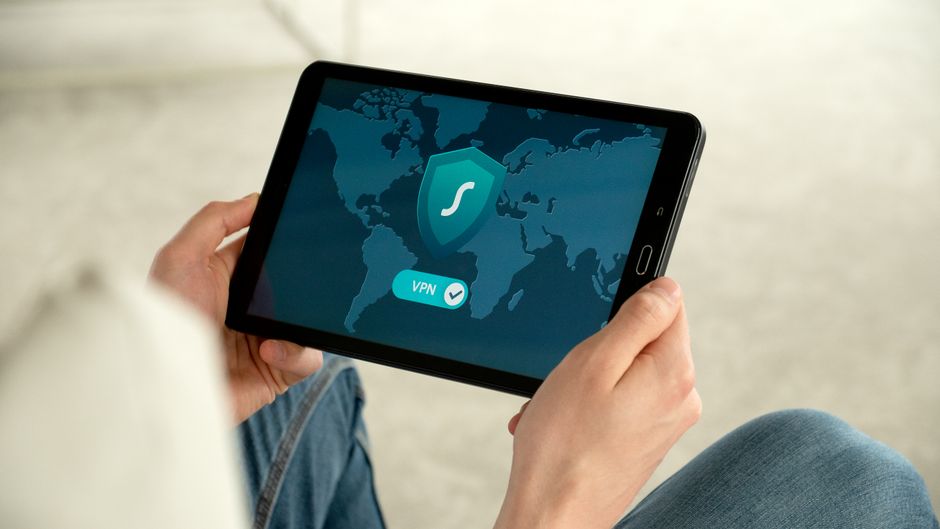
A VPN's role in mitigating social media tracking primarily revolves around obscuring your network-level identity and encrypting your traffic. When you connect to social media platforms through a VPN, your true IP address is masked, and the platform sees the IP address of the VPN server instead. This makes it harder for the platform to correlate your activity with your real geographical location and potentially with other online activities that might be tied to your actual IP. The encryption provided by the VPN also ensures that your internet service provider (ISP) cannot snoop on your traffic to and from social media sites. While your ISP might see that you're connecting to a VPN server, they won't be able to discern that you're specifically interacting with Facebook, Instagram, or X, thereby preventing them from collecting and potentially selling that specific aspect of your browsing data. This is particularly useful for users who want to prevent their ISP from building a profile based on their social media usage patterns, offering a vital layer of network privacy.
However, it is absolutely crucial to understand the limitations of a VPN in the context of social media. A VPN does not prevent social media companies from tracking your activity *once you are logged into your account*. If you are logged into Facebook, Facebook will still track every like, comment, share, and page view, regardless of whether you are using a VPN. The VPN protects your connection *to* Facebook, but it doesn't change what you *do* on the platform while logged in. Similarly, a VPN won't stop facial recognition software from analyzing photos you upload, or prevent the platform's algorithms from analyzing your interactions to build a profile. Therefore, to truly enhance privacy on social media, a VPN must be combined with active user choices: limiting the information you share, adjusting privacy settings on the platforms themselves, being judicious about connecting third-party apps, and considering the use of privacy-focused browser extensions that block social media tracking pixels on other websites. A VPN is an essential tool for providing network anonymity and encrypting your connection, making it harder for external parties to see your social media activity. But for controlling what social media platforms themselves collect about you, active management of your profile and conscious online behavior remain the most powerful defenses against their algorithmic stranglehold.
Reclaiming Your Digital Footprint Practical Steps to Bolster Your Privacy
Navigating the treacherous waters of online tracking can feel overwhelming, like an endless battle against unseen forces. But the good news is that you are not powerless. While complete anonymity in our hyper-connected world might be an elusive ideal, you can significantly reduce your digital footprint and reclaim a substantial degree of control over your personal data. The key is adopting a multi-layered approach, recognizing that no single tool or trick will solve all privacy problems, but a combination of smart choices and robust tools can build a formidable defense against the pervasive gaze of the internet. Think of it as constructing a digital fortress, brick by brick, each step adding a new layer of protection and making it exponentially harder for trackers to penetrate your privacy.
The cornerstone of this digital defense, as we've explored, is a high-quality Virtual Private Network. Choosing a reputable VPN provider that adheres to a strict "no-logs" policy is paramount. Look for providers with a proven track record, audited no-logs policies, strong encryption protocols (like OpenVPN or WireGuard), and a wide selection of servers. Once chosen, make it a habit to use your VPN consistently, especially when connecting to public Wi-Fi networks where your data is particularly vulnerable. Consider enabling the "kill switch" feature, which automatically disconnects your internet if the VPN connection drops, preventing accidental data leaks. For advanced users, configuring a VPN on your home router can protect all devices on your network, including smart devices that don't have native VPN support, effectively encrypting all outbound traffic from your home and masking your entire network's IP address. This single step alone will significantly obscure your online activities from your ISP and many third-party trackers, providing an immediate and substantial boost to your overall privacy posture.
Beyond a VPN, hardening your browser settings is another critical step. Ditch privacy-invasive browsers like Chrome, which is notoriously data-hungry, in favor of privacy-focused alternatives such as Mozilla Firefox (with enhanced tracking protection enabled) or Brave Browser (which has built-in ad and tracker blocking). Complement this with powerful browser extensions like uBlock Origin (for ad and tracker blocking), Privacy Badger (which learns and blocks trackers), and Decentraleyes (which protects against CDN tracking). Regularly clear your browser's cookies and cache, or configure your browser to do so automatically upon exit. Remember that "incognito" or "private" mode only prevents your browser from saving your history and cookies locally; it does not protect you from websites or ISPs tracking your activity. Additionally, consider using privacy-focused search engines like DuckDuckGo or Startpage, which do not track your searches or build profiles based on your queries, providing a much more anonymous search experience than their mainstream counterparts.
Your operating system and individual apps are also significant vectors for data collection. Take the time to meticulously review and adjust the privacy settings on your smartphone (iOS or Android) and computer (Windows, macOS). Pay close attention to app permissions, especially those requesting access to your location, microphone, camera, or contacts. Revoke permissions for any app that doesn't genuinely need them for its core functionality. On mobile devices, disable location services when not actively needed, and be wary of apps that demand "always allow" location access. For Windows users, dive into the privacy settings to limit diagnostic data collection and advertising IDs. On macOS, review privacy settings related to analytics and app usage. This diligent review of settings can significantly reduce the amount of personal data your devices are passively collecting and transmitting to app developers and operating system providers.
Email privacy is another often-overlooked area. Traditional email services like Gmail, while convenient, scan your emails for keywords to serve targeted ads and build profiles. Consider migrating to end-to-end encrypted email services such as ProtonMail or Tutanota, which ensure that only you and your intended recipient can read your messages. Be mindful of email tracking pixels, tiny, invisible images embedded in emails that inform senders when you open an email, your IP address, and even your approximate location. Many email clients and browser extensions can block these trackers. Furthermore, adopt strong password hygiene: use unique, complex passwords for every account, generated by a reputable password manager, and enable two-factor authentication (2FA) wherever possible. This adds a critical layer of security, making it much harder for malicious actors to gain access to your accounts even if your password is compromised.
Finally, cultivate a mindset of skepticism and intentionality in your online interactions. Before signing up for a new service or downloading an app, ask yourself if it's truly necessary and what data it might be collecting. Read privacy policies (or at least skim for red flags) and be judicious about what personal information you share on social media or online forms. Minimize your digital footprint by deleting old accounts you no longer use. Understand that "free" online services almost always come at the cost of your data. While a VPN is an indispensable tool for encrypting your traffic and masking your IP, it's not a panacea. It works best as part of a broader strategy of informed choices, diligent configuration, and a continuous commitment to digital hygiene. By combining a robust VPN with privacy-focused browsers, judicious app permissions, secure email, and strong password practices, you can effectively build a formidable shield against the internet's watchful eye, allowing you to navigate the digital world with greater confidence and, crucially, with a renewed sense of personal autonomy.