Imagine for a moment that every single detail of your life, from the mundane to the deeply personal, has been meticulously cataloged, analyzed, and then offered up for sale to the highest bidder. We're talking about your morning coffee preference, the routes you take to work, your political leanings, your health concerns, the brands you favor, your income bracket, whether you're a pet owner, a new parent, or even struggling with a specific medical condition. It’s not some dystopian science fiction novel; it’s the invisible reality orchestrated by an industry that thrives in the shadows, an industry so pervasive it touches nearly every aspect of our modern existence without us ever truly seeing it. This isn't just about targeted advertisements popping up on your social media feed; it's about a vast, intricate web of data brokers quietly assembling comprehensive dossiers on you, me, and billions of others, turning our digital footprints into profitable commodities. They are the unseen puppeteers, pulling strings we didn't even know existed, shaping our experiences, influencing our choices, and often, without our explicit consent or even our awareness.
For over a decade, navigating the complex currents of cybersecurity, online privacy, and network security has been my professional lifeblood, and what I’ve witnessed regarding the data broker industry is nothing short of alarming. It’s an ecosystem built on the premise that information about you is not yours alone, but rather a valuable resource to be harvested, processed, and traded. These entities operate in a largely unregulated space, scooping up snippets of data from countless sources – your social media activity, your online purchases, the apps on your phone, public records, loyalty programs, even your smart home devices – and then meticulously stitching them together. The result is a 'digital twin' of you, an algorithmic ghost that often knows more about your habits, desires, and vulnerabilities than some of your closest friends or family members. Understanding this invisible net is the first crucial step towards reclaiming some semblance of control over our digital lives, because until we acknowledge the extent of their reach, we remain unwitting participants in a game where the rules are stacked heavily against us.
The Unseen Puppeteers of Your Digital Life
The concept of data brokers often sounds like something out of a spy thriller, but the reality is far more mundane and, perhaps, more insidious. These companies, often operating with little public scrutiny, are the backbone of the modern information economy. They are not household names like Google or Facebook, yet their influence is just as profound, if not more so, because their business model revolves solely around the collection, aggregation, analysis, and sale of personal information. Think of them as the wholesalers of personal data, acquiring vast quantities from a multitude of sources, refining it, packaging it into specific categories, and then selling it to anyone willing to pay – marketers, advertisers, financial institutions, political campaigns, insurance companies, and even government agencies. Their primary goal is to build the most comprehensive and accurate profiles of individuals possible, predicting everything from your likelihood to buy a specific car to your susceptibility to certain health conditions, all without ever directly interacting with you.
The sheer scale of this industry is staggering, with estimates placing its global value in the hundreds of billions of dollars annually. It’s a market driven by the insatiable demand for granular insights into consumer behavior, fueled by the promise of hyper-targeted advertising and personalized services. But beneath this veneer of convenience and efficiency lies a profound erosion of privacy. Every click, every search, every purchase, every location ping from your smartphone, every public record – it all contributes to the ever-expanding data sets that these brokers amass. They don't just collect what you explicitly share; they infer, deduce, and predict based on patterns and correlations. For instance, if you frequently visit websites about home renovations and then suddenly start looking at baby products, a data broker's algorithm might deduce that you're expecting a child and then categorize you as a "new parent" or "prospective parent," selling that information to companies marketing diapers, strollers, or educational toys. This inferential power is where their true influence lies, allowing them to paint a picture of your life that you might not even fully recognize, let alone consent to.
Why should any of this matter to the average person, beyond the occasional annoyance of a hyper-relevant ad? The implications extend far beyond mere marketing. These meticulously crafted profiles can influence the interest rates you're offered on a loan, the premiums you pay for insurance, whether you're approved for certain services, or even the types of political messages you receive. Imagine applying for life insurance, only for the company to access a data broker's profile suggesting you frequent fast-food restaurants, spend significant time at specific medical clinics, or have a history of online searches related to chronic illnesses. Even if these inferences are incorrect or based on incomplete data, they can subtly, or overtly, impact the terms you are offered. It’s a subtle form of digital redlining, where your perceived risk or value is determined by algorithms fed with data you never directly provided. The opacity of this process makes it incredibly difficult to challenge, leaving individuals with little recourse when decisions are made about them based on information they can’t see or verify.
The Silent Trade of Your Identity
The genesis of the data broker industry isn't a new phenomenon; credit bureaus like Experian, Equifax, and TransUnion have been collecting financial data for decades. However, the digital revolution has dramatically expanded the scope and velocity of data collection, moving far beyond mere creditworthiness. Today’s data brokers operate in an environment where nearly every online interaction leaves a trace, and even offline activities are increasingly digitized and logged. This exponential growth in data availability has given rise to a new breed of information giants, some of whom you may never have heard of, yet they possess an astounding amount of information about you. Companies like Acxiom, Epsilon, Oracle Data Cloud (formerly Datalogix), and LiveRamp are just a few of the behemoths that form the bedrock of this invisible economy, each boasting databases containing billions of consumer records, often with thousands of attributes per individual.
Consider the sheer volume and granularity of the data points they collect. It’s not just your name, address, and phone number. It encompasses your age, gender, marital status, number of children, education level, occupation, income, home ownership status, vehicle make and model, political affiliation, religious beliefs, hobbies, interests, health conditions (inferred or explicit), online browsing history, purchase history (both online and offline), social media activity, app usage, location data, and even your predicted susceptibility to certain marketing messages. They categorize you into segments like "Bargain Hunters," "Health-Conscious Consumers," "Diabetics," "Frequent Travelers," "Gamblers," or "Credit Card Churners." These aren't just broad demographic buckets; they are incredibly specific, often predictive profiles designed to identify your vulnerabilities, aspirations, and spending habits with unnerving accuracy. The more data points they acquire and cross-reference, the sharper and more valuable your digital profile becomes, fueling a continuous cycle of collection and sale.
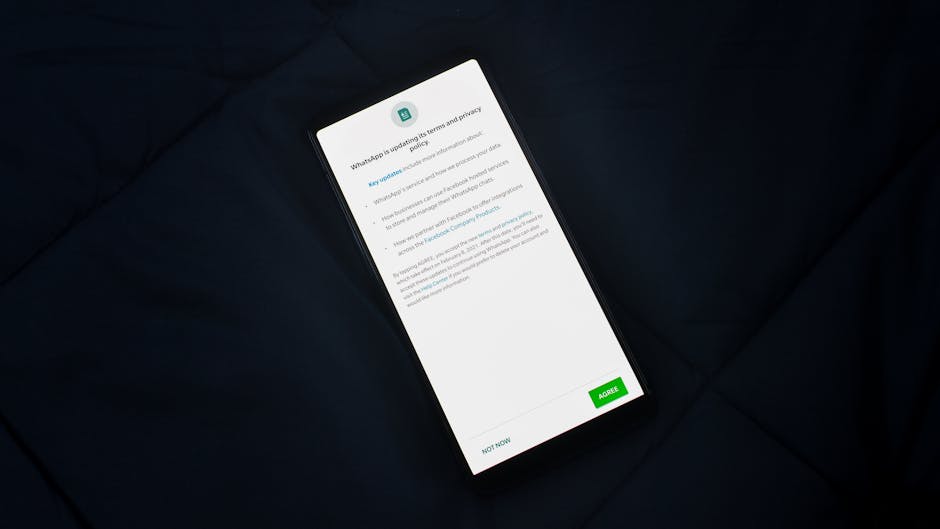
The critical element that makes this trade so insidious is the lack of transparency and consent. Unlike a direct interaction where you might knowingly share information with a company, data brokers often collect data indirectly, through third parties, or by leveraging public records. When you agree to a website's terms and conditions, often buried in legalese, you might inadvertently grant permission for your data to be shared with "partners" or "affiliates" – a vague term that often includes data brokers. The data then flows through a complex network of exchanges, aggregators, and resellers, making it nearly impossible to trace its origin or understand its ultimate destination. This opaqueness is intentional, allowing these companies to operate largely outside the purview of individual control, treating personal information as a commodity, detached from the person it represents. It's a digital Wild West, where information is gold, and the prospectors are constantly digging, often without a thought for the privacy rights of those whose lives they are mining.