The Silent Spies in Your Pocket Permitted to Pillage Your Private Life
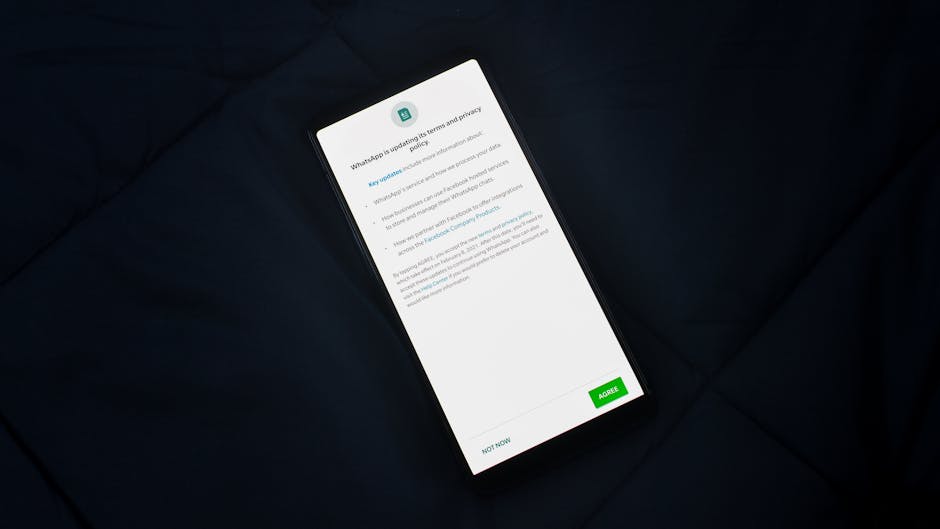
Let’s talk specifics, shall we? When you install an app, especially on an Android device, you’re often presented with a list of permissions. On iOS, this process is slightly more granular and often happens when the app first attempts to access a specific resource, but the underlying mechanisms are similar. These permissions are the digital keys you hand over, granting the app access to various parts of your device and, by extension, your life. The problem is, most of us, myself included at times, simply tap "Allow" without truly understanding the implications. We're in a hurry, we want the app to work, and we trust that the developers aren't asking for anything truly nefarious. But the requests can be startlingly broad and often have little to do with the app's core functionality. Why, for instance, does a simple flashlight app need access to your camera, microphone, and location? Why does a casual game require permission to read your contacts or call logs? These aren't rhetorical questions; they point to a deliberate strategy of over-permissioning, designed to maximize data collection under the guise of "improving user experience" or "providing essential features." The sheer volume of data categories an app can request access to is staggering, painting a comprehensive picture of your digital and physical life that goes far beyond what any reasonable person would consider necessary for the app’s stated purpose. It's a gold rush, and your data is the precious ore.
Consider location data, for example. Many apps, from weather forecasts to social media platforms, request access to your precise location. While it’s obvious why a mapping app needs this, why does a photo editing app or a simple game demand to know your exact whereabouts at all times? The answer, invariably, lies in monetization. Your location history is incredibly valuable to advertisers and data brokers. It reveals your daily commute, where you shop, where you work, where you socialize, and even where you sleep. This information can be used to target hyper-local advertisements, build profiles of your lifestyle, or even infer your socioeconomic status. There have been numerous reports and investigations, such as the 2018 New York Times exposé, which revealed how companies were collecting and selling the precise location data of millions of Americans, often without their explicit knowledge. This data, anonymized in theory but often easily re-identifiable in practice, could track individuals from their homes to their doctor’s offices, places of worship, or even political rallies. The casual sharing of location data, once an afterthought, has become a profound privacy risk, turning every movement into a data point for sale.
The Eavesdropping Ear and the All-Seeing Eye
Beyond location, the permissions that grant access to your device’s microphone and camera are perhaps the most chilling. The idea that your phone could be listening to your conversations or capturing images of your surroundings without your knowledge is the stuff of dystopian fiction, yet it’s a very real concern. While app developers vehemently deny actively "listening" to your conversations to target ads, the permission to access the microphone is often bundled with other seemingly innocuous requests. Many apps use microphone access for features like voice search, voice commands, or even for "ambient listening" to detect specific sounds or music playing in the background, ostensibly to improve recommendations. However, the potential for misuse is enormous. In 2019, a report by The Guardian highlighted how contractors working for tech giants were listening to audio recordings from voice assistants like Amazon Alexa and Google Assistant, often capturing highly personal and private conversations. While these were specifically voice assistants, the precedent of human review of "anonymized" audio snippets is a stark reminder of the potential vulnerabilities when microphone access is granted to any app.
"The fact that so many apps request permissions far beyond what they need to function is a clear indicator that data collection is not a secondary objective; it's often the primary one." – Eva Galperin, Director of Cybersecurity at the Electronic Frontier Foundation. Her insights consistently underscore the intentionality behind excessive permission requests.
Similarly, camera access, while essential for apps like Instagram or Snapchat, is often requested by apps with no apparent need for it. Why would a QR code scanner or a note-taking app require full access to your camera? While some might argue for features like document scanning or augmented reality, the truth is that once an app has camera permission, it has the theoretical ability to activate your camera and record video or take photos at any time, potentially without any visual indicator to the user. This isn't to say every app is actively spying on you through your camera, but the capability exists, and the trust placed in developers is often blind. There have been instances where security researchers have demonstrated vulnerabilities that could allow malicious apps to surreptitiously access device cameras. For instance, in 2019, a security flaw in iOS was discovered that could allow apps to record users' screens and even access their cameras without explicit consent, highlighting that even robust operating systems can have exploitable weaknesses. The implications for personal privacy, security, and even blackmail are profound, turning our most personal devices into potential tools of surveillance against us. The casual acceptance of these permissions creates a dangerous precedent, normalizing the idea that our private spaces and moments are fair game for digital intrusion.
Unmasking the Deepest Invasions Contacts, Call Logs, and SMS
Perhaps even more invasive than location or microphone access is the request for permission to read your contacts, call logs, and SMS messages. These permissions cut straight to the heart of your social network and communication patterns. When an app accesses your contacts, it gains a treasure trove of information: names, phone numbers, email addresses, and sometimes even physical addresses of everyone you know. This data can be used to build social graphs, connect your profile to others, and expand the data broker’s network of information. Think about the implications if this data falls into the wrong hands, or is simply sold to an unethical third party. Your friends and family, who never consented to anything, suddenly have their information circulating in the data economy, all because you installed a seemingly harmless app. There have been numerous controversies surrounding apps that upload entire contact lists to their servers, often under the guise of "finding friends" or "improving recommendations," without adequately informing users or obtaining proper consent from those whose data is being uploaded.
Access to call logs and SMS messages takes this invasion a step further. While modern operating systems like Android have become stricter about granting these permissions, older versions or apps that exploit loopholes can still gain access. Imagine an app knowing precisely who you call, when you call them, how long you talk, and even the content of your text messages. This isn't just about targeted advertising; it's about building an incredibly detailed psychological profile, understanding your relationships, your habits, and your vulnerabilities. This kind of data is invaluable for everything from identity theft to sophisticated phishing attempts, and even for influencing political discourse by understanding communication networks. In 2018, Google faced scrutiny when it was revealed that third-party developers had access to Gmail user data, including the content of emails, if users had granted certain permissions. While this wasn't directly a mobile app issue, it underscored the broader problem of granting broad access to sensitive communication data. The "convenience" offered by apps that promise to organize your messages or personalize your calls comes with the significant risk that your most private communications are being silently monitored, analyzed, and potentially sold to anyone willing to pay. The cumulative effect of these various data points creates a digital footprint so comprehensive that it becomes a permanent, uneditable record of your life, accessible and exploitable by an ever-growing number of entities.