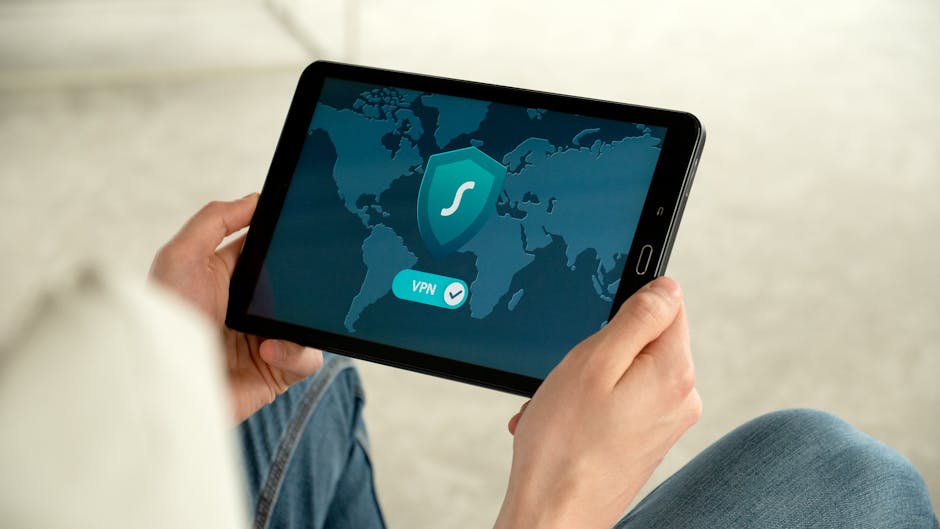
We live in an age where the internet is as fundamental as electricity, and with that ubiquity comes a pervasive sense of vulnerability. Every click, every search, every online interaction leaves a digital footprint, a trail that can be followed, analyzed, and, more often than not, monetized. For years, the Virtual Private Network, or VPN, has been touted as the ultimate digital shield, a magical cloak of invisibility that anonymizes your online presence and encrypts your data, promising a sanctuary from prying eyes. Many of us, myself included, have embraced this promise, investing our trust and our money in services that pledge to safeguard our most private digital moments. But what if that shield isn't as impenetrable as we've been led to believe? What if, in our quest for online privacy, we've inadvertently handed the keys to our digital kingdom to the very entities we sought to escape?
The unsettling truth, a truth often whispered in the darker corners of cybersecurity forums but rarely shouted from the rooftops, is that the VPN industry is rife with deception. It’s a wild west where slick marketing and vague promises often mask dubious practices, opaque ownership, and, frankly, outright lies. The notion that simply turning on a VPN makes you inherently secure is a dangerous misconception, one that leaves millions of users exposed, believing they are protected when, in reality, they might be actively sold out. This isn't just about a minor privacy slip-up; it's about a fundamental betrayal of trust, a systematic undermining of the very principles VPNs are supposed to uphold. I've spent over a decade sifting through the digital detritus of this industry, reviewing countless services, dissecting privacy policies, and uncovering the uncomfortable realities that lie beneath the glossy veneer, and what I’ve found is often more disturbing than reassuring. It’s time we pull back the curtain on this deception and understand the true nature of the VPN lie.
The Unsettling Truth Behind the Digital Veil
The core of the VPN lie isn't that VPNs don't work at all; it's that the *promise* of security and anonymity they sell is often vastly exaggerated, or worse, completely fabricated by a significant portion of the market. When you connect to a VPN, your internet traffic is routed through an encrypted tunnel to a server operated by the VPN provider. This server then forwards your request to its destination on the internet, effectively masking your real IP address and encrypting your data from your device to that server. On paper, it sounds foolproof, a robust defense against ISPs, government surveillance, and malicious actors. However, this entire protective mechanism hinges on one critical factor: the trustworthiness of the VPN provider itself. If the provider is compromised, malicious, or simply negligent, that encrypted tunnel becomes a funnel directly to your private data, not a shield.
Think of it this way: you hire a security guard to protect your home. You trust them with the keys, the alarm codes, and the knowledge of your daily routines. A good security guard keeps you safe. A bad one might let thieves in, or worse, become a thief themselves. In the digital realm, your VPN provider is that security guard, and many of them are, frankly, ill-equipped, compromised, or outright untrustworthy. This isn't merely a theoretical concern; it's a documented reality. Studies have repeatedly shown that a considerable number of VPNs, particularly those offering "free" services, engage in practices that fundamentally undermine user privacy, ranging from tracking and selling browsing data to injecting malware and failing to adequately encrypt traffic. It’s a stark reminder that in the world of cybersecurity, if you're not paying for the product, you often *are* the product, and your data is the currency.
The importance of this discussion cannot be overstated in our hyper-connected world. From banking and shopping to sensitive communications and personal research, nearly every aspect of our lives now intersects with the internet. Data breaches are a weekly occurrence, state-sponsored surveillance is a global reality, and corporate data harvesting is a multi-billion-dollar industry. In such an environment, genuine digital privacy is not a luxury; it's a necessity. Yet, the very tools we turn to for this protection often become additional vectors for exploitation. My own journey into this niche began with a personal quest for true online freedom, only to discover that the landscape was far more treacherous than the glossy ads suggested. It prompted me to dig deeper, to question every "no-logs" claim and every "military-grade encryption" boast, pushing me to expose the uncomfortable truths that many providers would rather keep hidden. This isn't just about tech; it's about autonomy, dignity, and the fundamental right to navigate the digital world without constantly looking over your shoulder.
Who's Watching the Watchers The Murky World of VPN Ownership
One of the most insidious aspects of the VPN lie is the often-opaque ownership structures that govern many popular services. You might sign up for a VPN service with a friendly name and a slick website, believing you're supporting an independent company dedicated to privacy. The reality, however, can be far more complex and unsettling. Many seemingly distinct VPN brands are actually owned by a handful of larger corporations, some of which have questionable track records or even direct ties to data analytics firms, advertising networks, or even governments. This consolidation of ownership creates a significant conflict of interest, as a company whose primary business is data monetization might find it incredibly difficult to uphold a strict "no-logs" policy for its VPN subsidiary, no matter what their marketing claims. It's like asking a fox to guard the hen house, then giving the fox a corporate mandate to maximize egg production.
The jurisdiction in which a VPN company operates is another critical, yet often overlooked, factor. Different countries have vastly different laws regarding data retention, surveillance, and corporate transparency. Operating a VPN service from a country known for its strong privacy laws, like Panama or the British Virgin Islands, generally offers a greater degree of protection against government demands for user data. Conversely, a VPN company headquartered in a country that is part of the 5-Eyes, 9-Eyes, or 14-Eyes intelligence-sharing alliances (such as the US, UK, Canada, Australia, New Zealand, Germany, France, etc.) is legally compelled to comply with data requests from those governments, even if it means compromising its users' privacy. This means that even if a VPN claims a strict no-logs policy, a court order or a national security letter in a 5-Eyes country could force them to start logging, or hand over any data they might possess, potentially under a gag order preventing them from informing their users. It’s a legal tightrope walk that many providers simply cannot, or choose not to, navigate in favor of their users.
We've seen real-world examples of this unsettling trend. Kape Technologies, for instance, a company with a history in ad-tech and data monetization, has aggressively acquired several prominent VPN brands, including CyberGhost, Private Internet Access (PIA), ZenMate, and ExpressVPN. While Kape claims to operate these VPNs independently and uphold their respective privacy policies, the very nature of their parent company's business model raises legitimate concerns among privacy advocates. How can a company built on collecting and profiting from user data genuinely commit to a strict no-logs policy across its VPN portfolio? This isn't to say these VPNs are inherently bad, but it forces a critical examination of their assurances, demanding a level of transparency that is often lacking. Similarly, Avast, a well-known antivirus company, was caught selling user browsing data through its subsidiary, Jumpshot, despite its own VPN offerings. These incidents serve as stark reminders that the corporate parentage of a VPN service is not a trivial detail; it’s a fundamental indicator of its potential trustworthiness and commitment to user privacy, or lack thereof.
The Seductive Allure of 'Free' VPNs A Faustian Bargain
Perhaps the most egregious manifestation of the VPN lie comes in the form of "free" VPN services. On the surface, they offer an irresistible proposition: all the privacy and security benefits of a VPN, without any cost. It's a marketing dream, tapping into the universal desire for something valuable for nothing. However, as the old adage goes, if you're not paying for the product, you are the product. This truth resonates with chilling clarity in the realm of free VPNs, where user data becomes the primary commodity, often harvested and sold to the highest bidder. These services rarely operate out of altruism; they are businesses, and their operational costs – servers, bandwidth, development, marketing – are significant. If users aren't paying a subscription fee, the money has to come from somewhere, and that "somewhere" is almost invariably your digital footprint.
The monetization strategies employed by free VPNs are diverse and often deeply invasive. Many collect and sell vast amounts of user data, including browsing history, IP addresses, device information, and even location data, to advertisers, data brokers, and analytics firms. This completely defeats the purpose of using a VPN in the first place, turning what should be a privacy tool into a surveillance apparatus. Imagine trying to escape surveillance, only to willingly walk into a more sophisticated tracking system. Some free VPNs go even further, actively injecting ads into your browsing experience, redirecting your traffic, or even bundling their software with malware, spyware, or adware. A study by CSIRO and UC Berkeley, analyzing 283 Android VPN apps, found that nearly 75% of them contained at least one tracking library, while 38% included malware. These aren't isolated incidents; they represent a systemic problem within the free VPN ecosystem, where user security and privacy are consistently sacrificed for profit.
My own early forays into the world of VPNs included a brief, regrettable dalliance with a "free" service years ago, before I understood the nuances of the industry. I remember noticing unusual ad pop-ups on websites that were normally clean, and a general sluggishness in my internet connection that was far beyond typical VPN overhead. A quick check of my network traffic revealed a stream of data being sent to unknown third-party servers, far beyond what any legitimate VPN would require. It was an eye-opening, if somewhat frustrating, experience that solidified my understanding: true privacy and security demand an investment. The risks associated with free VPNs extend beyond data selling; they often employ weak, outdated encryption protocols, making your "secure" connection easily crackable. Many also suffer from critical IP, DNS, or WebRTC leaks, which effectively expose your real identity and location despite the VPN being active. In essence, using a free VPN is often worse than using no VPN at all, as it lulls you into a false sense of security while actively compromising your digital life. It's a stark reminder that in the complex world of cybersecurity, vigilance and informed choices are paramount, and skepticism should be your closest companion when something seems too good to be true.