The digital world, for all its wonders, is also a vast, often unforgiving landscape where vigilance is not merely a virtue but a necessity for survival. As we delve deeper into the common habits that inadvertently expose us to significant risks, it becomes clear that many of these behaviors stem from a place of trust or, more accurately, a lack of critical skepticism. We’re accustomed to a certain level of convenience and immediacy online, which often overrides our innate caution, transforming us from discerning users into unwitting participants in our own compromise. The subtle ways in which our daily routines are exploited are a testament to the ingenuity of cybercriminals, who meticulously study human behavior to craft increasingly convincing traps. It's a psychological battle as much as a technological one, and understanding the nuances of these traps is the first step toward disarming them.
The Click-Happy Reflex Falling for the Digital Bait
Imagine a brightly colored, irresistible piece of bait dangling just within reach. Most of us, if we were fish, would probably take a bite. In the digital world, that bait comes in the form of a compelling email, an urgent-looking text message, or a seemingly innocuous link on social media. This is the domain of phishing, and our "click-happy reflex" is one of the most dangerous habits we’ve collectively developed. Phishing isn't a new threat, but it has evolved with astonishing sophistication, moving far beyond crude grammar errors and obvious scams. Today's phishing attacks are meticulously crafted, often impersonating trusted institutions, colleagues, or even friends, making them incredibly difficult to distinguish from legitimate communications. The moment you click that link or open that attachment, you might be unleashing malware, revealing sensitive information, or granting access to your accounts, all without realizing it until it’s far too late.
The psychological manipulation behind successful phishing campaigns is fascinating and terrifying. Attackers exploit fundamental human emotions: fear, urgency, curiosity, greed, and even helpfulness. An email claiming your bank account has been frozen, a package delivery notification requiring you to update your address, a message from your boss asking for immediate action, or an enticing offer for a free gift – these are all designed to bypass your critical thinking and trigger an immediate, emotional response. The goal is to get you to act before you have a chance to scrutinize the message's legitimacy. According to a report by Proofpoint, 83% of organizations experienced phishing attacks in 2021, and the human element remains the weakest link. It only takes one successful click, one momentary lapse in judgment, to compromise an entire system or personal digital life.
I recall a particularly cunning phishing attempt that targeted employees of a tech company I was consulting for. The email appeared to come from the CEO, urgently requesting a list of employee payroll information for an "urgent audit." The sender's email address was subtly spoofed, differing by just one letter from the actual CEO's domain. The tone was authoritative and stressed the importance of immediate compliance. Thankfully, one sharp-eyed employee noticed the slight discrepancy in the email address and reported it, preventing a potentially massive data breach. This wasn't a random, generic scam; it was a highly targeted "spear phishing" attack, designed to exploit trust and authority within a specific organization. Such attacks demonstrate that even with robust technical defenses, human vigilance is paramount. The habit of blindly trusting sender names or rushing to respond to urgent requests is a critical vulnerability that cybercriminals exploit with increasing precision.
Beyond email, phishing has proliferated across all digital communication channels. "Smishing" (SMS phishing) uses text messages to trick you, often with links to fake login pages for banks or delivery services. "Vishing" (voice phishing) involves phone calls from scammers impersonating support staff or government officials, attempting to extract personal information. Even social media platforms are rife with phishing attempts, disguised as tempting offers, fake news articles, or messages from compromised accounts of your friends. The common thread is always the same: a carefully constructed lure designed to elicit a quick, unthinking response. Breaking the "click-happy reflex" means cultivating a habit of extreme skepticism for every unsolicited communication, verifying legitimacy through independent channels, and understanding that if something seems too good to be true, or too urgent to be real, it almost certainly is.
The Social Media Spotlight Giving Away Too Much
Social media has become an indispensable part of modern life, a digital town square where we connect, share, and express ourselves. Yet, this very openness, this habit of sharing intimate details of our lives, often without a second thought, constitutes a colossal cybersecurity trap. From vacation photos to relationship statuses, check-ins at restaurants, and even mundane updates about our daily routines, we're constantly broadcasting information that, in the wrong hands, can be pieced together to form a highly detailed profile usable for social engineering, identity theft, or even physical security threats. It's the digital equivalent of leaving your diary open on a park bench for anyone to read, then being surprised when strangers know your deepest secrets.
The danger lies in the cumulative effect of seemingly harmless pieces of information. A photo of your child's birthday cake might reveal their full name and date of birth. A geotagged picture of your new car might disclose your home address and a valuable asset. A post about your upcoming vacation alerts potential burglars that your house will be empty. Cybercriminals meticulously scour social media profiles for these nuggets of information. They use them to answer security questions, craft highly personalized phishing emails, or even impersonate you to gain access to other accounts. The more data points they gather, the more convincing their scams become, eroding your digital defenses from the inside out. This isn't just about privacy; it's about the weaponization of personal data, often willingly provided by the users themselves.
Consider the case of a prominent tech executive whose social media profiles were surprisingly public. He routinely posted pictures of his family, including his children's names and ages, their school events, and even details about his favorite sports teams. While seemingly innocent, this trove of information became a goldmine for an attacker. The criminal didn't try to hack his accounts directly. Instead, they used the publicly available data to call the executive's mobile provider, impersonating him with enough verifiable information (birthdate, mother's maiden name, favorite sports team – all gleaned from social media) to convince customer service to port his phone number to a new SIM card under their control. This "SIM swapping" attack gave the criminals control over his phone number, which was tied to his multi-factor authentication for banking, email, and cryptocurrency accounts. Within hours, his digital life was plundered, not through sophisticated hacking, but through simple social engineering enabled by his own oversharing.
The habit of oversharing extends beyond explicit posts. Our privacy settings, often complex and confusing, are frequently left at their default, most permissive levels. We accept friend requests from strangers, participate in quizzes that ask for deeply personal information ("What's your spirit animal based on your first pet's name and your mother's favorite color?"), and link third-party apps to our profiles without scrutinizing the permissions we grant. Each of these actions, however small, expands our digital footprint and provides more fodder for those with malicious intent. It’s a constant trade-off between connection and security, and for many, the allure of connection outweighs the perceived, often abstract, risk. Breaking this habit requires a conscious effort to audit our online presence, understand our privacy settings, and adopt a "less is more" philosophy when it comes to sharing our lives with the wider digital world.
The Public Wi-Fi Gamble Broadcasting Your Life
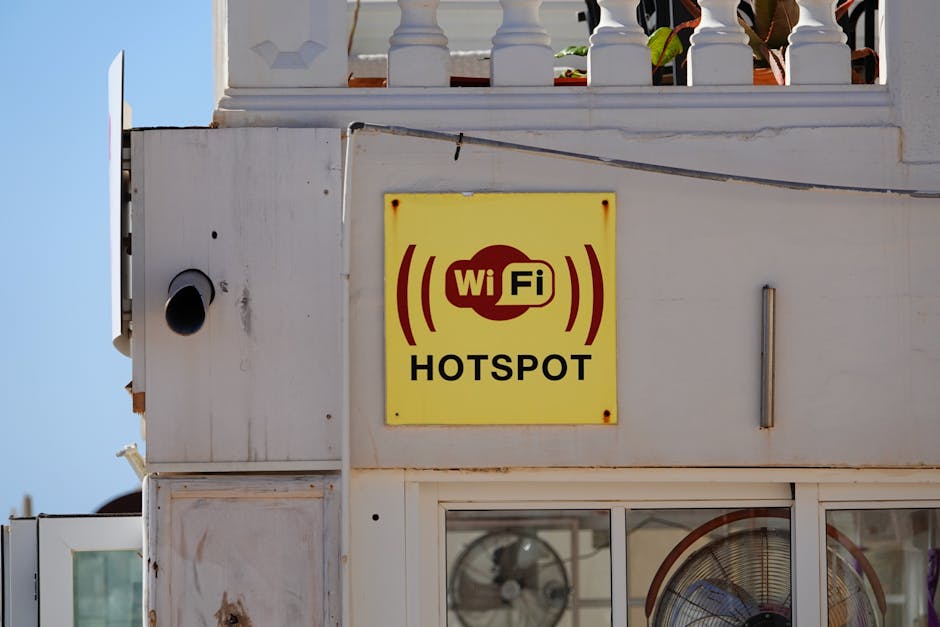
The allure of free, ubiquitous public Wi-Fi is undeniable. Whether you're at a coffee shop, an airport, a hotel, or even a local library, the convenience of connecting to the internet without burning through your mobile data plan is a powerful draw. Yet, this widespread habit of indiscriminately connecting to public Wi-Fi networks is a monumental cybersecurity trap, one that many users walk into daily without a second thought. It's the digital equivalent of having a private conversation in the middle of a bustling public square, assuming no one is listening, when in reality, anyone with the right tools can eavesdrop on your every word, or in this case, your every byte of data.
The fundamental problem with most public Wi-Fi networks is their inherent lack of security and encryption. Unlike your home network, which you (hopefully) secure with a strong password and WPA2/WPA3 encryption, public networks are often open or use weak, shared passwords. This means that any data you send or receive over these networks can be intercepted by anyone else connected to the same network. This is not some far-fetched, Hollywood-esque hacking scenario; it's a very real and relatively simple attack known as a "Man-in-the-Middle" (MitM) attack. A malicious actor can set up a fake Wi-Fi hotspot that looks legitimate (e.g., "Airport_Free_Wi-Fi") or simply monitor traffic on a genuine but unsecured public network, capturing everything from your browsing history to your login credentials for various services. Without encryption, your sensitive information is broadcast in plain text, ripe for the taking.
I distinctly remember an incident during a conference where I decided to do a quick, impromptu demonstration of public Wi-Fi vulnerability. I connected my laptop to the hotel's "free public Wi-Fi" and, using readily available network analysis tools, within minutes I could see the unencrypted traffic of other users on the same network. I wasn't trying to hack anyone; I was merely observing. I could see the websites people were visiting, the images they were loading, and in some cases, even fragments of their login attempts if they were using unencrypted HTTP sites. It was a sobering visual representation of just how exposed users are. Imagine someone logging into their banking app or checking their work email on such a network without a VPN. Their username and password, if the site isn't fully HTTPS protected, could be captured and used against them later. This isn't theoretical; it’s a constant, pervasive risk that many simply choose to ignore for the sake of convenience.
Beyond direct interception, public Wi-Fi poses other threats. Rogue access points are easily set up by attackers to mimic legitimate networks, tricking users into connecting to them. Once connected, the attacker has complete control over your internet traffic, potentially redirecting you to fake websites, injecting malware, or stealing your data. Furthermore, some public Wi-Fi providers themselves might collect and sell your browsing data, blurring the lines between security risk and privacy invasion. The habit of connecting to any available public Wi-Fi without a second thought or, crucially, without the protective layer of a Virtual Private Network (VPN), is a gamble with your digital safety. A VPN encrypts your internet traffic, creating a secure tunnel between your device and a VPN server, effectively shielding your data from prying eyes, even on the most unsecured public networks. It's an essential tool, not a luxury, for anyone who values their privacy and security in an increasingly connected world.