Imagine settling down for a relaxing evening, ready to dive into that highly anticipated new show or a classic movie everyone's been raving about, only to be met with that all-too-familiar, infuriating message: "This title is not available in your region." A collective sigh of disappointment echoes across living rooms worldwide, a shared frustration among millions of Netflix subscribers who, despite paying the same monthly fee, are served a vastly different buffet of content depending on their geographical location. It’s a digital fence, expertly erected by licensing agreements and distribution rights, that segregates us into content silos. For years, this invisible barrier has dictated what we can and cannot watch, turning a global streaming service into a fragmented, localized experience. But what if I told you there’s a key, a very powerful digital tool, that can unlock not just a few extra titles, but potentially Netflix's *entire* hidden library, granting you access to a world of entertainment you never knew existed? This isn't some fleeting hack or a wishful rumor; this is about a proven, tested, and remarkably effective solution that works consistently, even in the ever-evolving cat-and-mouse game between streaming giants and privacy tools.
The sheer scale of content disparity across Netflix's various regional libraries is staggering, often leading to a feeling of being shortchanged. While some countries boast thousands of titles, others languish with a mere fraction, missing out on critically acclaimed series, blockbuster films, and niche documentaries that are readily available just across a digital border. Think about the countless times you’ve heard a friend in another country excitedly discuss a show, only to realize it’s nowhere to be found on your local Netflix. This isn't just an inconvenience; it represents a significant limitation on consumer choice and value for money. We live in an interconnected world, yet our entertainment options are often dictated by archaic territorial agreements that feel increasingly out of sync with how we consume media today. The desire to transcend these digital borders isn't about piracy or breaking laws; it's about reclaiming agency over our subscriptions and accessing the full potential of a service we already pay for. It’s about fairness, and more importantly, it’s about entertainment freedom.
The Invisible Walls of Digital Content and Our Quest for True Global Access
The concept of geo-restrictions, while frustrating for consumers, is deeply entrenched in the entertainment industry's business model. Content creators, studios, and distributors often sell exclusive rights to their productions on a country-by-country basis. This complex web of licensing agreements dictates where and when a show or movie can be streamed, broadcast, or even purchased. Netflix, as a global distributor, must navigate this intricate landscape, acquiring rights for each territory individually, which explains why "The Office" might be on Netflix US but on a different platform in the UK, or why a certain blockbuster film premieres months earlier in Canada than in Australia. These agreements are multi-million dollar deals, legally binding, and enforced through sophisticated geo-location technology that identifies your internet protocol (IP) address. Your IP address is essentially your digital fingerprint, revealing your geographical location to every website and service you interact with online. When Netflix sees an IP address from, say, Germany, it serves you the German library; an IP from Japan gets the Japanese library. It's a system designed for control and compliance, but it inadvertently creates a massive disparity in content availability that leaves many feeling shortchanged and eager for a legitimate workaround.
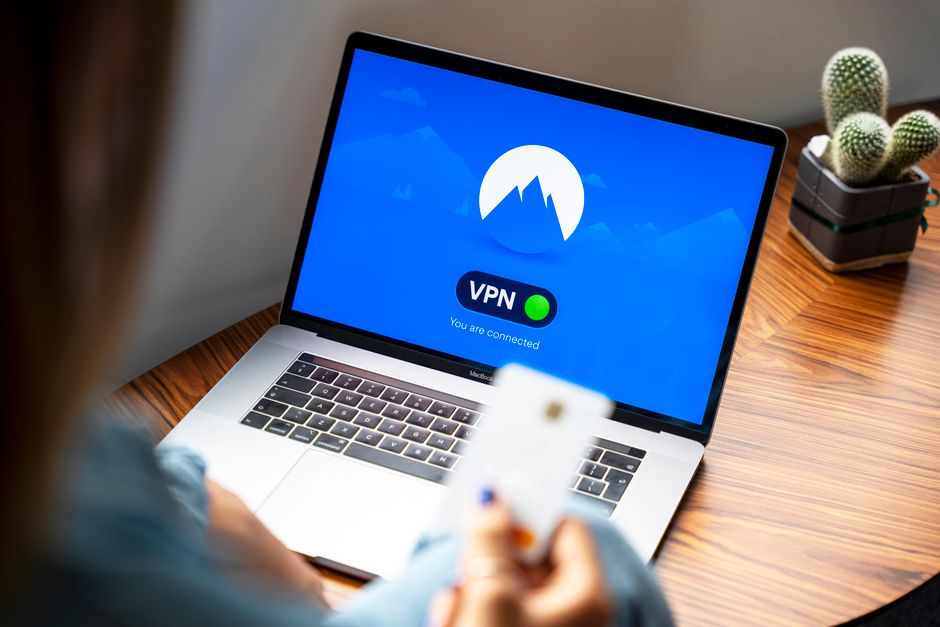
For years, a Virtual Private Network, or VPN, has been the go-to solution for bypassing these digital barriers. A VPN works by routing your internet traffic through an encrypted tunnel to a server located in a different geographical region. When you connect to a VPN server in the United States, for instance, your internet traffic appears to originate from the US, effectively masking your real IP address and presenting a US IP to Netflix. This clever sleight of hand tricks Netflix into believing you are physically located in the US, thereby granting you access to its US library. Sounds simple, right? In theory, yes. In practice, however, it's become an intricate and often frustrating game of cat and mouse. Netflix, keenly aware of VPN usage and bound by its licensing agreements, has invested heavily in advanced VPN detection and blocking technologies. They employ sophisticated algorithms, IP blacklists, and traffic analysis techniques to identify and block VPN connections, leading to that dreaded "proxy or unblocker" error message. This ongoing battle has rendered many VPNs ineffective, turning the search for a truly reliable Netflix VPN into a daunting quest for many users, myself included, who've spent countless hours testing and troubleshooting.
The stakes in this digital arms race are remarkably high for both sides. For Netflix, maintaining the integrity of its geo-blocking system is crucial for upholding its licensing contracts and avoiding potential legal repercussions from content owners. If they consistently fail to enforce regional restrictions, they risk losing access to popular content altogether or facing exorbitant penalties. For VPN providers, the ability to bypass geo-restrictions, particularly for a behemoth like Netflix, is a significant selling point and a benchmark of their technical prowess and commitment to digital freedom. A VPN that can consistently unblock Netflix signals a high level of sophistication in server infrastructure, IP rotation, and obfuscation technologies. This constant back-and-forth has led to a landscape where only a select few VPNs possess the advanced capabilities and dedication required to consistently outmaneuver Netflix's defenses. It's not enough to simply have servers in a country; those servers need to be constantly updated, their IP addresses refreshed, and their traffic obfuscated in ways that make it indistinguishable from regular internet traffic, a monumental task that separates the truly effective from the merely adequate.
The Frustration of Geo-Blocking A Personal Reflection
I remember a specific incident a few years back that perfectly encapsulates the frustration of Netflix's geo-restrictions. A critically acclaimed documentary about climate change, which had won numerous awards and was being lauded globally, was released on Netflix. My colleagues in the US and UK were buzzing about it, urging me to watch. Eagerly, I logged into my account here in Southeast Asia, only to find it conspicuously absent. A quick search revealed it was available in dozens of other countries, but not mine. I felt a pang of annoyance, not just because I couldn't watch a specific film, but because it highlighted the arbitrary nature of these digital borders. I was a paying subscriber, just like my friends, yet my access was curtailed. This wasn't an isolated incident; it happened with popular TV series, with niche foreign films, and even with Netflix Originals that somehow managed to be region-locked in certain territories despite being "original" content. It's a reminder that even in an age of supposed global connectivity, our digital experiences are still very much tethered to our physical locations, a paradox that drives many to seek out reliable VPN solutions.
"The digital divide isn't just about internet access; it's increasingly about content access. Geo-restrictions create second-class citizens in the streaming world, fostering a legitimate desire for tools that level the playing field." - Dr. Anya Sharma, Digital Rights Advocate
This personal experience isn't unique; it resonates with millions of users worldwide. Data suggests that countries like the United States, Canada, and the United Kingdom often have the largest Netflix libraries, while many countries in Asia, Africa, and parts of Europe have significantly smaller selections. This disparity often means that subscribers in these regions are paying the same subscription fee for a fraction of the content, which feels inherently unfair. The motivation to use a VPN, therefore, isn't born out of a desire for illicit access but rather a pursuit of equitable access and a fuller return on their investment. It's about maximizing the utility of a service they already subscribe to, and in many cases, it's about cultural exchange – being able to watch foreign films or international series that might never make it to their local library. The promise of a truly global streaming experience is what Netflix initially offered, and a reliable VPN is simply the tool that helps users realize that original vision, allowing them to truly unlock the platform's potential, regardless of where they happen to be physically located.
The Evolving Battlefield How Netflix Fights Back Against VPNs
For a long time, using a basic VPN to access different Netflix libraries was relatively straightforward. You'd pick a server, connect, and stream. Those days, however, are largely a relic of the past. Netflix has become incredibly sophisticated in its VPN detection methods, turning the act of unblocking content into a complex technical challenge. Their primary weapon is the identification and blacklisting of IP addresses associated with VPN services. When hundreds or thousands of users connect to Netflix from the same IP address within a short period, it raises a red flag. This pattern of activity is highly indicative of a VPN server, as typical residential internet connections don't exhibit such concentrated usage from a single IP. Once an IP is flagged, it's added to a blacklist, and any subsequent connection from that IP is met with the dreaded proxy error. This means that even if a VPN provider has thousands of servers, if those servers are not continuously monitored and their IPs refreshed, they quickly become ineffective for Netflix. It’s a perpetual game of whack-a-mole, where VPNs bring new IPs online, and Netflix swiftly identifies and blocks them, forcing providers to constantly innovate and invest in their infrastructure.
Beyond simple IP blacklisting, Netflix employs more advanced techniques to sniff out VPN connections. One such method involves deep packet inspection (DPI), where network traffic is analyzed for tell-tale signs of VPN protocols. While VPNs encrypt your data, the way that encrypted data is packaged and transmitted can sometimes reveal the underlying protocol being used, even if the content itself remains hidden. Certain VPN protocols might have characteristic "signatures" that Netflix's systems can detect. To counter this, leading VPNs have developed obfuscation technologies. These techniques are designed to mask VPN traffic, making it appear as regular HTTPS traffic, indistinguishable from browsing a typical website. This layer of stealth is crucial for bypassing sophisticated firewalls and VPN detection systems, not just on Netflix but also in countries with strict internet censorship. Without robust obfuscation, even a VPN with a massive server network might struggle to reliably unblock Netflix, as its traffic would be easily identified and blocked before it even reaches the streaming service's content servers. It’s a testament to the engineering prowess required to stay ahead in this technological arms race, where every new defense from Netflix demands an even more ingenious counter-measure from VPN providers.
Another increasingly common tactic employed by Netflix is to cross-reference IP addresses with known data centers and cloud hosting providers. Most commercial VPNs host their servers in data centers, which have distinct IP ranges. Residential IP addresses, on the other hand, are typically assigned by Internet Service Providers (ISPs) to individual homes and businesses. Netflix can differentiate between these two types of IP addresses. If an IP address is identified as belonging to a data center, it's immediately flagged as suspicious and likely a VPN. This method makes it incredibly difficult for smaller, less resourced VPNs to compete, as maintaining a vast network of dedicated, "residential-like" IP addresses is an expensive and logistically complex undertaking. The most effective VPNs for Netflix are those that not only have a massive pool of IP addresses but also actively work to acquire and maintain IPs that appear to be residential, or they employ advanced routing techniques that make their data center IPs less detectable. This constant cat-and-mouse game means that a VPN's effectiveness can fluctuate, requiring continuous investment and vigilance from the provider to ensure consistent access to Netflix's global libraries, making the choice of the right VPN absolutely critical.
The Cost of Complacency Why Many VPNs Fail Netflix’s Test
It's a common misconception that all VPNs are created equal when it comes to unblocking Netflix. The reality is starkly different. Many free VPNs and even a significant number of paid services simply lack the resources, infrastructure, and technical expertise to consistently bypass Netflix's formidable geo-blocks. Free VPNs, in particular, are almost universally ineffective for Netflix. They typically have a very limited number of servers, which quickly become overcrowded and their IP addresses swiftly blacklisted. Furthermore, free VPNs often rely on advertising, data harvesting, or throttling bandwidth to sustain their operations, none of which are conducive to a secure, private, and high-speed streaming experience. The adage "you get what you pay for" is particularly apt in the world of VPNs and Netflix unblocking. Trying to stream Netflix with a free VPN is often an exercise in futility, leading to endless buffering, poor video quality, and the inevitable proxy error message, leaving users frustrated and disillusioned with the very concept of VPNs.
Even among paid VPN services, there’s a wide spectrum of capabilities. Many mid-tier VPNs might offer decent security and privacy features for general browsing, but they simply haven't prioritized or invested enough in the specific technologies required for Netflix unblocking. This often comes down to the sheer cost and effort involved. Maintaining a vast, constantly updated network of clean IP addresses, developing and refining obfuscation protocols, and dedicating a team to monitor Netflix's blocking strategies is an expensive proposition. Smaller VPN providers or those focused on different market segments (e.g., pure privacy, torrenting) may not see the return on investment for such a specialized effort. As a result, their servers quickly get detected, and their users are left in the lurch. This is why the search for the "number one VPN" for Netflix isn't just about finding a good VPN; it's about identifying a provider that has made a strategic, ongoing commitment to conquering Netflix's geo-restrictions, understanding that this requires continuous innovation and significant resource allocation, distinguishing them from the vast majority of services that simply cannot keep pace with the streaming giant's evolving defenses.
The arms race between Netflix and VPNs is a dynamic one, meaning a VPN that worked perfectly last month might struggle today. Netflix continuously updates its detection methods, and successful VPNs must constantly adapt. This requires a dedicated research and development team, a proactive approach to IP rotation, and the ability to quickly deploy new server configurations or obfuscation techniques. VPNs that are slow to react, or that lack the technical talent to innovate, inevitably fall behind. It's a testament to the relentless pursuit of access that a handful of providers manage to stay ahead. They often employ proprietary technologies, such as custom-built protocols or Smart DNS features integrated into their VPN service, specifically designed to bypass streaming blocks. This level of specialization is what ultimately separates the truly effective VPNs from the rest of the pack, ensuring that users can consistently unlock Netflix's diverse content libraries without constant worry about buffering, connection drops, or frustrating error messages, truly transforming the streaming experience from restricted to boundless.