The Art of Deception Phishing and Social Engineering Masterpieces
While data breaches and open-source intelligence provide the raw materials for your digital ghost, phishing and social engineering are the master craftsmen who use those materials to bring the ghost to life, making it interact with you directly. These aren't the crude, easily identifiable scams of yesteryear; today's phishing attacks are sophisticated, highly personalized, and often terrifyingly effective, precisely because they leverage the detailed profiles cybercriminals have already built about you. They don't just send out a blanket email to millions hoping for a few bites; they craft bespoke messages designed to exploit your specific fears, desires, professional obligations, or personal connections. This evolution from generic email blasts to hyper-targeted spear phishing and whaling attacks represents a significant leap in the art of digital deception, turning your own information against you in a psychological battle for your credentials, your money, or your trust.
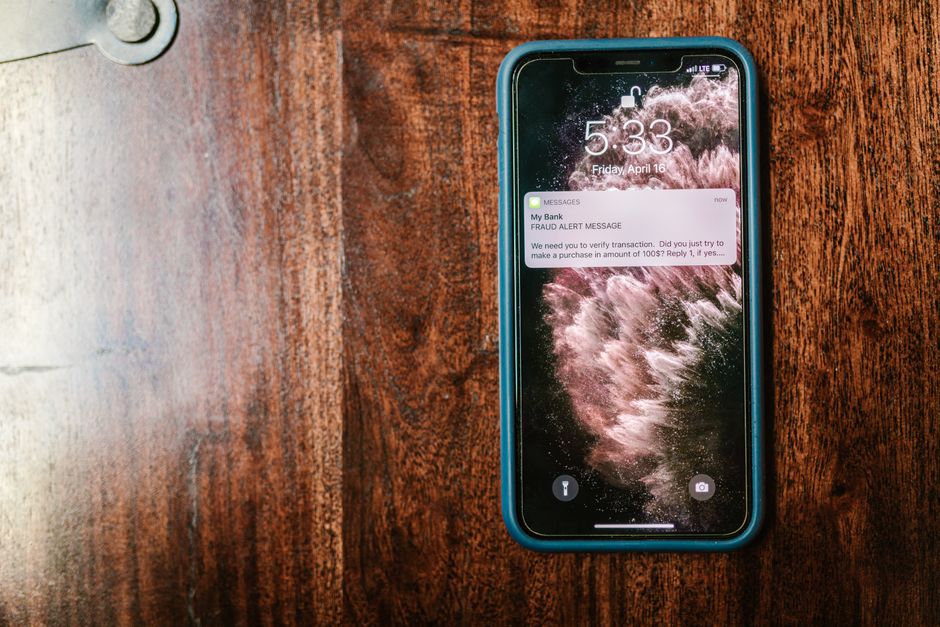
The effectiveness of modern phishing stems directly from the rich profiles assembled through other means. When a cybercriminal knows your name, your employer, your job title, who your boss is, what projects you're working on, or even your recent online purchases, they can create a phishing email that is virtually indistinguishable from a legitimate communication. Imagine receiving an email seemingly from your bank, addressing you by name, referencing a recent transaction, and asking you to "verify" your details by clicking a link. Or an email from your HR department, with your manager's name in the sender field, about an "urgent policy update" that requires you to log into a fake portal. These aren't random guesses; they are meticulously crafted pretexts, built on the foundations of your digital ghost. The email might even mimic the company's branding perfectly, using logos and formatting scraped from their official website, further eroding any suspicion you might have. The goal is to bypass your critical thinking entirely, playing on your sense of urgency, authority, or curiosity.
One particularly insidious form is "whaling," where high-value targets like CEOs or CFOs are impersonated to trick employees into making fraudulent wire transfers or revealing sensitive company data. These attacks rely on an extensive profile of the target executive, their communication style, their travel schedule, and their relationships within the company. The criminal might know the CEO is traveling and send an email to the CFO, seemingly from the CEO, urgently requesting a wire transfer for an "acquisition" or "urgent payment" that can't wait. Without the detailed profile, such an attack would be impossible. The human element is the weakest link, and social engineering expertly exploits human psychology – our innate desire to be helpful, our respect for authority, our fear of missing out, or our tendency to trust familiar names. Statistics show just how effective these tactics are: the FBI's Internet Crime Complaint Center (IC3) consistently reports business email compromise (BEC) schemes, a form of whaling, as one of the costliest cybercrimes, with billions of dollars lost annually. This isn't just about data; it's about directly manipulating individuals to achieve financial gain or access to critical systems.
Exploiting Trust and Urgency with Your Own Data
The core of effective social engineering is the exploitation of trust, and your digital ghost provides the blueprint for building that trust, however fleetingly. If a criminal knows your children’s names from your public social media, they might send a text message pretending to be your child in distress, asking for money or gift cards. This plays directly on a parent's deepest fears and protective instincts, often bypassing rational thought in a moment of panic. Similarly, if they know you're expecting a package, they might send a fake delivery notification that prompts you to click a malicious link to "reschedule" or "track" your parcel. These attacks are so effective because they inject themselves into the context of your real life, using your own information to create a sense of authenticity and urgency that makes you drop your guard.
Beyond emails, social engineering extends to phone calls (vishing), text messages (smishing), and even direct interactions. I recall a case where a criminal, after researching a target's online presence, called their office pretending to be from IT support, referencing specific software the company used and a known issue. Because the criminal knew enough details from the target's digital ghost, the employee readily provided their login credentials, believing they were helping to resolve a legitimate technical problem. This demonstrates the power of a well-crafted pretext combined with accurate, profile-driven information. The cybercriminal isn't just guessing; they're operating with a script informed by your life, designed to elicit a specific response. It's a testament to the fact that even the most technically secure systems can be bypassed if the human operating them is effectively manipulated. Our collective digital ghost becomes a detailed map for these manipulators, guiding them to our most vulnerable points.
"Phishing isn't a technical attack; it's a psychological one. The more a cybercriminal knows about you, the more precisely they can aim their psychological weapon, making your own fears and trusts the ammunition." - Anya Sharma, Behavioral Cybersecurity Analyst.
The insidious nature of these attacks is that they often leave no immediate trace of compromise beyond the initial deception. You might not realize you've been phished until weeks or months later when fraudulent charges appear on your credit card or your identity is stolen. By then, the damage is done, and the digital ghost has been further fleshed out with new credentials or financial details. This makes attribution and recovery incredibly challenging. The constant barrage of these personalized attacks means that our vigilance must be unwavering, a difficult task in an increasingly noisy digital world. The ongoing refinement of your digital ghost by cybercriminals through data breaches and OSINT directly translates into more sophisticated and harder-to-detect social engineering campaigns, making the act of simply existing online a continuous exercise in risk assessment and self-preservation. It's a reminder that even the most subtle pieces of information you reveal can be woven into a compelling narrative designed to trick you.