Location, Location, Location Your Digital Stalker
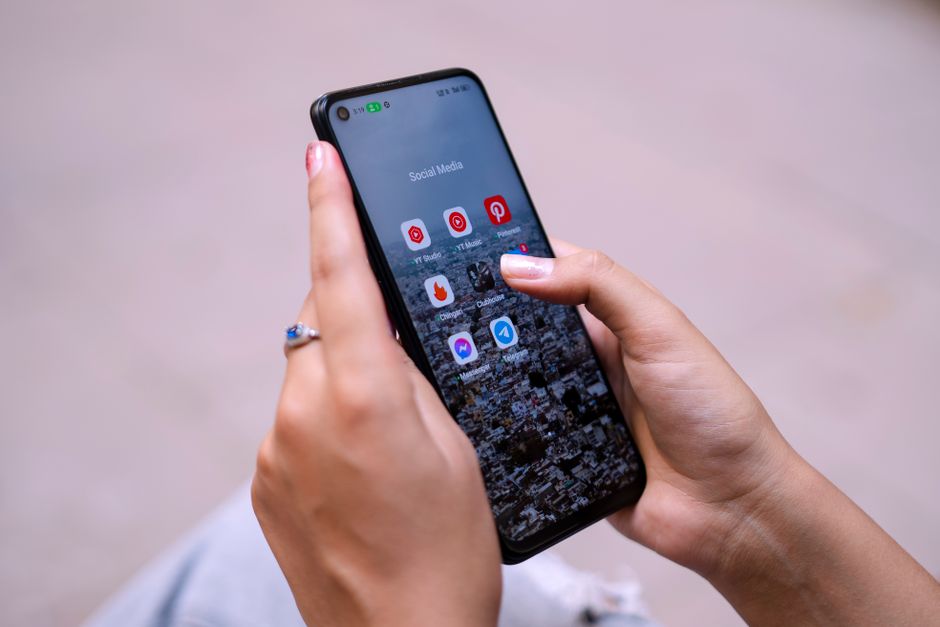
Your smartphone is a remarkably sophisticated tracking device, far more precise and persistent than any private investigator could ever hope to be. While most users are vaguely aware that their phone can track their location via GPS, the reality is that the methods employed are far more numerous, intricate, and relentless. It’s not just about knowing which city you’re in; it’s about pinpointing the exact store you walked into, the specific aisle you browsed, the duration of your stay, and even the route you took to get there. This hyper-granular location data, often collected continuously and in the background, paints an incredibly detailed picture of your daily routines, your habits, your social circles, and even your spending patterns, effectively turning your phone into a digital stalker that never sleeps. The convenience of map applications and location-based services comes at a significant cost to personal privacy, a cost that is rarely fully understood or consented to by the average user.
The methods of location tracking extend far beyond the Global Positioning System. Your phone utilizes a combination of Wi-Fi signals, Bluetooth beacons, and cellular tower triangulation to achieve remarkable accuracy, often down to a few feet. Wi-Fi networks, even those you don't connect to, broadcast unique identifiers that your phone can detect, allowing apps to map your movements indoors where GPS might be weak. Bluetooth Low Energy (BLE) beacons, increasingly deployed in retail stores, airports, and public spaces, can directly communicate with your phone, pinpointing your exact position within a building and even identifying specific products you linger near. Cellular towers, while less precise, provide a constant fallback, ensuring that even in remote areas, your general whereabouts are always known. This multi-pronged approach ensures that there are very few places your phone can go without leaving a precise digital breadcrumb trail, a trail that is eagerly collected and analyzed by a multitude of applications and third-party services.
The sheer scale of this location data harvesting is staggering. A 2018 New York Times investigation revealed how location data from millions of Americans, collected by various apps, was being sold to a vast ecosystem of data brokers. This data, often anonymized in name but easily re-identifiable through movement patterns, was then used for everything from targeted advertising to sophisticated market research, and even by law enforcement or private entities for surveillance. Imagine the implications: a dating app that knows where you sleep at night, a weather app that tracks your commute, or a simple game that logs every store you visit. This data can reveal sensitive information, such as visits to medical clinics, religious institutions, political rallies, or even a friend's house. Once this data leaves your device and enters the hands of third parties, the control you have over it effectively vanishes, and its potential for misuse skyrockets.
Real-world examples of location data misuse are chilling. There have been instances where location data from apps was used by stalkers to track victims, or by disgruntled employees to monitor former colleagues. In one particularly egregious case, a Catholic priest was reportedly outed by an app that sold his location data, which revealed his visits to gay bars and a gay sauna. This incident highlighted the profound vulnerability individuals face when their most private movements are exposed and weaponized. Furthermore, the concept of "geofencing" is a key tool for advertisers, allowing them to target you with ads the moment you enter a specific geographic area, like a competitor's store or a particular neighborhood. This isn't just about showing you relevant ads; it's about influencing your behavior in real-time, leveraging your physical presence to trigger a commercial response. The constant collection of your geographical coordinates is not merely a technical function; it is a fundamental infringement on your right to privacy and anonymity in the physical world, creating a digital shadow that follows your every step.
The Camera's Eye Peeking Through Your Lens
Beyond the microphone and location services, another deeply personal and potentially invasive sensor on your smartphone is its camera. While we readily use our phone cameras to capture life's moments, scan QR codes, or engage in video calls, the permission to access this camera can be exploited by apps in far more unsettling ways. The thought of an app secretly activating your camera, even for a fleeting moment, to capture images or video of your surroundings, your face, or even documents you're viewing, is enough to send shivers down anyone's spine. This isn't just a theoretical threat; it's a documented capability that, when combined with sophisticated image processing and artificial intelligence, can reveal an astonishing amount of sensitive information about you and your environment, transforming your phone's lens into a surreptitious eye.
Many apps request camera access for seemingly innocuous reasons: a social media app for posting photos, a banking app for scanning checks, or a shopping app for augmented reality try-ons. However, once granted, this permission allows the app, or any embedded third-party SDKs within it, to potentially activate the camera at will, even when the app is running in the background. While major operating systems like iOS and Android have implemented indicators (like a green or orange dot) to show when the camera or microphone is active, these indicators can sometimes be subtle or briefly missed, and they don't prevent an app from *requesting* access in the first place. The real concern lies in the potential for malicious or overly aggressive data collection practices where the camera is used not just for the stated purpose, but to gather ambient visual data about the user and their surroundings, often without explicit notification or understanding.
Imagine an app that, under the guise of an AR feature, briefly activates your front-facing camera to assess your facial expressions, gauging your mood or attention level as you scroll through content. Or consider an app that uses the rear camera to scan your environment, identifying brands, objects, or even other people in the background. This visual data, when processed through computer vision algorithms, can be incredibly rich. Facial recognition technology can identify individuals, track their gaze, and even infer emotional states. Object recognition can catalog your possessions, your living conditions, and your lifestyle. While such capabilities are often touted for "improving user experience" or "personalizing content," they fundamentally represent a form of visual surveillance that erodes personal privacy, creating a visual record of your life that can be stored, analyzed, and potentially shared with unknown entities.
The security implications are equally dire. Vulnerabilities in apps or operating systems have, in the past, allowed malicious actors to remotely access smartphone cameras, turning devices into unwitting spy cameras. Such breaches can lead to deeply invasive surveillance, blackmail, or the collection of highly sensitive personal imagery. Furthermore, the data collected through surreptitious camera access could be used to train AI models for deepfakes, to create more realistic virtual avatars, or to build even more comprehensive profiles about individuals. The camera, a tool designed to capture memories, can thus become a tool for covert data extraction, turning your most personal moments into data points for corporate profit or nefarious purposes. It’s a stark reminder that the lens on your phone can look both ways, and without strict controls, it can peer into your life with disturbing ease, transforming the act of taking a photo into a potential act of involuntary self-surveillance.
The Keyboard Spy What You Type, They Know
The keyboard on your smartphone is arguably one of the most intimate interfaces you interact with daily. Every word you type, every message you send, every password you enter, and every search query you formulate passes through this digital gateway. While the default keyboards provided by your phone's operating system (like Gboard for Android or Apple's native keyboard for iOS) generally have robust privacy protections, the allure of third-party keyboards, with their promise of enhanced features, custom themes, or unique functionalities, can lead users down a perilous path. These alternative keyboards, often downloaded from app stores, can be sophisticated data collection tools, functioning as keyloggers that capture every single character you input, transforming your most private communications and credentials into a treasure trove of exploitable data for their developers and associated third parties.
The mechanism is deceptively simple: when you install a third-party keyboard, you grant it broad permissions to "full access" or "monitor all input." This permission is necessary for features like predictive text, autocorrect, and swipe typing, which require the keyboard to analyze your typing patterns and learn your vocabulary. However, this same permission also grants the keyboard the technical capability to record every keystroke, including sensitive information like passwords, credit card numbers, email addresses, and private messages. While reputable third-party keyboard developers claim to anonymize this data and only use it to improve their predictive algorithms, the potential for abuse is immense. Unlike a standard app, a keyboard literally sits between you and every piece of text you generate on your phone, making it an exceptionally powerful point of interception for data harvesting.
History is replete with examples of third-party keyboards that have been exposed for egregious data collection practices. Some have been found to transmit user data, including everything typed, to remote servers without adequate encryption, leaving it vulnerable to interception. Others have been accused of selling aggregated typing data to third-party advertisers or data brokers, using linguistic patterns and entered information to build incredibly detailed profiles about individuals. Imagine a keyboard app knowing your banking login details, the content of your intimate conversations, your political leanings based on your search queries, or your health concerns gleaned from messages to friends or doctors. This level of access transforms a seemingly innocuous utility into a pervasive surveillance tool, capable of capturing the very essence of your digital communications and personal information, often without your explicit knowledge or meaningful consent.
The danger extends beyond overt malicious intent. Even well-meaning keyboard apps can pose a risk due to lax security practices or vulnerabilities that could be exploited by hackers. A data breach at a keyboard provider could expose millions of users' keystroke data, leading to widespread identity theft, financial fraud, and privacy violations on an unprecedented scale. Furthermore, the "learning" capabilities of these keyboards, while convenient, inherently involve data processing. Predictive text suggestions, for example, are often generated based on cloud-based models that analyze vast amounts of user input. This means your unique typing style and vocabulary are being uploaded and processed, contributing to a collective dataset that, while anonymized in theory, adds another layer of data transfer and potential exposure. The keyboard on your phone is not just an input device; it is a potential digital spy, silently recording your every word, making the choice of which keyboard to use a critical privacy decision that warrants far more scrutiny than it typically receives.