As we delve deeper into the pervasive mechanisms of digital surveillance, it becomes increasingly clear that the threat to our privacy extends far beyond the confines of our web browsers and the websites we visit. The very devices we invite into our homes and carry in our pockets, designed to make our lives easier and more connected, often double as sophisticated listening posts and observation units, constantly collecting data about our most intimate moments and surroundings. This isn't the stuff of science fiction; it's the everyday reality of smart homes, voice assistants, and the increasingly sophisticated cameras and sensors embedded in our personal technology. The convenience these devices offer often comes at the steep price of unparalleled data collection, turning our private spaces into data mines for corporations and, by extension, potentially for other entities. It's a trade-off that many consumers make without fully understanding the implications, lured by the promise of effortless living while simultaneously surrendering unprecedented access to their personal lives.
Listening In The Ambient Surveillance of Smart Assistants
The rise of smart voice assistants like Amazon's Alexa, Google Assistant, and Apple's Siri has fundamentally altered the landscape of home computing and, by extension, personal privacy. These devices, designed to respond to our voice commands, inherently require microphones that are always on, always listening for their specific "wake word." While companies assure us that recordings are only sent to the cloud after the wake word is detected, numerous incidents have revealed the fragility of this promise. There have been well-documented cases of smart assistants accidentally recording private conversations, sometimes due to misinterpreting background noise as a wake word, and on other occasions, simply malfunctioning. These accidental recordings, often containing highly sensitive personal information, are then transmitted to company servers, where they can be stored, analyzed by AI algorithms, and in some notorious instances, even reviewed by human contractors. This practice of human review, often justified by companies as a means to improve the assistant's accuracy, sparked widespread outrage when it was revealed that contractors were listening to and transcribing potentially intimate or sensitive conversations without users' explicit knowledge or consent. It’s a chilling reminder that the convenience of a voice-activated device can easily morph into a persistent, uninvited eavesdropper.
Beyond the immediate privacy concern of accidental recordings, there's the broader issue of what data these assistants intentionally collect and how it's used. When you interact with Alexa or Google Assistant, your voice commands are not just processed; they are often stored, analyzed to create a "voiceprint" unique to you, and used to build a profile of your interests, habits, and even your emotional state. These profiles can then be linked to your other online activities, contributing to the comprehensive digital dossiers that tech giants maintain. Imagine asking your smart speaker about health symptoms, financial advice, or political topics – this information, once spoken aloud, becomes data that can be used for targeted advertising, content recommendations, or even shared with third parties. The companies argue that this data collection is essential for improving the service, making the assistant smarter and more responsive. However, the lack of transparency regarding precisely what data is collected, how long it's stored, and with whom it's shared, creates a significant trust deficit. It's a situation where the black box of corporate data practices hides the true extent of ambient surveillance, leaving users in the dark about the digital echoes of their own voices.
The problem isn't confined to dedicated smart speakers; it extends to other internet-of-things (IoT) devices that have microphones and, increasingly, cameras. Smart TVs, for instance, are often equipped with microphones for voice control and sometimes even cameras for gesture recognition or video calls. Many of these devices come with privacy policies that grant the manufacturer broad rights to collect usage data, including audio and video recordings. There have been numerous reports and investigations revealing that smart TVs from various brands have been collecting vast amounts of data about viewing habits, app usage, and even ambient conversations, transmitting this data back to manufacturers and their advertising partners. The sheer volume of smart devices entering our homes – from smart doorbells and security cameras to robotic vacuum cleaners and even smart refrigerators – each with its own array of sensors, creates an unprecedented network of potential surveillance points. Each device, designed to offer convenience, subtly chips away at the sanctity of our private spaces, turning our homes into data-rich environments where almost every interaction, every sound, and every movement could potentially be recorded and analyzed by unseen entities. It's a digital Panopticon where the guards are algorithms and the cells are our own living rooms.
Unseen Eyes The Pervasive Reach of Facial Recognition and Biometrics
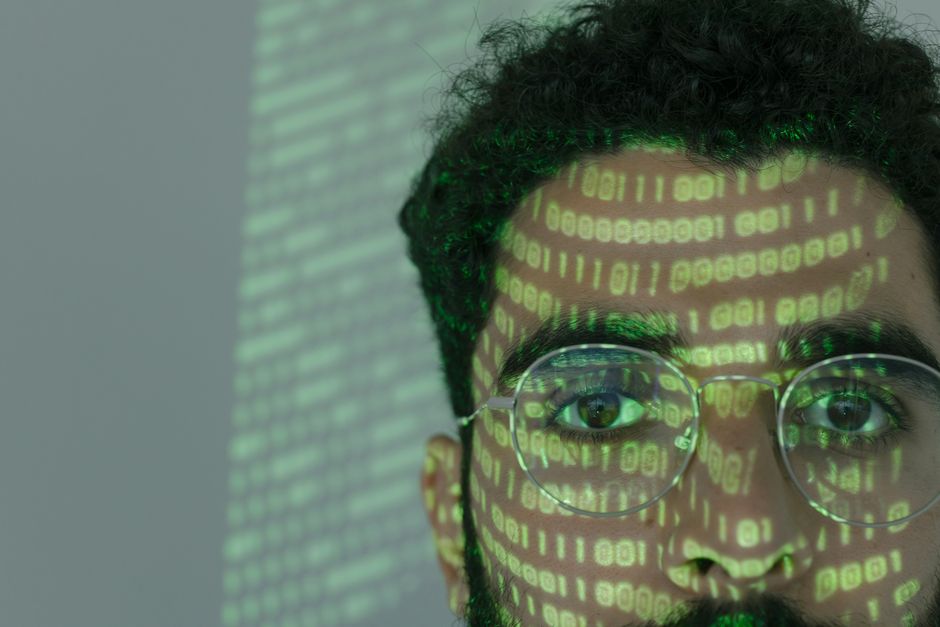
While voice assistants listen, an even more unsettling form of surveillance involves technology that sees and identifies us: facial recognition and other biometrics. Once the stuff of spy movies, facial recognition technology has rapidly advanced and permeated our daily lives, often without our conscious consent or even awareness. Tech giants like Google, Facebook, and Apple have amassed colossal databases of faces, primarily through photos uploaded to their platforms. Facebook, for example, used to automatically tag faces in uploaded photos, creating a vast, proprietary facial recognition database before public outcry led to some changes. Google Photos can identify and group individuals across countless images, showcasing the immense power of their algorithms. This data isn't just used for convenience like unlocking your phone; it's a powerful tool for identification, tracking, and profiling, with implications that stretch far into the realm of public and private surveillance. The ability to identify individuals from a distance, in real-time, and without their consent, fundamentally alters the concept of public space and anonymity, effectively turning every camera into a potential identification scanner.
The reach of facial recognition extends beyond social media and personal devices. It's increasingly deployed in public spaces by law enforcement, retail establishments, and even private security firms, often operating with little oversight or public accountability. Imagine walking down a street, entering a store, or attending an event, and having your face scanned and cross-referenced against databases of known individuals, all without your knowledge. The technology can identify you, track your movements, and even infer your emotional state or demographic characteristics. This capability raises profound ethical and civil liberties concerns, particularly regarding potential for misidentification, racial bias in algorithms, and the creation of pervasive surveillance states where anonymity is a relic of the past. The data collected – your unique facial features, gait, and other physical characteristics – constitutes highly sensitive biometric information, which, unlike a password, cannot be changed if compromised. Once your face is in a database, it's there forever, making you perpetually identifiable to anyone with access to that database and the necessary technology.
Beyond facial recognition, other biometric data points are also being collected and utilized by tech giants. Fingerprint scanners are standard on most smartphones and laptops, iris scanners are used for high-security access, and even gait analysis (identifying individuals by their unique walking style) is an emerging field. While these biometrics offer convenient security for personal device access, the underlying data is often processed and stored by the device manufacturer or cloud services, creating potential vulnerabilities. The aggregation of these various biometric identifiers, combined with other forms of tracking data, creates an incredibly robust and persistent profile of an individual, making it virtually impossible to truly "disappear" online or even in the physical world without extreme measures. The danger lies not just in the immediate use of this data, but in its potential for future applications – applications we cannot yet foresee but which could have profound impacts on our freedoms and privacy. It's a silent invasion of our most personal attributes, turning our very bodies into data points for an ever-expanding surveillance economy, blurring the lines between the physical and digital realms in ways that are deeply unsettling and difficult to counteract.