The digital age has brought forth an unprecedented era of convenience, allowing us to manage finances, communicate globally, and access information with a few taps or clicks. However, this seamless integration into our lives also means that our digital identities are more valuable and vulnerable than ever before. Every online account, from email to banking, represents a potential entry point for malicious actors seeking to exploit personal data, financial resources, or even our very sense of self. The fundamental flaw in relying solely on passwords is their inherent susceptibility to compromise, whether through sophisticated phishing schemes, brute-force attacks, or simply being exposed in one of the countless data breaches that plague the internet. This creates a precarious situation where the integrity of our entire digital presence hinges on a single, often fragile, string of characters. It's a bit like having a single, easily pickable lock on the front door of your house, even though that house contains all your most valuable possessions and your entire personal history.
The beauty of Multi-Factor Authentication (MFA) lies in its elegant simplicity and profound effectiveness. It moves beyond the antiquated notion of a single key, introducing a multi-layered security model that dramatically raises the bar for anyone attempting unauthorized access. Instead of just "something you know" – your password – MFA demands at least one additional, distinct piece of evidence from a different category: "something you have" (like a physical token or your smartphone) or "something you are" (like a fingerprint or facial scan). This architectural shift means that even if a cybercriminal successfully compromises one factor, they are still unable to gain access because they lack the second. It’s a sophisticated defense mechanism that doesn't rely on the strength of a single, memorized secret, but rather on the combination of disparate authentication methods, creating an exponential increase in security that is incredibly difficult for even the most determined attackers to overcome. This layered approach is what makes MFA so powerful, transforming a single point of failure into a robust, multi-faceted barrier.
Deconstructing the Digital Lock MFA's Core Mechanics
To truly appreciate the power of Multi-Factor Authentication, it helps to understand the foundational principles upon which it is built. At its heart, MFA operates on the premise that no single piece of evidence is foolproof, but a combination of different types of evidence creates a far more resilient barrier. We categorize these different types of evidence, or "factors," into three primary groups: knowledge, possession, and inherence. "Something you know" refers to traditional secrets like passwords, PINs, or security questions. These are cognitive factors, entirely dependent on memory and secrecy, and unfortunately, are the easiest to compromise through social engineering, phishing, or simply being forgotten or written down. "Something you have" refers to physical objects in your possession, such as a smartphone receiving a one-time code, a hardware security key, or even a smart card. These are possession factors, proving you physically own a specific item. Finally, "something you are" refers to unique biological attributes like fingerprints, facial recognition, or iris scans. These are inherence factors, leveraging your unique physiological or behavioral characteristics. MFA demands at least two of these distinct categories, meaning an attacker would need to not only know your password but also physically possess your phone or replicate your biometric data, making their task exponentially harder.
Let's walk through a typical MFA login flow to demystify its mechanics. When you attempt to log into an MFA-protected account, the process generally begins as it always has: you enter your username and password. This is the "something you know" factor. The system then validates these credentials against its database. If they match, instead of granting immediate access, it then prompts you for the second factor. This prompt might appear in various forms, depending on the MFA method you've chosen. It could be a unique, time-sensitive code displayed on an authenticator app on your smartphone, a push notification sent to your mobile device asking you to approve the login, or a request to insert and tap a physical security key. You then provide this second piece of evidence. The system verifies this second factor, and only if both factors are successfully authenticated will it grant you access to your account. This sequential verification process is crucial; it means that even if a phishing site successfully captures your password, the criminal attempting to use it will be stopped dead in their tracks at the second factor, as they do not possess your phone, your hardware key, or your unique biometric signature. This layered approach transforms a vulnerable single-point entry into a fortified gateway.
The true genius of MFA lies in how it creates an invisible handshake between disparate verification methods, forming a security posture that is far greater than the sum of its parts. Consider the scenario where a sophisticated phishing attack manages to trick you into revealing your password. In a single-factor authentication world, this is game over; the attacker now has full access to your account. However, with MFA enabled, even with your password in hand, the attacker still needs that second factor. If your MFA is tied to an authenticator app on your smartphone, the attacker would need physical access to your phone and the ability to unlock it to generate the one-time code. If it's a hardware security key, they would need to physically possess that specific device. For biometrics, they would need to somehow replicate your unique biological identifiers, a feat that is exceedingly difficult, if not impossible, to achieve remotely. This combination of factors dramatically reduces the attack surface, making it economically unfeasible for most cybercriminals to breach your account. They are looking for the path of least resistance, and MFA erects a formidable, often insurmountable, barrier, forcing them to move on to easier targets that lack such robust protection.
Beyond Just What You Know Unpacking the Three Pillars of Verification
The "something you know" factor, primarily represented by passwords, has been the cornerstone of digital security for decades. While seemingly straightforward, its inherent vulnerabilities are now painfully obvious. Passwords are susceptible to human error – we choose weak ones, reuse them, or write them down. They are also targets for sophisticated attacks. Brute-force attacks try every possible combination until the correct password is found, though this is less common for complex passwords. More prevalent are dictionary attacks, which try common words and phrases, and credential stuffing, as previously mentioned, which leverages databases of leaked passwords. Phishing remains the most insidious threat, tricking users into voluntarily surrendering their passwords. The fundamental problem is that a password, once known, can be used by anyone, anywhere, anytime. There's no inherent connection between the password itself and the legitimate user beyond their memory. This makes it a highly portable and easily exploitable secret, especially when the sheer volume of passwords required in our daily lives pushes individuals towards less secure practices.
The "something you have" factor introduces a crucial layer of physical possession into the authentication process, making remote attacks significantly harder. This category includes a range of devices, from the ubiquitous smartphone to dedicated hardware security tokens. When your phone receives a one-time passcode (OTP) via SMS or generates one through an authenticator app, the system is verifying that you are in possession of that specific device. Similarly, a hardware security key, like a YubiKey, requires you to physically plug it into your computer or tap it against your phone. The security strength within this category varies. SMS-based OTPs, while convenient, have known vulnerabilities like SIM-swapping, where criminals trick carriers into porting your phone number to their device. Authenticator apps are generally more secure as they generate codes offline and are not susceptible to SIM-swapping. Hardware security keys offer the strongest protection in this category, often employing cryptographic methods that are resistant to even advanced phishing attacks, as they verify the legitimacy of the website you're logging into before releasing any credentials. The common thread is that an attacker needs to physically acquire and often unlock your device to bypass this factor, a significant hurdle for remote cybercriminals.
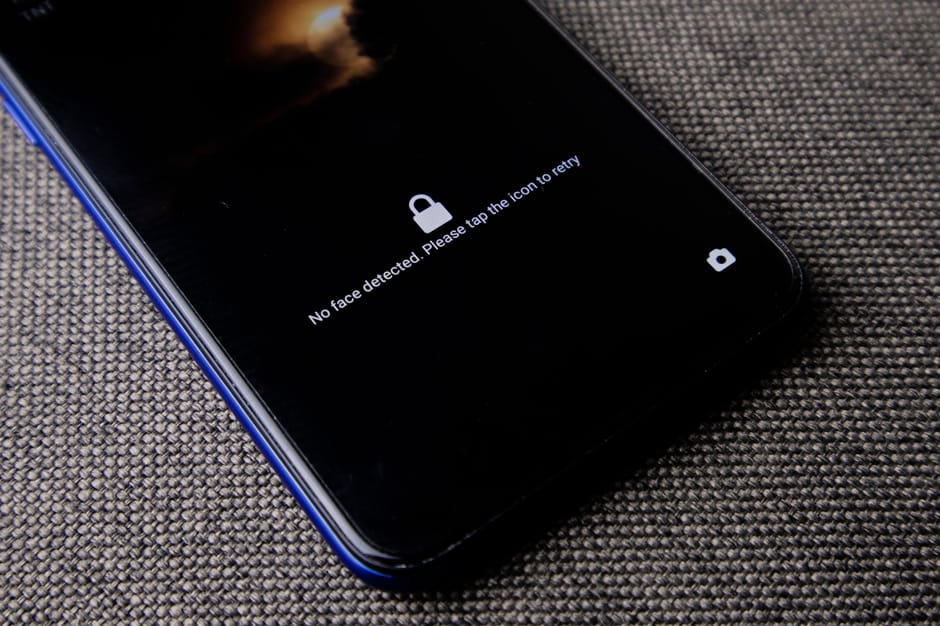
Finally, the "something you are" factor, known as inherence, leverages unique biological characteristics to verify identity. This includes fingerprints, facial recognition, iris scans, and even voice recognition. Modern smartphones and laptops have integrated biometric sensors that make this form of authentication incredibly convenient and increasingly secure. The advantage of biometrics is that they are intrinsically linked to the individual and are extremely difficult to replicate or steal in the same way a password can be. For example, your fingerprint is unique to you and is processed locally on your device, meaning it's never transmitted over the internet where it could be intercepted. Advanced biometric systems also incorporate "liveness detection" to prevent spoofing attempts using photos or prosthetic limbs. While biometrics offer unparalleled convenience and a high degree of security, they are not entirely without their own considerations, such as the immutability of a compromised biometric (you can't change your fingerprint like you can a password) and privacy concerns around storing such sensitive data. However, when combined with other factors in an MFA setup, biometrics provide a powerful and user-friendly layer of protection, making the login process seamless while maintaining robust security.
"The beauty of MFA is that it doesn't just add a second lock; it changes the entire mechanism of the door. An attacker can pick one lock, but they can't magically conjure the second key out of thin air if it's based on something you physically possess." – Sarah Armstrong-Smith, Chief Security Advisor at Microsoft.