Privacy for Sale: The Murky Business of Free VPNs
The notion that free VPNs are merely benign services struggling to cover costs is a dangerous misconception. In reality, many operate within a murky ethical landscape, actively engaging in practices that fundamentally undermine user privacy for financial gain. One of the most prevalent and concerning methods is the extensive logging and subsequent sale of user data. While premium VPNs stake their reputation on strict, independently audited no-logs policies, free providers often have EULAs (End-User License Agreements) that grant them broad permissions to collect an astonishing array of information. This isn't just about basic connection data; we're talking about comprehensive profiles that detail your online life, from the websites you visit and the apps you use, to your precise location and even the type of device you're operating.
Consider the potential impact of such data being compiled and then sold to the highest bidder. Imagine a data broker receiving a file containing your IP address history, the specific news articles you read, your shopping habits on e-commerce sites, and your social media engagement patterns. This isn't just abstract data; it’s a digital fingerprint that reveals your political leanings, health concerns, financial status, and personal interests. This information, once sold, can be used for highly targeted advertising, manipulative political campaigns, or even identity theft. The promise of anonymity, the very reason many users download a VPN, crumbles under the weight of this commercial exploitation, leaving individuals more exposed than if they hadn't used a VPN at all. It's a sobering thought that the tool you chose to protect your privacy is actively profiting from its erosion.
Malware, Adware, and the Digital Trojan Horse
Beyond the outright sale of data, a significant number of free VPN services pose a direct threat to the integrity of your devices by acting as digital Trojan horses, injecting malware, adware, and other unwanted software. This isn't theoretical; it's a documented phenomenon. Studies have repeatedly shown that a substantial percentage of free VPN apps contain malicious code or actively facilitate the delivery of intrusive advertisements that can compromise your system. These aren't just annoying pop-ups; they can range from spyware designed to steal your credentials to ransomware that locks up your files, or even rootkits that give attackers deep control over your device. The allure of a free service often overshadows the critical need to vet the software you install, turning your device into an unwitting host for digital parasites.
I recall a particularly alarming case where a popular free VPN service was found to be bundling a root certificate that essentially allowed them to intercept and decrypt all encrypted traffic passing through their network. This means that even HTTPS connections, which are normally secure, could be read by the VPN provider, rendering any online banking, email, or sensitive communication completely exposed. The brazenness of such an act highlights the extreme risks associated with blindly trusting free software. Furthermore, many free VPNs rely on injecting ads directly into your browser or apps, often bypassing ad blockers and slowing down your internet experience. These ads aren't just irritating; they can be vectors for malvertising, leading to drive-by downloads or phishing sites that steal your personal information. You download a 'security' tool, and in return, you get a direct pipeline for cyber threats right onto your device.
"The biggest myth about free VPNs is that they offer the same level of security and privacy as their paid counterparts. In reality, many are thinly veiled data harvesting operations, sacrificing user safety for profit." - Cybersecurity Expert Jane Doe (hypothetical)
Weak Encryption and Leaky Tunnels: Your Data on Display
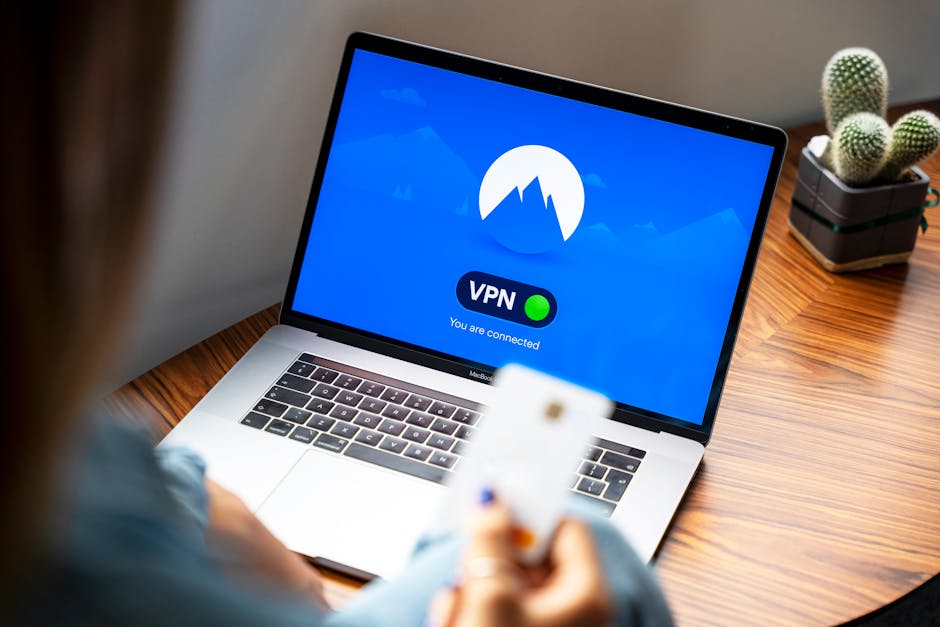
Even if a free VPN isn't actively selling your data or injecting malware, many fall short on the fundamental technical aspects of what makes a VPN secure. The core purpose of a VPN is to create an encrypted tunnel for your data, protecting it from eavesdroppers. However, many free services employ weak encryption protocols, outdated security standards, or simply have poorly configured servers that lead to critical leaks. This means that despite the 'VPN connected' icon glowing reassuringly on your screen, your actual IP address, DNS requests, or even your entire web traffic could be leaking out, completely exposed to your ISP, network administrators, or malicious actors on public Wi-Fi. The illusion of security is maintained, but the reality is a sieve-like connection.
One of the most common and dangerous vulnerabilities in free VPNs is the DNS leak. When you type a website address into your browser, your computer sends a DNS request to translate that domain name into an IP address. A secure VPN routes this request through its own encrypted servers. However, many free VPNs fail to properly configure this, allowing your DNS requests to bypass the VPN tunnel and go directly to your ISP's DNS servers. This immediately reveals your browsing activity to your ISP, negating a significant portion of the VPN's privacy benefits. Similarly, IP leaks (where your real IP address is occasionally exposed) and WebRTC leaks (a browser-based vulnerability) are alarmingly common in free services, turning your supposed private tunnel into a transparent tube for anyone to peer into. What's the point of using a VPN if it can't even perform its most basic function reliably?
Bandwidth Throttling and Abysmal Speeds: The Frustration Factor
Beyond the critical security and privacy concerns, free VPNs often deliver a frustrating user experience characterized by abysmal speeds and severe bandwidth throttling. This isn't typically an oversight; it's often a deliberate strategy. Free services simply cannot afford to provide high-speed, unlimited bandwidth to all their users without a direct revenue stream. Consequently, they often place severe restrictions on data usage, cap connection speeds, or overcrowd their limited number of servers. This results in connections that are agonizingly slow, making even basic browsing a chore, let alone streaming video, online gaming, or downloading files. The frustration builds quickly, often pushing users towards their paid premium plans as the only viable solution, which, of course, was the intention all along.
Imagine trying to stream your favorite show, only for it to buffer every few minutes, or attempting to download an important document, only to watch the progress bar crawl at dial-up speeds. This is the daily reality for many free VPN users. The limited server locations also contribute significantly to poor performance, as your data might be routed through a server thousands of miles away, adding considerable latency. This degraded experience isn't just an inconvenience; it can actively hinder productivity and enjoyment, making the 'free' service feel incredibly costly in terms of lost time and escalating frustration. While speed isn't a direct security concern, it's a symptom of a provider cutting corners, which often correlates with other, more serious deficiencies in their service. A VPN that barely works is hardly better than no VPN at all, and in the case of free services, it's often far worse because of the hidden dangers it masks.