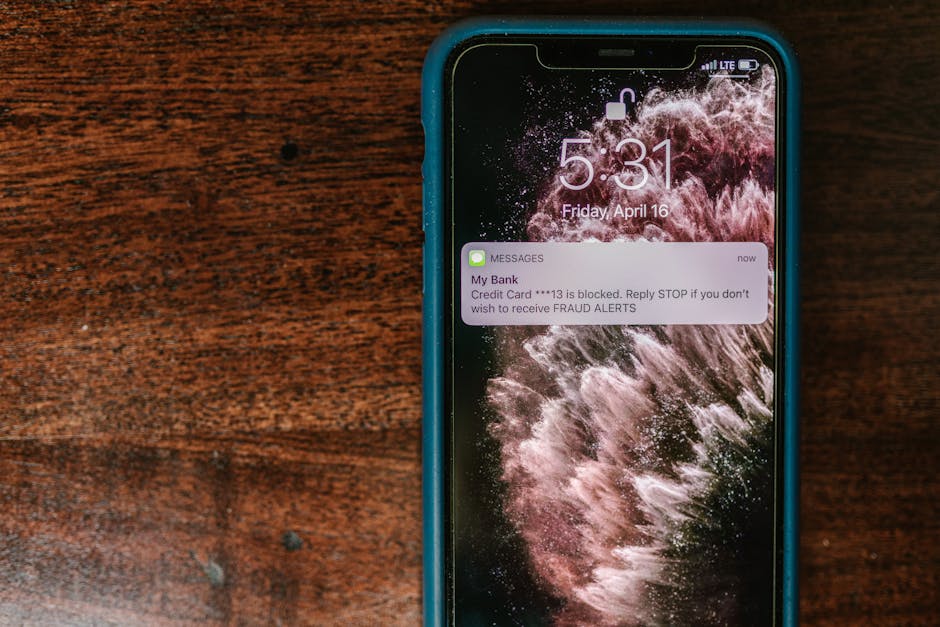
The email landed in my inbox like a digital serpent, its scales shimmering with the familiar branding of my bank. "Urgent Security Alert," it declared, a bold red banner screaming for immediate attention. My heart gave a little lurch, a primal fear response triggered by the perceived threat to my financial sanctuary. The link, prominently displayed, promised to resolve the "compromised account activity" if I just clicked and verified my details. For a fleeting moment, a microsecond of vulnerability, my finger hovered, ready to obey. But then, a tiny, almost imperceptible detail caught my seasoned eye – a subtle misalignment in the logo, a slightly off-kilter font in the footer, and a hovering glance at the URL revealed a domain that was just a shade off, a cunning imposter lurking beneath a veneer of legitimacy. It was a phishing attempt, meticulously crafted, designed to exploit fear and urgency, and it almost worked on me, someone who eats, sleeps, and breathes cybersecurity. If it could almost trick me, imagine the peril for those less attuned to the subtle whispers of digital deception.
This personal close call, a stark reminder of the ever-present threat, crystallized a profound truth: relying solely on external security measures, however robust, is a gamble we can no longer afford. Firewalls, antivirus software, and even the most advanced AI-driven threat detection systems are crucial, yes, but they form only one layer of defense. The most critical, yet often the weakest, link in the cybersecurity chain remains the human element. Phishing, in its myriad forms, preys precisely on this vulnerability, bypassing technological safeguards by manipulating the very individuals those technologies are designed to protect. It's a psychological battle, a game of digital chess where the attacker's queen is often a cleverly worded email and the pawn is an unsuspecting employee or individual. And to win this game, to truly inoculate ourselves against these insidious attacks, we must understand the enemy not just intellectually, but intimately, by stepping into their shoes, by learning to 'hack ourselves first'.
The Digital Battlefield Where Deception Reigns Supreme
The internet, for all its revolutionary promise of connectivity and information, has simultaneously become a sprawling, often lawless, digital frontier. Here, amidst the bustling marketplaces of ideas and commerce, lurk predatory forces constantly seeking to exploit weaknesses, with phishing reigning supreme as one of the most effective and pervasive attack vectors. It’s no longer just about poorly translated emails from Nigerian princes; modern phishing campaigns are sophisticated, highly targeted, and often indistinguishable from legitimate communications. Attackers meticulously research their targets, understanding their habits, their professional connections, and even their emotional triggers, transforming generic spam into personalized, compelling lures. This evolution means that everyone, from the CEO of a Fortune 500 company to a grandparent checking their email, is a potential target, and the consequences of falling victim can range from minor inconvenience to catastrophic financial loss or reputational damage.
Consider the sheer volume and impact of these attacks. Statistics paint a grim picture: the Anti-Phishing Working Group (APWG) consistently reports record numbers of phishing attacks quarter after quarter, with millions of unique phishing sites detected annually. These aren't just numbers; they represent countless instances of compromised credentials, stolen identities, and financial fraud. The FBI’s Internet Crime Report frequently highlights Business Email Compromise (BEC) and other phishing-related scams as leading causes of financial losses, totaling billions of dollars each year globally. This isn’t a distant threat; it’s an immediate, tangible danger that infiltrates our daily lives, from fake package delivery notifications to urgent password reset requests that seem to come directly from our IT department. The digital landscape is indeed a battlefield, and deception is the primary weapon wielded by an army of cybercriminals.
Moreover, the advent of artificial intelligence and machine learning is rapidly accelerating the sophistication of these attacks. AI can now generate highly convincing, grammatically perfect phishing emails in multiple languages, craft realistic deepfake audio and video for vishing (voice phishing) and smishing (SMS phishing) attacks, and even automate the reconnaissance phase to identify prime targets and tailor lures with unprecedented precision. This technological arms race means that our traditional defenses, while necessary, are constantly being outpaced. We cannot simply rely on spam filters to catch every malicious email, nor can we expect security software to perfectly identify every deceptive link. The human firewall, therefore, becomes not just a layer, but arguably the most critical and adaptable defense mechanism we possess. Building resilience here is paramount, and it starts with understanding the very mechanics of how these attacks are constructed.
Understanding the Mind Games Behind Every Malicious Link
At its core, phishing is less about technological prowess and more about psychological manipulation. It’s a sophisticated form of social engineering, meticulously designed to bypass our rational thought processes and trigger an emotional, often impulsive, response. Attackers exploit fundamental human traits: curiosity, fear, urgency, greed, and a desire to be helpful or compliant. Think about the last time you received an email demanding immediate action to avoid a penalty, or offering an irresistible deal that seemed too good to be true. These aren't random occurrences; they are carefully calculated psychological triggers designed to disarm your skepticism and compel you to click, to reveal, to compromise.
One of the most potent psychological levers is urgency. Phishing emails frequently employ phrases like "Account Suspended," "Immediate Action Required," or "Your Package is Delayed." This creates a sense of panic, pushing recipients to act without thinking, to bypass their usual scrutiny. Nobody wants their bank account suspended or their critical delivery held up. Attackers know this and weaponize these anxieties. Another common tactic is leveraging authority. An email appearing to come from your CEO, a government agency like the IRS, or a trusted vendor carries significant weight. We are conditioned to respect and obey authority figures, and cybercriminals exploit this deference to gain compliance, often requesting sensitive information or instructing the transfer of funds. The perceived legitimacy of the sender often overrides any internal alarms about the unusual nature of the request.
Beyond urgency and authority, phishing campaigns often tap into our innate curiosity or even our desire for reward. A message promising access to exclusive content, a lottery win, or a significant discount can be incredibly enticing. Conversely, fear of missing out (FOMO) is also a powerful driver; who wants to be the only one not benefiting from a new company policy or a limited-time offer? The brilliance, and indeed the danger, of these tactics lies in their universality. These psychological buttons are hardwired into our human experience, making us all potential targets regardless of our technical acumen. Understanding these underlying psychological principles is the first step towards building an internal defense mechanism, a mental firewall that can recognize and neutralize these emotional attacks before they take root.
Why Becoming Your Own Adversary Is the Ultimate Cybersecurity Strategy
The concept of "Hack Yourself First" might sound counterintuitive, perhaps even a little reckless, but in the realm of cybersecurity, it's a philosophy born of necessity and proven effectiveness. It means proactively testing your own vulnerabilities, not waiting for a real attacker to expose them. It’s about building a controlled, ethical environment where you simulate real-world phishing attacks against yourself, or with explicit consent, against your team members. This isn't about shaming or catching people out; it's about experiential learning, about imprinting the patterns of deception onto your subconscious so that when a genuine threat emerges, your brain immediately flags it as suspicious, rather than falling prey to its carefully constructed illusion. This hands-on approach transcends theoretical knowledge, transforming abstract security guidelines into tangible, deeply ingrained practical skills.
Think of it like a fire drill. You don't wait for a real fire to understand evacuation procedures; you practice them repeatedly in a safe environment. Similarly, you don't wait for a real phishing attack to learn how to identify one. By actively constructing and deploying your own phishing tests, you gain an invaluable insider's perspective. You begin to understand the attacker's mindset, their tools, their techniques, and their psychological ploys. This knowledge isn't just academic; it sharpens your critical thinking skills, hones your observational abilities, and most importantly, builds muscle memory for recognizing and reporting suspicious activity. It transforms you from a passive recipient of security advice into an active participant in your own defense, an informed and empowered guardian of your digital self.
Moreover, the "Hack Yourself First" methodology fosters a culture of continuous learning and adaptation. The threat landscape is not static; it evolves at a dizzying pace. New phishing techniques emerge constantly, exploiting new technologies, current events, and shifting social norms. By regularly conducting your own phishing simulations, you ensure that your defenses, both technological and human, remain sharp and relevant. It’s an iterative process of testing, learning, refining, and re-testing. This proactive stance moves beyond reactive security measures, placing you firmly in control of your digital resilience. It's about empowering individuals to become the strongest link in the cybersecurity chain, turning a common vulnerability into an unyielding strength, ensuring that you, and those around you, are never again caught off guard by the cunning deceptions of the digital underworld.