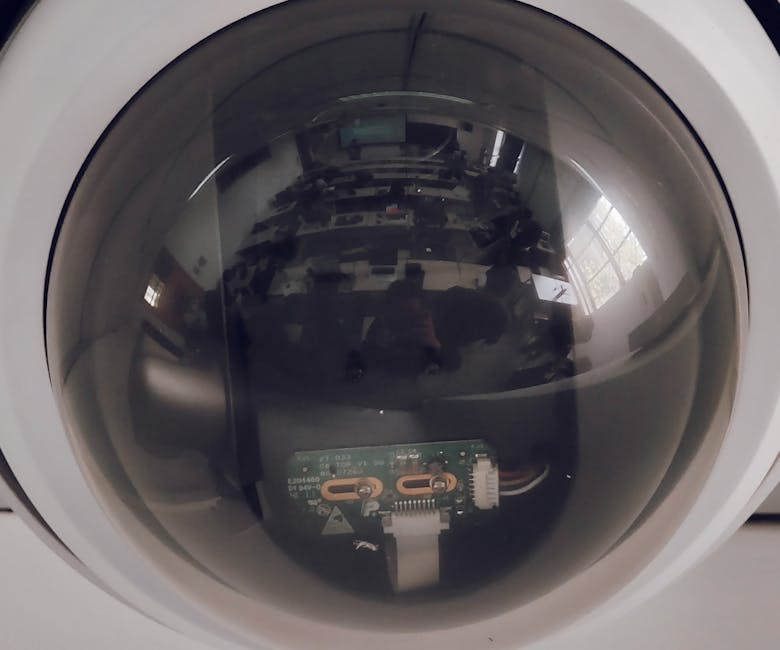
It starts subtly, doesn't it? A casual mention of a new gadget to a friend, not even typing it into a search bar, and suddenly, your social media feed is awash with ads for that exact device. Or perhaps you’ve been discussing a holiday destination, only to find travel deals popping up in your inbox moments later. You might shrug it off as coincidence, a trick of the mind, or even impressive predictive advertising. But deep down, a little shiver of unease often runs through you, a quiet question echoing in the back of your mind: Is my phone listening? Is my smart TV watching? Are these convenient little helpers, designed to make our lives easier, actually something far more intrusive? The answer, in short, is yes. Not in the shadowy, nefarious way of a human operative with tiny microphones hidden in your lampshade, but in a far more pervasive, automated, and often, perfectly legal manner that fundamentally reshapes our understanding of personal privacy.
We’ve welcomed smart devices into every corner of our lives with open arms, seduced by the promise of effortless living. From thermostats that learn our preferred temperatures to refrigerators that tell us when we're low on milk, from watches that monitor our heartbeats to voice assistants perched on our countertops, these gadgets have become indispensable fixtures. They streamline our routines, entertain us, and connect us to the world. Yet, this seamless integration comes at a significant, often unspoken, cost. Every interaction, every command, every piece of data they collect, paints an increasingly detailed portrait of who we are – our habits, our desires, our health, our relationships, even our most private thoughts and vulnerabilities. This isn't just about targeted ads; it's about the very essence of our digital autonomy being subtly eroded, often without our explicit, informed consent.
The Invisible Eyes and Ears in Your Digital Home
The concept of "spying" in the context of smart devices often conjures images of malicious hackers or government surveillance, which are certainly valid concerns for another discussion. However, the more immediate and widespread form of digital intrusion comes from the very companies that manufacture and operate these devices. Their business models are increasingly predicated on data collection, processing, and monetization. Every "smart" feature, every "personalized" recommendation, every "convenient" automation often relies on a continuous stream of information flowing from your home, your body, and your digital interactions back to their servers. This data isn't just used to improve your user experience; it's meticulously analyzed, cross-referenced, and often sold or shared with a vast ecosystem of advertisers, data brokers, and analytics firms, creating an incredibly comprehensive profile of your existence.
Consider the sheer volume and variety of data points these devices are designed to capture. Your smart speaker isn't just waiting for its wake word; it's constantly listening to ambient sounds, processing speech, and potentially uploading snippets of conversations. Your smart TV isn't merely displaying content; it might be employing Automatic Content Recognition (ACR) to identify everything you watch, including commercials, across all inputs, even tracking what you stream from other devices. Your fitness tracker isn't just counting steps; it’s logging your sleep patterns, heart rate variability, workout routines, and even your location throughout the day. Each of these devices, individually, might seem innocuous, but when their data streams converge, they create an unprecedented, granular understanding of your life that extends far beyond what most people would willingly share with even their closest confidantes.
This pervasive data collection isn't always about nefarious intent; often, it’s simply part of the operational blueprint for these technologies. Machine learning algorithms, which power many of the "smart" features we enjoy, require vast datasets to learn and improve. Voice assistants need to process millions of speech samples to understand different accents and inflections. Recommendation engines thrive on knowing what you’ve watched, listened to, or purchased to suggest new content. The problem arises when this necessary data collection blurs into excessive data harvesting, where companies collect far more information than is truly necessary for the device's core function, purely for the purpose of creating richer user profiles for advertising or other commercial ventures. It’s a subtle shift from utility to exploitation, hidden behind layers of complex privacy policies that few people ever read in their entirety.
The Erosion of Digital Boundaries and the Privacy Paradox
The lines between public and private have become increasingly blurred in our hyper-connected world. Our homes, once sanctuaries of privacy, are now populated with devices that act as constant observers. This isn't just a theoretical concern; it has tangible implications for our autonomy and sense of security. Imagine a future where your smart thermostat knows you're home by detecting your voice, and then adjusts the temperature while simultaneously flagging your presence to your insurance company, which might then adjust your premiums based on perceived activity levels or even health data from your smart mattress. While this might sound like science fiction, the technological components for such scenarios already exist and are actively being integrated into various smart home ecosystems, creating a dense web of interconnected data points that can be analyzed and acted upon.
The privacy paradox perfectly encapsulates our collective dilemma. We express profound concerns about data privacy and the surveillance capabilities of tech companies, yet we continue to enthusiastically adopt smart devices and services that demand ever-increasing access to our personal lives. We crave the convenience, the efficiency, the entertainment, and the perceived safety that these technologies offer, often overlooking or downplaying the privacy implications until a headline-grabbing data breach or a particularly creepy targeted ad forces us to confront the reality. This isn't a judgment; it's a reflection of the powerful psychological pull of convenience and the often-opaque nature of data collection practices, making it difficult for the average user to make truly informed decisions about their digital footprint.
"Privacy is not a commodity to be traded; it is a fundamental human right. When we allow our smart devices to continuously collect data without clear consent and control, we are slowly surrendering pieces of that right." - Dr. Eleanor Vance, Cybersecurity Ethicist.
Understanding this landscape is the first critical step toward reclaiming some semblance of control over our digital lives. It’s not about abandoning technology or retreating into a pre-digital existence, which for many is simply not feasible in today’s world. Instead, it's about becoming more discerning consumers and proactive managers of our own data. It’s about recognizing that the default settings on these devices are almost always configured to maximize data collection, not privacy, and that a small, often overlooked, adjustment can make a monumental difference in protecting your personal information from constant scrutiny. This isn’t a battle against technology itself, but a concerted effort to ensure that technology serves us, rather than turning us into the product being served up to advertisers and data brokers.