Imagine this: you settle onto your couch after a long day, perhaps you tell your smart speaker to dim the lights, play some jazz, or even order a pizza. It’s effortless, convenient, almost magical. Your home responds to your voice, anticipating your needs, making life just a little bit smoother. This isn't science fiction anymore; it's the reality for millions of us. Our homes are getting smarter, evolving from mere brick-and-mortar structures into interconnected digital ecosystems, teeming with devices that promise to simplify our lives and enhance our comfort. From smart thermostats that learn our preferences to security cameras that keep an eye on our property, and voice assistants that answer our every query, the allure of the smart home is undeniable.
But beneath the gleaming surface of innovation and convenience lies a disquieting truth, one that many of us prefer not to confront: these helpful gadgets, our digital companions, might be doing more than just serving us. They are listening. They are watching. They are collecting an astonishing amount of data about our most intimate spaces and habits, often without our full understanding or explicit consent. The very devices designed to bring peace of mind might, in fact, be creating a pervasive network of surveillance within the walls of our own homes. The question isn't whether your smart home could be spying, but rather, to what extent it already is, and what that means for the sanctity of your personal privacy.
The Siren Song of Convenience and Its Hidden Costs
The journey into smart home adoption often begins with a single device – perhaps a voice assistant like Amazon Echo or Google Home, or maybe a smart doorbell. We're drawn in by the promise of effortless control, energy efficiency, and enhanced security. Who wouldn't want to adjust the thermostat from their phone on the way home, or see who's at the door even when they're halfway across the world? These devices are marketed with compelling narratives of ease and modernity, painting a picture of a future where technology seamlessly integrates into our lives, making everything better. This vision is powerful, seductive even, and it has successfully propelled the smart home market into a multi-billion dollar industry, with projections showing continued exponential growth.
However, this convenience comes at a price, one that is often hidden in plain sight within lengthy terms of service agreements that few of us ever truly read. The fundamental business model for many of these "free" or low-cost smart devices isn't just about selling hardware; it's about data. Every interaction, every command, every sensor reading, every movement detected, every conversation overheard, contributes to a vast reservoir of personal information. This data is the new gold, eagerly sought after by companies looking to refine their products, target advertising with surgical precision, and even develop new AI models. We willingly trade bits of our privacy for a perceived gain in convenience, often without fully grasping the long-term implications of such a bargain.
Consider the sheer volume and granularity of data being collected. It's not just about what you explicitly tell your voice assistant; it's also about ambient noise, background conversations, your sleep patterns if you have a smart bed, your daily routines based on light and motion sensors, and even your health metrics if you've integrated wearable tech. This creates an incredibly detailed profile of your life, a digital twin that exists in the cloud, constantly being updated and analyzed. The allure of a home that anticipates your needs is potent, but that anticipation is built on an intimate knowledge of your habits, preferences, and even your most private moments, all harvested by devices you've invited into your sanctuary.
An Orchestra of Sensors Listening to Your Life
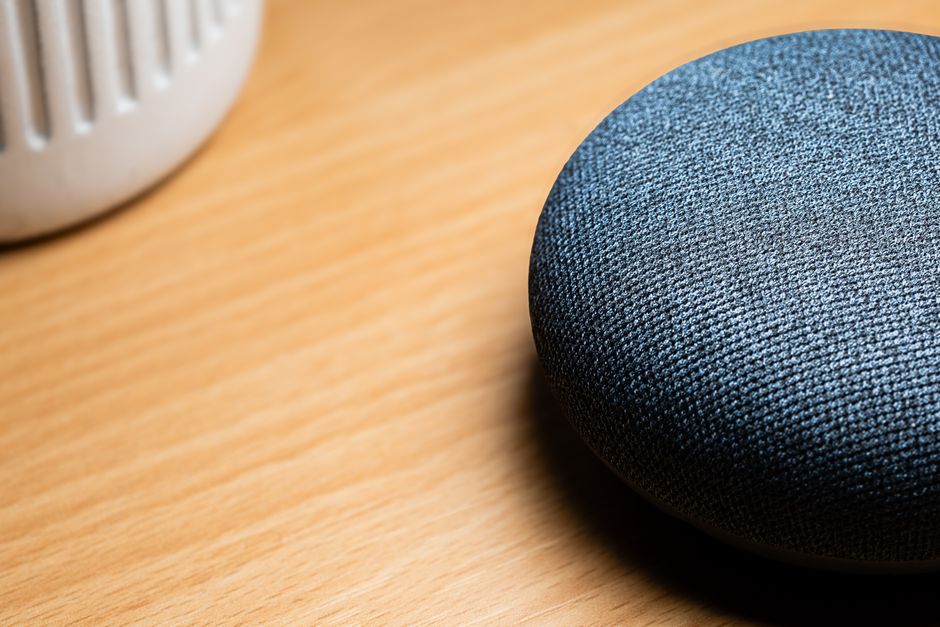
Let's talk about microphones. They are arguably the most pervasive and concerning "ears" in your smart home. Voice assistants, smart TVs, security cameras, baby monitors, and even some smart light switches are equipped with microphones that are, by design, always listening. Their primary function is to detect a "wake word" – "Alexa," "Hey Google," "Siri," or whatever trigger phrase activates the device. But for them to detect that wake word, they must be constantly processing audio input from their environment. While companies assure us that recordings are only sent to the cloud *after* the wake word is detected, the raw audio processing happens locally, all the time.
The reality of this constant listening mechanism raises immediate privacy red flags. What happens to the snippets of audio processed locally before a wake word is triggered? Are they truly discarded immediately? Can a false positive trigger a recording? We've seen numerous incidents where smart speakers have reportedly recorded private conversations without a wake word, sometimes sending them to contacts or simply uploading them to company servers. These aren't isolated glitches; they highlight the inherent vulnerability of devices designed to be perpetually attentive. A child's babble, a snippet of a TV show, or even a specific tonal pattern can sometimes be misinterpreted as a wake word, leading to unintended recordings of highly personal moments.
Beyond explicit recordings, the mere presence of always-on microphones creates a chilling effect. Do you feel comfortable having sensitive conversations – about finances, health, relationships, or even just mundane daily plans – knowing that a device in the corner of the room is perpetually ready to pick up your voice? This subconscious awareness can subtly alter behavior, leading to self-censorship and a diminished sense of freedom within one's own home. The promise of an effortless interaction with technology slowly erodes the fundamental right to private communication, replacing it with an unspoken understanding that your words, however fleeting, might be processed, analyzed, and stored by unseen entities.
The Echoes of Unintentional Recordings
The stories are plentiful and disturbing. Remember the Oregon family whose private conversation was recorded by their Alexa device and then sent to an acquaintance in their contact list? Or the reports of Amazon employees listening to and transcribing user recordings to "improve" the AI? While Amazon and Google have since adjusted policies and made it easier for users to opt-out or delete recordings, the fundamental architecture remains: these devices are built to listen. It’s not just about malicious intent; it’s about the potential for accidental privacy breaches and the sheer volume of data being processed, which creates an attractive target for bad actors.
Furthermore, the data collected from these microphones isn't just voice recordings. Advanced audio processing can discern background noises, detect patterns in speech, identify different voices, and even infer emotional states. This goes far beyond simply understanding a command; it paints a rich, sonic portrait of your household. Imagine the insights that can be gleaned from knowing when you're home, when you're away, when you're talking, when you're silent, or even the type of music you listen to. This ambient data, often overlooked, contributes significantly to the comprehensive profile being built around you and your family.
"The smart speaker is perhaps the most invasive piece of technology we've ever invited into our homes. It's an always-on microphone, connected to the internet, and feeding data back to a corporation. We've essentially given companies a key to our private conversations." – Dr. Sarah Miller, Cybersecurity Ethicist.
The convenience of simply speaking a command often overshadows the intricate data pipeline that enables it. We tend to trust these devices because they are helpful, but that trust can be easily exploited, intentionally or unintentionally. The fact that these devices are designed to be "invisible" in their operation, seamlessly blending into our decor, only exacerbates the problem. We forget they are there, diligently performing their primary function of data collection, long after we've issued our last command. It’s a subtle, almost imperceptible shift from convenience to constant surveillance, blurring the lines between helpful assistant and digital eavesdropper.
Through the Lens of Your Living Room
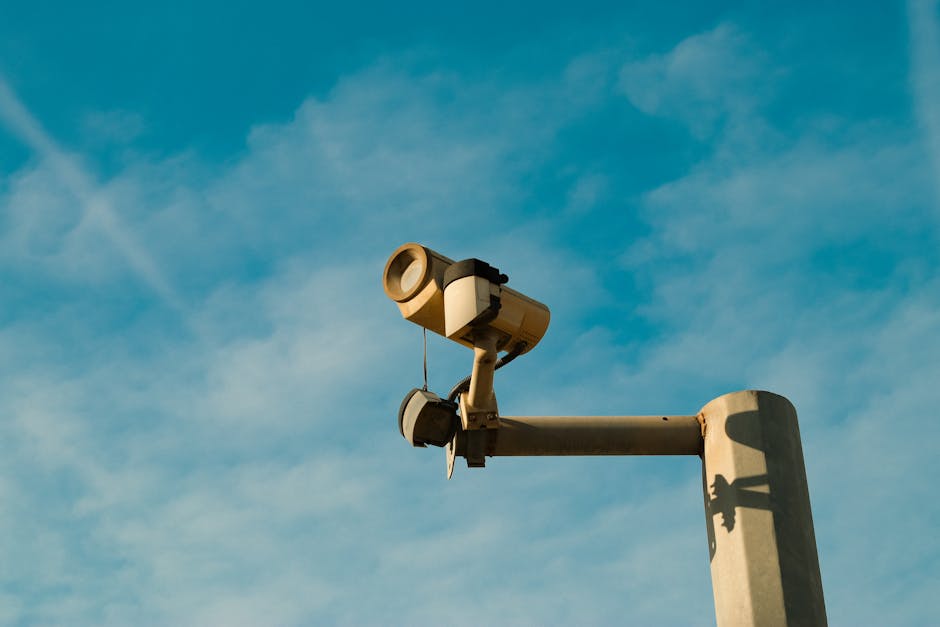
If microphones are the ears, then smart cameras are undeniably the eyes of your connected home. From doorbell cameras and indoor security cameras to baby monitors and even some smart refrigerators, lenses are everywhere. The appeal is obvious: enhanced security, the ability to check on pets or children, or simply peace of mind when you're away. The footage these cameras capture can be incredibly useful, providing evidence in case of a break-in or allowing you to see who's at your door without physically opening it. However, this utility comes with a significant caveat: you are inviting a camera, often connected to the internet, into your most private spaces.
The fundamental concern with smart cameras is straightforward: who has access to that footage, and how secure is it? Many smart cameras upload footage to cloud servers for storage and remote access, which means your intimate moments are leaving your home and residing on servers controlled by a third party. While companies implement security measures, no system is impenetrable. Data breaches are a persistent threat, and if a camera's cloud storage is compromised, your private home footage could fall into the wrong hands, leading to blackmail, identity theft, or simply a horrifying violation of your privacy.
Beyond external threats, consider the potential for internal misuse or accidental exposure. Have you ever considered who within the company might have access to your footage? What about law enforcement requests, or even simple misconfigurations where your camera feed is accidentally made public? There have been numerous alarming reports of smart camera feeds being hacked, with strangers peering into homes, talking to children through baby monitors, or even live-streaming private moments online. These incidents serve as stark reminders that a camera, no matter how "smart," is only as secure as its weakest link, which is often the internet connection or the cloud service it relies upon.
When Your Security Camera Becomes a Vulnerability
The concept of "smart" extends beyond just recording video; many cameras now incorporate advanced features like facial recognition, person detection, and even object identification. While these features are designed to enhance security – distinguishing between a pet and an intruder, for instance – they also represent an advanced form of data collection. Facial recognition technology, in particular, raises significant ethical and privacy concerns, as it can be used to identify individuals, track movements, and potentially build databases of people entering and exiting your home. This technology is evolving rapidly, and its implications for personal privacy are still largely unexplored.
Furthermore, the default settings of many smart cameras can be surprisingly lax. Some cameras have wide fields of view that capture not just your property, but also parts of your neighbors' homes or public spaces. Poorly secured cameras, or those with default passwords, are prime targets for hackers. The internet is littered with websites that aggregate unsecured camera feeds from around the world, allowing anyone to peek into strangers' lives. This isn't just a theoretical risk; it's a documented reality that underscores the importance of careful setup, strong security practices, and a critical evaluation of where and why you deploy smart cameras in your home.
The convenience of checking on your home from afar is a powerful motivator, but it requires a conscious trade-off. Are you comfortable with the potential risks associated with placing internet-connected eyes in your personal sanctuary? Do you fully understand how your footage is stored, who has access to it, and for how long? These are not questions to be dismissed lightly, as the visual data captured by smart cameras is arguably among the most sensitive and revealing forms of personal information. Once it leaves your device and enters the cloud, it becomes part of an ecosystem over which you have diminishing control, transforming your private moments into digital commodities or potential vulnerabilities.