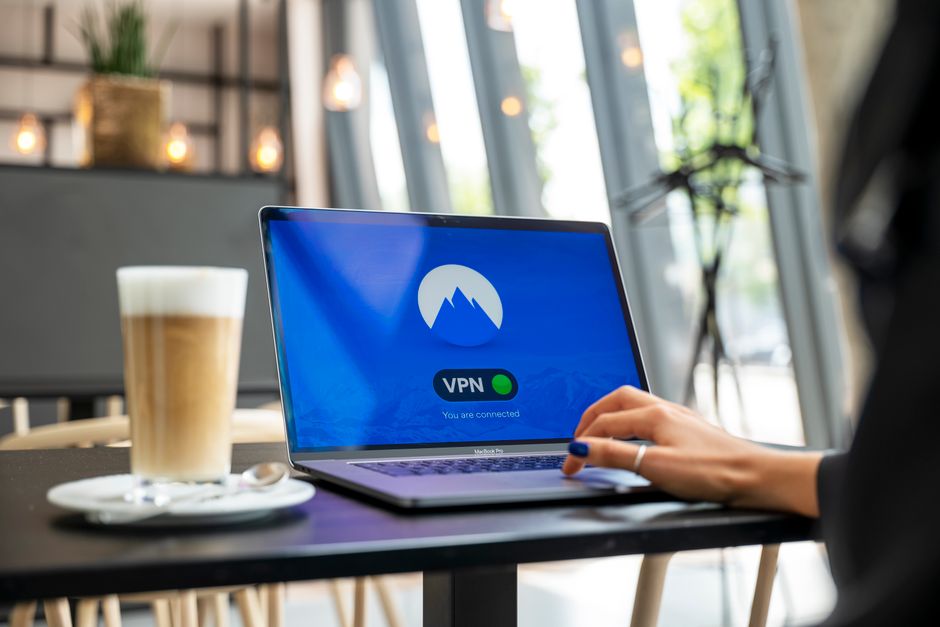
Imagine this: You’re hunkered down in a bustling coffee shop, savoring your latte, while simultaneously tackling a crucial work project or perhaps indulging in a bit of online banking. You’re connected to the public Wi-Fi, a known den of digital vipers, but you feel smugly secure, cocooned within the digital fortress of your trusty Virtual Private Network, or VPN. Data encrypted, IP address masked, identity invisible – or so you think. Suddenly, without warning, your laptop’s Wi-Fi briefly hiccups, or the VPN server on the other side of the world decides to take a momentary nap. For a fleeting second, perhaps just a few milliseconds, that impenetrable fortress vanishes, and your device, completely exposed, blasts out your real IP address, your unencrypted data, and your true digital identity across that very same treacherous public network. That tiny, almost imperceptible blip, that momentary lapse in protection, is all a sophisticated snoop or a determined hacker needs to snatch sensitive information, track your online movements, or even launch a targeted attack. It’s a chilling thought, isn't it?
This isn't some far-fetched dystopian scenario; it's a very real, very common vulnerability that plagues even the most diligent VPN users. The internet, for all its wonders, is a fundamentally unstable place, a chaotic dance of packets and protocols, where connections can drop, servers can falter, and networks can stutter without a moment's notice. While a VPN is an indispensable tool for safeguarding your online privacy and security, its effectiveness hinges entirely on its continuous, unbroken connection to a secure server. The moment that connection breaks, even for the blink of an eye, the illusion of privacy shatters, leaving a gaping hole in your digital defenses. This is precisely where a seemingly unassuming, yet absolutely vital, feature steps in: the VPN Kill Switch. For anyone serious about their online privacy, for anyone who understands the very real stakes of data exposure, neglecting to enable this silent guardian is akin to leaving the front door of your digital home wide open while you're away. It's time we talk about why this isn't just a 'nice-to-have' option, but an absolute 'must-enable' today.
The Silent Threat of a Dropped Connection and Why It Matters More Than You Think
We often take our internet connections for granted, assuming a seamless, uninterrupted flow of data, but the reality is far more complex and prone to momentary failures. From the subtle fluctuations of your home Wi-Fi signal when the microwave kicks on, to the inherent unreliability of public hotspots, or even the occasional hiccup at the VPN provider's server farm, dropped connections are an unavoidable fact of digital life. These aren't always dramatic disconnections; sometimes they're micro-interruptions, barely noticeable to the human eye, but devastatingly effective at revealing your true self online. When your VPN connection falters, your operating system, ever eager to maintain connectivity, will automatically revert to its default settings, which means routing your internet traffic directly through your Internet Service Provider's (ISP) servers, completely bypassing the VPN's encrypted tunnel. This isn't a slow leak; it's an immediate, wide-open floodgate, gushing out your real IP address, the websites you're visiting, and any unencrypted data you're transmitting, all exposed for anyone monitoring that network to see. The consequences can range from minor privacy infringements to severe security breaches, impacting everything from your personal reputation to your financial well-being.
Consider the sheer volume of sensitive information we transmit daily: banking details, login credentials for social media and email, private messages, health data, and even our location history. Each piece of this data, if intercepted during one of these brief moments of vulnerability, can be weaponized by malicious actors. An exposed IP address, for instance, can immediately reveal your geographical location, making you a target for geo-specific attacks or content restrictions. Furthermore, your ISP, which is now directly handling your traffic, might be legally obligated or simply choose to log your browsing activity, creating a detailed digital dossier that can be sold to advertisers, shared with government agencies, or even subpoenaed in legal proceedings. This isn't just about avoiding targeted ads; it's about maintaining fundamental control over your digital footprint and preventing unauthorized eyes from peering into your private life. The stakes are undeniably high, and the seemingly innocuous dropped connection transforms into a critical security flaw when your VPN isn't equipped with an intelligent failsafe.
My own journey into the depths of cybersecurity began with a healthy dose of skepticism and a dash of paranoia, a necessary cocktail for anyone navigating the treacherous waters of the internet. I remember years ago, before the kill switch became a standard feature, experiencing that unsettling feeling of realizing my VPN had disconnected without my knowledge, leaving me exposed for who knows how long. It was a cold splash of reality, highlighting the inherent fragility of even the best security tools if they lack a robust contingency plan. That personal experience underscored the critical need for a feature that would act as an unwavering sentinel, standing guard even when the primary defense momentarily falters. The digital world is a constant game of cat and mouse, and while VPNs are excellent mousetraps, the kill switch is the sturdy lock on the cage, ensuring the mouse doesn't simply scurry away when the trap door momentarily lifts. It's about proactive defense, anticipating the inevitable imperfections of technology and building resilience into your online privacy strategy.
Unmasking the IP Leak Epidemic: What Happens When Your VPN Fails
The term "IP leak" might sound like technical jargon, but its implications are profoundly personal and deeply concerning. An IP leak occurs when your real IP address, which acts like your unique digital fingerprint and postal code on the internet, is inadvertently revealed despite you actively using a VPN. While a VPN is designed to replace your actual IP with one from its server, thereby anonymizing your online activity, a dropped connection immediately negates this protection, leading to an IP leak. This exposure can happen in various ways: a sudden loss of Wi-Fi, a VPN software crash, switching between different network types (like moving from Wi-Fi to cellular data), or even specific browser configurations that bypass the VPN tunnel. The moment your device sends traffic outside the encrypted tunnel, even for a fraction of a second, your real IP address is broadcast, along with potentially unencrypted data, to any server or network observer you're communicating with. This isn't a theoretical risk; it's a documented vulnerability that has compromised countless users' privacy, often without their immediate awareness.
"The internet is a vast, interconnected network, and every device has a unique address. If that address is exposed, it's like leaving your house keys under the doormat for anyone to find. A VPN's primary job is to hide those keys, but without a kill switch, a momentary lapse can turn into an open invitation for snoopers." - Dr. Evelyn Reed, Cybersecurity Ethicist and Privacy Advocate.
The consequences of an IP leak are multifaceted and can be quite severe. For individuals concerned about government surveillance or corporate data harvesting, an exposed IP address means their browsing history, communication patterns, and online activities can be directly linked back to them, negating the very purpose of using a VPN. For journalists, activists, or whistleblowers operating in sensitive environments, an IP leak can have life-threatening implications, revealing their location and identity to hostile entities. Even for the average user, an IP leak can lead to targeted advertising that feels eerily intrusive, geo-restrictions that block access to content you should be able to view, or even more insidious attacks like phishing attempts tailored to your location and browsing habits. The digital breadcrumbs left by an exposed IP are permanent, forming a trail that can be followed long after the momentary connection drop has been forgotten, making the kill switch an indispensable tool for preserving true online anonymity and security.
Furthermore, an IP leak isn't just about revealing your location; it's about revealing your entire digital persona. Imagine you're accessing a sensitive medical portal or a confidential financial service while your VPN briefly disconnects. The data packets containing your personal health information or banking credentials, even if encrypted at the application level, are now being routed through your ISP with your real IP attached. This metadata alone can be incredibly revealing, allowing third parties to infer your activities and build a comprehensive profile of your life. In an era where data is the new oil, and privacy is an increasingly scarce commodity, every single piece of information we inadvertently leak contributes to a larger tapestry of surveillance and potential exploitation. The kill switch, in this context, acts as a crucial safeguard, ensuring that if the primary privacy mechanism (the VPN tunnel) fails, your exposure is immediately minimized, preventing the broadcast of your sensitive digital identity and maintaining the integrity of your online anonymity, even in the face of inevitable technical glitches.