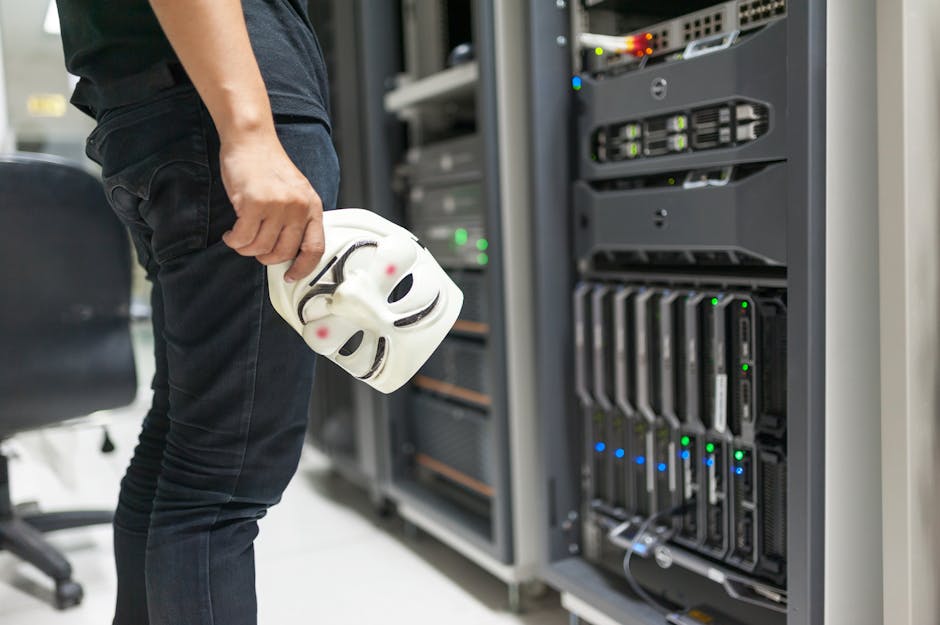
The digital world, for all its wonders, often feels like a sprawling, chaotic metropolis where every step leaves a trace, every interaction is recorded, and every shared moment contributes to a vast, invisible dossier. This isn't hyperbole; it's the reality of our interconnected lives, particularly when it comes to platforms like Facebook and Instagram. Understanding the true extent of your digital footprint, and more importantly, identifying the diverse cast of characters who might be watching, is the crucial second step in fortifying your online privacy. It’s not just about the obvious stalkers; the threat landscape is far more nuanced and pervasive, encompassing everyone from sophisticated data brokers to that overly curious distant cousin you barely know. Each entity, with varying degrees of intent, contributes to the erosion of your digital boundaries if left unchecked. We need to dissect not only what data is being collected but also the myriad ways it can be used, and by whom, to truly grasp the gravity of the situation.
Let's paint a clearer picture of this digital footprint. It’s not merely the photos you post or the witty comments you leave. It encompasses the metadata embedded in your images, revealing where and when they were taken. It includes your precise location data, often transmitted unknowingly by your device. It tracks your browsing history through cookies and pixels that follow you across the web, even after you’ve left the social media platform. It logs your interactions with ads, your engagement with specific types of content, and even the amount of time you spend looking at certain posts. Furthermore, it incorporates information gathered from third-party apps you've connected, the devices you use to access the platforms, and even details about your network connectivity. This vast ocean of data, when aggregated, forms an incredibly detailed and dynamic profile of your life, your habits, your preferences, and your vulnerabilities. It’s a treasure trove for marketers, yes, but also a dangerous blueprint for anyone with malicious intent. The platforms, in their relentless pursuit of engagement and personalization, have inadvertently become the world's largest public libraries of personal lives.
Deconstructing Your Digital Footprint What Data Do They Really Collect
The sheer volume and variety of data collected by Facebook and Instagram are astonishing, often far exceeding what users consciously realize they are sharing. Beyond the obvious posts, photos, and profile information, these platforms delve deep into the minutiae of your digital life. They record your interactions: every like, every reaction, every comment, every share, every message sent or received, and even the content of those messages (even if they claim to be private, they are often scanned for keywords related to policy violations or advertising). They track your device information: the type of phone or computer you're using, its operating system, battery level, signal strength, and even unique identifiers like device IDs. This isn't just for improving app performance; it's for creating a comprehensive digital fingerprint that helps them understand you better, and in turn, target you more effectively. It's a level of surveillance that, if conducted by a government or private investigator without your consent, would be considered a profound breach of privacy, yet we often accept it as the cost of using "free" social media services.
Furthermore, the data collection extends beyond the boundaries of the apps themselves. Facebook, which owns Instagram, employs sophisticated tracking mechanisms that follow your activity across the internet. This "Off-Facebook Activity" includes data from websites and apps that use Facebook's tools, such as the Facebook Pixel, which tracks your visits, purchases, and other actions on third-party sites. So, when you browse a shopping website, look at a particular product, or even just visit a news site that has a Facebook "Like" button embedded, Facebook is likely collecting that data and associating it with your profile. This allows them to build an even richer picture of your interests, habits, and intentions, enabling hyper-targeted advertising. For a stalker, this cross-platform data aggregation can be invaluable, providing insights into your routines, your purchasing habits, and even your emotional state based on the content you consume. It’s a pervasive, almost inescapable web of data collection that necessitates a proactive approach to privacy management, not just within the apps, but across your entire digital existence.
And let's not forget the insidious nature of location data. While many users are aware that geotagging photos can reveal their whereabouts, fewer understand that their devices are often constantly transmitting location information to these apps, even when not actively in use. This background location tracking, if enabled, can pinpoint your exact movements, patterns, and frequented locations. Imagine the implications for a stalker: they could potentially know where you live, where you work, where you exercise, and even where you socialize, all without you ever explicitly sharing that information in a post. This granular level of tracking, often justified by the platforms as necessary for features like "nearby friends" or location-based recommendations, represents a profound invasion of personal space. It transforms your daily life into a series of data points, a digital breadcrumb trail that can be followed by anyone with the right tools and enough determination. This is why understanding and actively managing your device's permissions, alongside in-app settings, is absolutely paramount for securing your privacy.
The Many Faces of Digital Intruders Who's Really Watching
When we talk about "stalkers," the image that often comes to mind is a singular, malevolent figure. However, the reality of who might be watching your digital life is far more complex and varied. It ranges from the overtly malicious to the subtly intrusive, each with their own motivations and methods. At the forefront are, unfortunately, often former romantic partners or disgruntled acquaintances. These individuals, already possessing a degree of familiarity with your life, can leverage social media to continue monitoring, harassing, or even intimidating you. They might exploit shared connections, knowledge of your routines, or even old photos and posts to maintain a disturbing presence. Their motivation is often rooted in control, jealousy, or unresolved conflict, and the digital realm provides a convenient, often anonymous, avenue for their actions. This type of stalking is particularly insidious because it often targets individuals who are already emotionally vulnerable, turning their digital sanctuaries into spaces of fear and distress.
Beyond the personal antagonists, there’s a broader spectrum of digital intruders. Identity thieves are constantly trawling social media for personal information—birthdays, pet names, hometowns, school affiliations—data points often used as security questions or clues for password resets. Even seemingly innocuous details can be pieced together to construct a convincing persona for fraudulent activities. Then there are the professional data brokers, companies that aggregate publicly available social media data, along with other online and offline information, to create comprehensive profiles of individuals which they then sell to advertisers, political campaigns, and even background check services. While their intent isn't typically malicious stalking, their collection and sale of your data contributes to the overall erosion of privacy and makes it easier for others to access information about you. Furthermore, employers or potential employers might conduct "social media background checks," scrutinizing your public profiles for any content they deem unprofessional or undesirable, potentially impacting your career prospects. This omnipresent scrutiny underscores that "who's watching" isn't a simple question with a simple answer, but a multifaceted reality demanding a multifaceted defense.
And let's not forget the sheer curiosity of the masses. While not explicitly "stalking," the general public's ability to freely browse your public content, comment on your posts, or even save your photos (on platforms that allow it) still constitutes a significant lack of control over your digital identity. This includes strangers, distant relatives, or even future colleagues who might form opinions about you based solely on your public online persona. While not overtly threatening, this broad accessibility can lead to misunderstandings, misinterpretations, and a general feeling of exposure. The lines between public and private have become incredibly blurred, and the expectation of privacy in what we consider our "personal" spaces has largely evaporated unless actively enforced. This is why a comprehensive approach to locking down your Facebook and Instagram privacy isn't just about fending off the most dangerous threats; it's about establishing clear, firm boundaries that allow you to control your narrative, protect your reputation, and maintain your peace of mind in an increasingly transparent world. It's about empowering you to decide who gets a window into your life, and who remains firmly outside the glass.
The False Sense of Security Default Settings Provide
One of the most insidious aspects of social media privacy is the false sense of security that many users derive from the default settings. When you create a new account, or even after years of using a platform, the assumption often is that the platform itself has set up reasonable privacy defaults to protect you. This assumption, however, is deeply flawed. Social media companies, at their core, are driven by engagement and data collection. Their business model thrives on users sharing more, connecting more, and spending more time on their platforms. Consequently, default settings are almost invariably configured to maximize visibility and data capture, not to prioritize your privacy. On Facebook, for example, your posts might default to "Public" or "Friends of Friends," meaning a vast network of people beyond your immediate connections can see your content. On Instagram, a new account often defaults to "Public," allowing anyone on the internet to view your photos, videos, and stories. This isn't a bug; it's a feature, designed to make your content more discoverable and, by extension, to keep you and others engaged.
This subtle manipulation of default settings creates a significant vulnerability. Many users simply don't delve into the labyrinthine privacy menus, trusting that the "out-of-the-box" experience is sufficient. They believe that if they haven't actively changed a setting, it must be secure enough. This passive approach is precisely what digital stalkers and malicious actors rely upon. They know that a vast percentage of users operate with these default, open settings, making their information readily accessible. Consider the number of people who have their birthday, hometown, current city, and workplace listed publicly on Facebook. Each of these data points, individually innocuous, becomes a potent piece of information when combined. A stalker can use this to verify identity, guess security questions, or even physically track an individual. The platforms are not inherently malicious, but their design choices, driven by commercial imperatives, often create an environment ripe for privacy breaches and exploitation. It's a fundamental conflict of interest: the platform wants your data; you want to protect it. Understanding this dynamic is the first step towards taking definitive action.
The illusion of privacy is further compounded by the ever-changing nature of social media platforms. Privacy settings are not static; they evolve with new features, policy updates, and design overhauls. What was private yesterday might be semi-public today due to an unnoticed update or a subtle change in terminology. This constant flux means that even diligent users need to regularly audit their settings, a task that many find tedious and overwhelming. The sheer complexity of navigating privacy menus, often buried several layers deep within settings, discourages proactive management. It’s almost as if the platforms intentionally make it difficult to lock down your data, creating friction for privacy-conscious users. This strategic obfuscation means that the "under 10 minutes" promise of this guide isn't just about speed; it's about cutting through the noise and focusing on the most impactful, critical settings that provide the biggest privacy gains for the least amount of effort. It’s about empowering you to bypass the default traps and build a robust, resilient digital defense without getting lost in the weeds of every single granular option.