The digital world, for all its wonders and conveniences, has always harbored a dark underbelly, a relentless struggle between those who build and those who seek to exploit. For years, we’ve spoken of cyber warfare in hushed tones, a theoretical future where state-sponsored actors and sophisticated criminal syndicates wield digital weapons capable of crippling nations and devastating economies. But what if I told you that future isn’t just knocking on our door; it has already kicked it wide open, a new kind of combatant stepping onto the battlefield? My gut tells me we’re not just facing an evolution of threats anymore; we're staring down a revolution, one powered by the very artificial intelligence that promised to make our lives easier and safer.
You see, for over a decade, I’ve been knee-deep in the trenches of cybersecurity, watching the cat-and-mouse game unfold, advocating for stronger VPNs, explaining the nuances of online privacy, and dissecting the latest network vulnerabilities. I thought I'd seen it all – the rise of ransomware, the insidious creep of state-backed espionage, the sheer audacity of global phishing campaigns. Yet, nothing quite prepared me for the seismic shift ushered in by large language models (LLMs) like ChatGPT. Suddenly, the barriers to entry for sophisticated cyberattacks have crumbled, and the capabilities of even novice threat actors have been amplified exponentially. It's no longer a question of if AI will reshape the threat landscape, but how drastically, and whether our existing security paradigms can even begin to cope.
The Digital Pandora's Box Unleashed
Imagine a tool that can write flawless code in dozens of programming languages, understand complex human nuances, synthesize vast amounts of information in seconds, and even mimic human conversation with unsettling accuracy. Now, imagine that same tool falling into the wrong hands, or rather, being intentionally weaponized by those with malicious intent. That’s precisely the scenario we find ourselves in with the widespread availability of advanced LLMs. These aren't just glorified chatbots; they are powerful engines of creation and analysis, capable of tasks that, until very recently, required highly specialized human expertise and considerable time. The implications for cybersecurity are nothing short of terrifying, fundamentally altering the calculus of risk for every individual and organization connected to the internet.
The speed at which these AI models have evolved has caught many off guard, including, it seems, some within the cybersecurity community itself. Just a few years ago, AI in security was primarily focused on defensive applications: anomaly detection, threat intelligence correlation, and automated incident response. We were teaching machines to spot the bad guys. Now, the bad guys are teaching machines to *be* the bad guys, and they’re proving to be incredibly fast learners. The very algorithms designed to understand and generate human-like text are being repurposed to craft hyper-realistic phishing emails, generate malicious code, identify system vulnerabilities, and even orchestrate complex social engineering campaigns that would have taken a dedicated team of human attackers weeks or months to perfect. This isn’t a slow burn; it’s an explosion of capability, and we’re all standing in the blast radius.
When Lines Blur The Unsettling Evolution of Cyber Adversaries
Historically, sophisticated cyberattacks were the domain of highly skilled individuals or well-funded groups. You needed deep technical knowledge, an understanding of network protocols, mastery of programming languages, and often, significant resources to launch effective campaigns. This created a natural bottleneck, limiting the sheer volume and complexity of threats. But LLMs are dissolving these barriers at an alarming rate. A budding cybercriminal, perhaps with limited coding skills or even English proficiency, can now leverage an AI model to generate convincing spear-phishing emails, write custom malware scripts, or even formulate plausible pretexts for phone-based social engineering. It democratizes cybercrime, not by making it easier for everyone to be a security expert, but by making it easier for everyone to be a highly effective attacker.
The impact of this democratization cannot be overstated. We're moving from a world where we primarily defended against known attack patterns and human-crafted exploits to one where we must contend with dynamically generated, context-aware, and highly adaptive threats. Imagine a phishing email that not only uses perfect grammar and syntax but also references recent news specific to your industry, mimics the writing style of a known colleague, and even anticipates your potential questions. This level of personalization, once the hallmark of an elite, targeted attack, is becoming increasingly automated and scalable, making it exponentially harder for human users to distinguish genuine communications from malicious ones. It forces us to re-evaluate our fundamental assumptions about trust in the digital realm.
The Code Whisperers How LLMs Arm the Malicious
One of the most concerning applications of LLMs for offensive purposes is their ability to generate and modify code. While many AI developers implement safeguards to prevent the direct generation of harmful code, clever prompting and iterative refinement can often circumvent these restrictions. Threat actors can use LLMs to write shellcode, develop new malware variants, or even identify and exploit vulnerabilities in existing software. Think about it: a less experienced hacker can now ask an AI to "write a Python script that scans for open ports and attempts a brute-force login on SSH" or "create a simple ransomware payload that encrypts files and demands Bitcoin." The AI won't do it directly if guarded, but it can provide the building blocks, the logic, the specific functions, and even debug the code, effectively acting as a highly efficient, tireless, and non-judgmental co-conspirator.
The implications extend beyond just generating new malicious programs. LLMs can also be used to analyze existing malware, identify its weaknesses, or, conversely, suggest modifications to make it more resilient against detection. They can help in obfuscating code, making it harder for antivirus software and security analysts to understand its true intent. We're entering an era where polymorphic malware, which constantly changes its signature to evade detection, could become the norm, not because a human programmer is meticulously crafting each variant, but because an AI is dynamically generating them on the fly. This introduces an unprecedented level of adaptability into the attacker's toolkit, putting immense pressure on traditional signature-based detection methods and requiring a fundamental shift in our defensive strategies.
Beyond Simple Phishing The Sophistication Surge
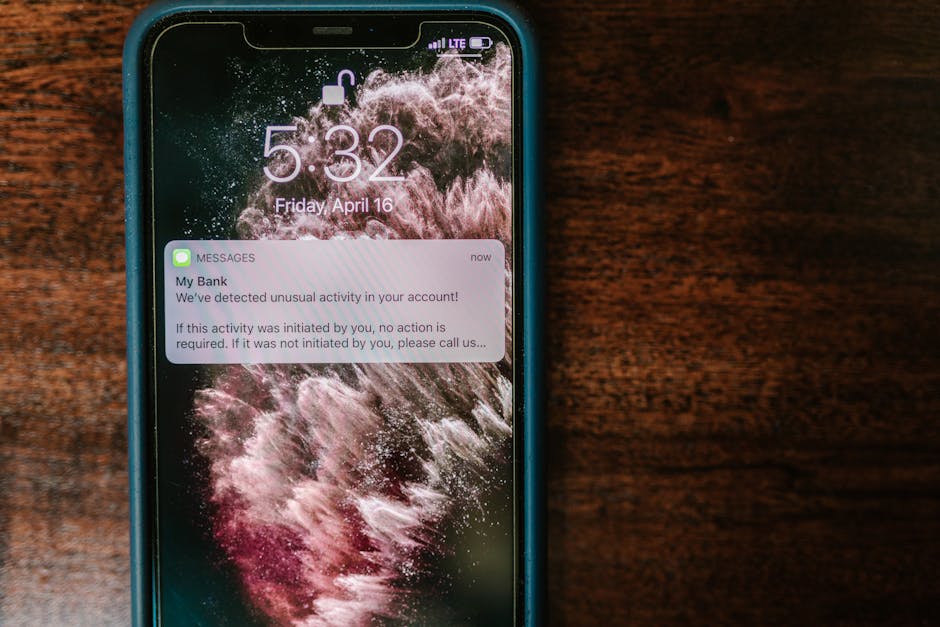
The days of easily identifiable phishing emails, riddled with grammatical errors and strange formatting, are rapidly fading into memory. ChatGPT and its brethren are masters of language, capable of crafting highly convincing narratives that are indistinguishable from legitimate communications. They can adopt various tones, mimic specific writing styles, and tailor messages to individual targets based on publicly available information. This isn't just about better English; it's about psychological manipulation at scale. Imagine an email, ostensibly from your bank, that perfectly matches their branding, uses your name, references a recent transaction you actually made, and then subtly guides you to a malicious link or asks for sensitive information. The AI can even generate follow-up emails, maintaining a persistent conversation to build trust over time, a tactic known as "phishing as a service" but now hyper-automated.
The sophistication surge isn't limited to email. We’re already seeing early examples of AI being used to generate deepfake audio and video, raising the specter of highly convincing voice phishing (vishing) and video conferencing scams. Imagine a CEO's voice, perfectly replicated, calling a financial officer to urgently authorize a fraudulent wire transfer. Or a deepfake video of a senior executive instructing employees to install a new "security update" that is, in fact, malware. These are not futuristic hypotheticals; the underlying technology is here, and it's improving at a terrifying pace. The human element, once considered the strongest link in the security chain due to its ability to discern nuance and context, is now paradoxically becoming the most vulnerable, as AI-powered deception exploits our inherent trust and cognitive biases. The challenge for security professionals is no longer just about securing systems, but about educating and re-educating users to question everything, even when it appears perfectly legitimate.