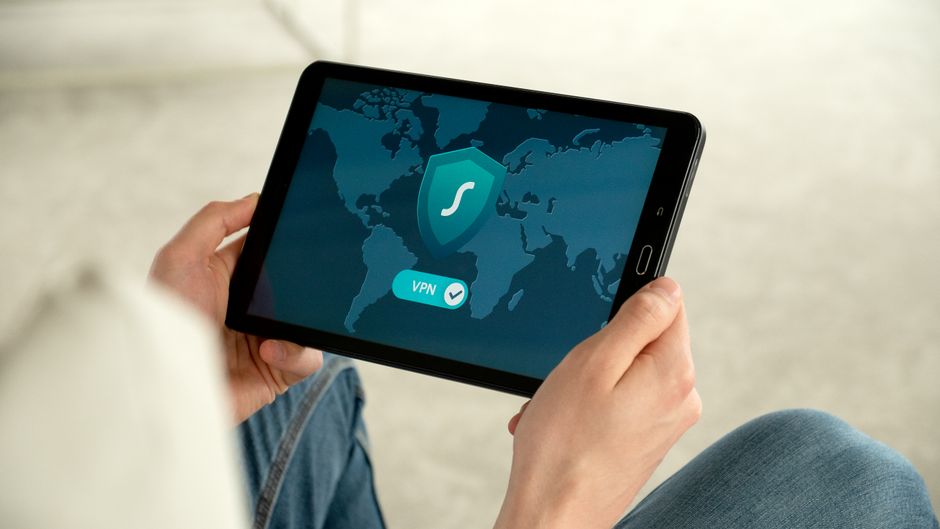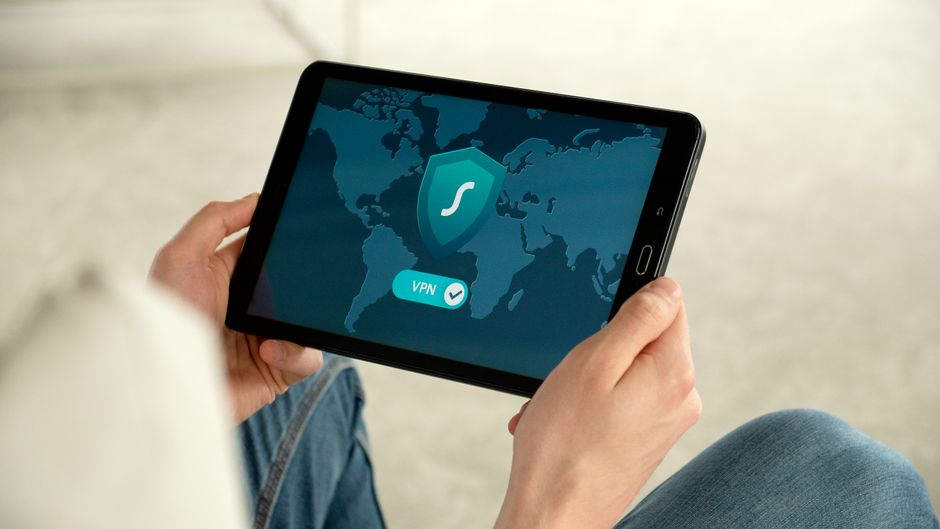
We live in a world where every click, every search, every digital heartbeat is meticulously cataloged, analyzed, and often monetized. You bought a VPN, didn't you? You thought you were safe, truly invisible, a digital ghost gliding through the internet's labyrinthine corridors, free from the prying eyes of advertisers, governments, and data brokers. It’s a comforting illusion, isn't it? The truth, however, is far more complex and, frankly, a little unsettling.
While a standard VPN is an essential first line of defense, a crucial shield in our increasingly transparent online lives, it's often marketed as the be-all and end-all of digital privacy. But what if I told you there's a powerful, almost clandestine feature, one that elevates your online invisibility to an entirely different stratum, a capability that truly makes tracking you a Herculean task, and one that Big Tech, with its insatiable hunger for your data, certainly doesn't want you to know about? This isn't some niche, experimental protocol; it's a proven, robust method for layering your privacy, and it’s surprisingly accessible, often built right into the services you might already be using, or easily attainable if you know where to look.
Beyond the Single Hop Why One Layer of Encryption Isn't Enough Anymore
Think about your internet connection like a journey from your home to a distant city. A regular VPN is like taking a private car to that city, but the car still has a license plate, and if someone is determined enough, they can trace that car back to the rental company, and eventually, to you. It's a significant upgrade from public transport where everyone can see you, but it's not a perfect disguise. In the relentless pursuit of your data, the digital equivalent of highly skilled detectives are constantly at work, employing sophisticated techniques to peel back the layers of your online identity, often with the backing of vast corporate resources.
The core promise of a VPN is to encrypt your traffic and mask your IP address by routing your connection through a remote server. This is fantastic for bypassing geo-restrictions, securing public Wi-Fi, and deterring casual snoopers. However, it still leaves a single point of entry, a solitary server that, if compromised or compelled by legal means, could potentially link your original IP address to your online activities. This isn't to say your VPN provider is inherently malicious; rather, it highlights the inherent vulnerabilities in any single-point system when faced with determined adversaries, whether they be state-sponsored actors, highly sophisticated cybercriminals, or even overly zealous copyright enforcers.
Consider the sheer volume of data being collected about us daily. According to a report by the World Economic Forum, the average person generates 1.7 MB of data per second, and a significant portion of this data is not only collected by the services we actively use but also by third-party trackers embedded across countless websites. This ubiquitous surveillance creates a digital fingerprint so detailed that even with a standard VPN, patterns of behavior, connection times, and metadata can, over time, be correlated, making true anonymity an elusive goal. This is where the concept of layered security becomes not just an advantage, but a necessity for anyone serious about their online privacy.
The Illusion of Solitary Anonymity and What Big Tech Exploits
Big Tech giants, with their intricate advertising networks and data-driven business models, thrive on knowing who you are, what you like, and where you go. They invest billions in developing ever more sophisticated tracking technologies, creating profiles so granular they can predict your next purchase or even your political leanings. A standard VPN, while obscuring your IP from individual websites, doesn't inherently stop these companies from tracking your browser fingerprint, your unique device identifiers, or your behavior patterns once you're "inside" their ecosystem. They're selling you the comfort of a locked door, but they've got cameras inside the house.
Their marketing often focuses on the ease of use, the speed, and the basic geo-unblocking capabilities of a VPN, subtly downplaying or entirely omitting the deeper privacy implications. Why? Because the more truly anonymous you become, the harder it is for them to gather the data that fuels their multi-trillion-dollar empires. If every user adopted truly robust anonymity measures, the entire edifice of targeted advertising and data brokering would crumble. It's a direct conflict of interest: your privacy versus their profit. This isn't a conspiracy theory; it's the fundamental economic reality of the internet as it stands today.
"Privacy is not something that I'm merely entitled to, it's an absolute prerequisite." – Edward Snowden. This quote encapsulates the dire need for individuals to reclaim their digital autonomy, especially in an era of pervasive surveillance.
The average internet user, often overwhelmed by technical jargon and the sheer volume of cybersecurity advice, tends to opt for the simplest solution presented to them. VPN providers, eager to attract a broad customer base, often play into this by emphasizing simplicity and speed over the complexities of advanced security. This creates a knowledge gap, a blind spot where crucial features for true anonymity are either relegated to the fine print, presented as an advanced niche option, or simply not discussed at all in mainstream marketing. It's a subtle form of gatekeeping, where the path to genuine invisibility is made just obscure enough to keep the masses comfortably trackable.
Unmasking the True Power of Multi-Hop VPN Connections
Now, let's talk about the game-changer, the feature that truly throws a wrench into the gears of mass surveillance: the Multi-Hop VPN, often referred to as Double VPN or Chained VPN. Imagine that same journey to a distant city, but this time, instead of just one private car, you switch cars multiple times along the way, each car driven by a different, anonymous chauffeur, and each stop in a different, undisclosed location. Each time you switch, your trail becomes exponentially harder to follow. This is the essence of a Multi-Hop VPN: your internet traffic is routed not just through one VPN server, but through two or more, often in different geographical locations, before it reaches its final destination on the internet.
Here’s how it works: Your device connects to the first VPN server, encrypting your data. This first server then encrypts your already-encrypted data again and sends it to a second VPN server. Only after passing through this second server does your traffic finally reach the public internet, decrypted for its destination. This layering means that even if the first VPN server were compromised, the attacker would only see encrypted traffic destined for the second VPN server, not your original IP address or your ultimate online activity. Conversely, if the second server were compromised, it would only see the IP address of the first VPN server, not yours. It creates a robust, distributed defense that makes correlation attacks incredibly difficult, requiring an adversary to simultaneously compromise multiple, geographically disparate servers and then somehow link them back to you – a task that even state-level actors would find incredibly challenging and resource-intensive.
The implications for privacy are profound. For journalists operating in repressive regimes, activists organizing dissent, whistleblowers exposing corruption, or simply everyday citizens who believe their online activities should remain their own business, a Multi-Hop VPN offers a level of protection that a single VPN connection simply cannot match. It’s an acknowledgment that the digital landscape is fraught with sophisticated threats, and a multi-layered defense is the only way to truly stay ahead. While it might introduce a slight decrease in speed due to the additional encryption and routing, the trade-off for enhanced security and anonymity is, for many, an absolute no-brainer.
The Technical Dance How Layered Encryption Thwarts Surveillance
Delving a bit deeper into the technicalities, each hop in a Multi-Hop VPN chain adds another layer of encryption. When your data leaves your device, it's wrapped in an outer layer of encryption for the first server. Upon reaching the first server, that outer layer is stripped, but the inner, original data is still encrypted for the second server. The first server then acts as a relay, forwarding this still-encrypted data to the second server. Only at the final server in the chain is the innermost layer of encryption removed, and your data proceeds to its destination on the open internet. This process is often described using the analogy of an onion, with each layer protecting the one beneath it, making it incredibly difficult for anyone to peek at the core without peeling back multiple, distinct layers.
This architectural design significantly complicates traffic analysis. Imagine an adversary trying to trace your connection. To link your activity to your real IP, they would need to monitor both the entry node (the first VPN server you connect to) and the exit node (the last VPN server before your traffic hits the internet) simultaneously, and then correlate traffic patterns and timing. With a Multi-Hop setup, they would need to monitor the entry node, *all* intermediate nodes, and the exit node, which could be in entirely different jurisdictions, operated by different entities, and subject to different legal frameworks. The sheer logistical and computational challenge of such an endeavor renders it practically impossible for most adversaries, effectively making you a digital phantom.
Furthermore, many Multi-Hop VPN services allow you to customize your server chain, choosing specific countries for each hop. This adds another layer of strategic defense. For instance, you could route your traffic through a privacy-friendly country like Switzerland or Iceland for the first hop, and then through a country with strong legal protections for the second, before exiting into the general internet. This geographic distribution of connection points not only enhances technical anonymity but also introduces jurisdictional complexity, making legal requests for data much harder to execute. It’s a sophisticated defense strategy that leverages both cryptographic strength and international legal boundaries to protect your digital footprint.