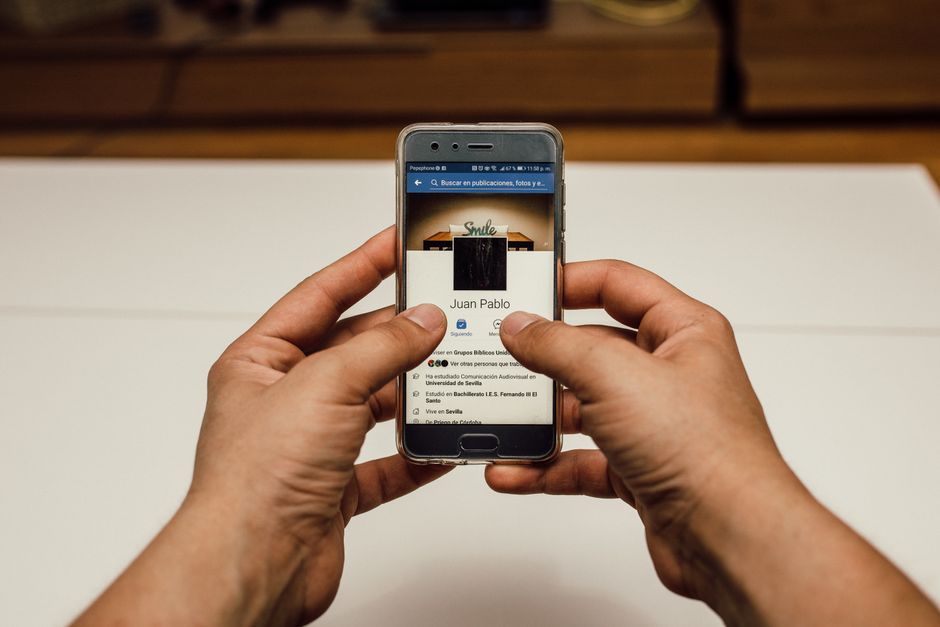
As we delve deeper into the mechanics of how your smartphone acts as a personal spy, we inevitably land on the most direct and often most overlooked vector of data leakage: the applications you willingly download and install. These digital tools, designed to enhance productivity, entertain, or connect us, are frequently the primary conduits through which a torrent of personal information flows from your device into the vast, hungry maw of the data economy. The insidious nature of this data harvest lies in its apparent legitimacy; you often grant these apps explicit permission to access various parts of your phone, albeit usually without fully grasping the implications of those grants.
The Insidious Data Harvest from Your Apps
Think about the last time you installed a new app. Did you meticulously read through every permission request? Or did you, like the vast majority of users, quickly tap "Allow" to get to the fun stuff? This common user behavior is precisely what developers and data brokers bank on. Apps often request a broad array of permissions that seem tangential, at best, to their core functionality. A flashlight app might request access to your camera, which seems logical for the LED flash, but then it might also ask for your location, contacts, and microphone – suddenly, the utility-to-privacy ratio takes a nosedive. This over-permissioning is a well-documented tactic, designed to maximize data collection potential, often for purposes entirely unrelated to the app's primary function, such as selling data to third-party advertisers or data brokers.
The sheer volume of applications available on app stores, numbering in the millions, makes it nearly impossible for the average user to vet each one thoroughly. Even reputable apps from well-known companies can engage in questionable data practices. Take, for instance, the seemingly innocuous game or social media platform. Beyond its core purpose, it might be collecting detailed analytics on your usage patterns, the duration of your sessions, the specific features you interact with, and even your scrolling speed and tapping rhythm. This behavioral data, when combined with other identifiers, contributes to an incredibly granular profile of your digital habits, which can then be used for hyper-targeted advertising, content manipulation, or even more concerning applications down the line. It's a gold rush for data, and your smartphone is the mine.
Location Tracking Your Every Step
Perhaps one of the most pervasive and privacy-invasive forms of data collection is location tracking. Your smartphone, through a combination of GPS, Wi-Fi triangulation, Bluetooth beacons, and even cell tower signals, possesses an uncanny ability to pinpoint your exact geographical coordinates at virtually any given moment. Many apps, from mapping services and ride-sharing platforms to weather apps and even some games, request and often receive permission to access your location data, sometimes continuously, even when the app isn't actively in use. This constant stream of location information paints an incredibly detailed picture of your daily routine: where you live, where you work, where you shop, where you socialize, and even where you sleep.
The implications of this pervasive location tracking are staggering. For advertisers, it means understanding foot traffic patterns, targeting ads based on physical proximity to stores, or even inferring your income bracket based on the neighborhoods you frequent. For data brokers, it's a valuable commodity, bundled and sold to various industries. We've seen numerous real-world examples of this, such as reports detailing how location data from popular apps was sold to defense contractors, government agencies, and even bounty hunters, allowing them to track individuals without a warrant. One particularly disturbing investigation revealed how data from seemingly innocent apps could reveal the exact movements of military personnel, high-ranking officials, and even visitors to sensitive government facilities. This isn't just about privacy; it's about national security and personal safety.
"The greatest danger to privacy is the belief that you have nothing to hide." - Unknown
Beyond the commercial aspects, continuous location tracking creates a significant security vulnerability. Imagine if this highly sensitive data were to fall into the wrong hands through a data breach. Stalkers, criminals, or even oppressive regimes could gain real-time or historical access to your movements, putting you at immense risk. Furthermore, law enforcement agencies, sometimes with minimal legal oversight, can purchase or compel companies to hand over vast troves of location data, effectively creating a surveillance state where individuals are tracked without their knowledge or specific suspicion. While some operating systems like iOS and Android have introduced more granular controls over location permissions, the default settings and the sheer number of apps demanding this access mean that most users remain unknowingly exposed.
The Always-On Eavesdropper Your Microphone
The microphone on your smartphone is an incredibly powerful tool, essential for calls, voice notes, and interacting with voice assistants. However, it also represents a significant privacy risk. Many apps, from social media platforms to lesser-known utilities, request microphone access. While some legitimate uses exist, such as recording audio or enabling voice chat, the concern arises when apps are granted "always-on" or background microphone access, potentially listening in on your surroundings without your explicit knowledge or consent.
Remember the persistent rumors that Facebook (now Meta) was listening to your conversations to serve targeted ads? While Meta vehemently denied actively recording conversations for advertising, the incident highlighted a deep-seated public distrust, fueled by anecdotal evidence where users would discuss a product verbally, only to see ads for it moments later. The truth is more nuanced but no less concerning. Voice assistants like Siri, Google Assistant, and Alexa are explicitly designed to be always-on, constantly listening for their wake words. While they are supposed to only process audio after the wake word, the sheer volume of "false positives" and the human review processes involved in improving these systems mean that snippets of private conversations can and do get recorded and analyzed.
Moreover, some apps have been caught exploiting microphone permissions in less overt ways. For instance, certain gaming apps were found to be using their access to the microphone to listen for ambient audio cues, such as TV shows or background music, to identify users for advertising purposes. This acoustic fingerprinting, while not recording full conversations, still invades your personal space and harvests data about your media consumption habits. The potential for misuse is clear: a compromised app with microphone access could become a remote listening device, turning your smartphone into a bug, silently transmitting everything it hears to a third party. The microphone, once a simple input device, has become a gateway to the most intimate details of your personal environment.
Your Camera A Window to Your World
Your smartphone's camera is an extension of your eyes, capturing moments, scanning QR codes, and enabling video calls. But like the microphone, it also serves as a potential window into your personal world, accessible to apps that you grant permission to. While apps like Instagram or Snapchat obviously need camera access, why would a simple note-taking app or a calculator require it?
The risks associated with camera access are arguably even more immediate and visually invasive than microphone access. A malicious or compromised app with camera permission could covertly activate your front or rear camera, capturing photos or recording videos of your surroundings, your activities, or even your face, all without your knowledge. Imagine a scenario where a seemingly innocent app, perhaps a photo editor or a game, secretly captures images of your sensitive documents, your home layout, or even your family members, and transmits them to an unknown server. The thought alone is chilling.
Beyond direct surreptitious recording, camera data can also be used for more subtle forms of surveillance. Facial recognition technology, increasingly integrated into various apps and services, can identify individuals, track their emotions, and even infer demographic information. While often touted for convenience (e.g., unlocking your phone with your face), the widespread collection of facial biometrics by third-party apps raises significant privacy concerns, especially given the potential for misuse, data breaches, and the inherent difficulty of changing a biometric identifier once it's compromised. The camera, therefore, is not just for capturing memories; it’s a powerful sensor that can reveal profound personal insights, making its permissions a critical area of concern for anyone serious about their digital privacy.