Your Digital Breadcrumbs: Advanced Location Tracking Beyond GPS
Most people associate location tracking with GPS, the familiar blue dot on a map app, or the explicit permission pop-up on their smartphone. However, the reality of location tracking extends far beyond satellite navigation, employing a sophisticated array of technologies to pinpoint your whereabouts with startling accuracy, often without your direct consent or even your awareness. Your digital breadcrumbs are scattered not just by your phone's GPS, but by every Wi-Fi signal, Bluetooth beacon, and cellular tower you encounter, creating a persistent record of your physical movements.
One of the primary methods for advanced location tracking is Wi-Fi triangulation. Even if your GPS is turned off, your smartphone is constantly scanning for nearby Wi-Fi networks to improve its own location accuracy and to provide you with a list of available networks. Each Wi-Fi access point broadcasts a unique identifier (MAC address), and companies like Google and Apple have compiled massive databases mapping these MAC addresses to their geographical locations. By detecting several nearby Wi-Fi networks and cross-referencing their known locations, your device can determine its position with surprising precision, often down to a few meters, even indoors where GPS signals struggle. This data is then often uploaded to these companies' servers, contributing to a vast, dynamic map of human movement.
Bluetooth beacons represent another powerful, often covert, form of location tracking, particularly prevalent in retail environments, airports, and public spaces. These small, low-energy devices broadcast unique identifiers that can be picked up by your smartphone's Bluetooth radio. When an app on your phone (or even the operating system itself) detects a beacon, it can log your presence, duration of stay, and even your movement within a specific area. Retailers use this to track foot traffic, analyze shopping patterns, and send targeted promotions to your phone as you pass by certain departments. The insidious part is that you might have granted permission to an app for Bluetooth access for one purpose, unknowingly enabling it to track your physical location via these ubiquitous beacons.
Cellular tower triangulation, while less precise than Wi-Fi or Bluetooth, provides a broad picture of your location, especially useful in rural areas or when other signals are unavailable. Your phone constantly communicates with the nearest cell towers, and by measuring the signal strength and time delay from multiple towers, mobile network operators can estimate your position. This data, aggregated and anonymized, is often sold to third-party analytics firms who then use it to understand traffic patterns, population density, and even social trends. While your individual location might be obscured by aggregation, the sheer volume of data allows for powerful insights into collective behavior, which can then be de-anonymized with other data points.
"Your phone is a homing beacon. Even when you think it's off the grid, it's constantly whispering your location to a network of digital listeners." - Edward Snowden, Whistleblower and Privacy Advocate.
Beyond these network-based methods, the sensors within your smartphone itself are a goldmine for location inference. Accelerometers, gyroscopes, magnetometers, and barometers can collectively paint a picture of your movement, elevation changes, and even the type of environment you're in. While these sensors don't directly provide GPS coordinates, the patterns they generate can be highly indicative of specific activities or locations. For example, a combination of accelerometer data and Wi-Fi signals could distinguish between you walking through a shopping mall and driving on a highway, adding another layer of detail to your location profile. This granular sensor data, when combined with other tracking methods, creates an incredibly rich and persistent record of your physical presence in the world, far exceeding what most people imagine when they think of "location services."
The implications of this advanced, multi-faceted location tracking are profound. It means that your physical movements, your visits to doctors, political rallies, places of worship, or even private residences, can be meticulously recorded and analyzed. This data can be used for targeted advertising, but also for more nefarious purposes: surveillance, profiling by insurance companies, or even by law enforcement without a warrant. The digital breadcrumbs we leave behind are not just harmless markers; they are incredibly sensitive pieces of personal information that, when pieced together, reveal the intimate tapestry of our lives. Understanding the pervasive nature of this tracking is essential for taking proactive steps to protect your physical privacy in an increasingly connected world.
The Unseen Hand: Behavioral Biometrics and How You Interact
In the relentless pursuit of unique identifiers, companies have moved beyond what you click or where you go, delving into the very essence of *how* you interact with your devices. This is the realm of behavioral biometrics, a cutting-edge tracking method that analyzes your unique patterns of behavior – how you type, swipe, scroll, and move your mouse – to create a digital fingerprint that is nearly impossible to spoof. It’s an unseen hand, constantly observing your subtle digital mannerisms, turning your habits into a powerful, persistent identifier.
Behavioral biometrics leverages machine learning and artificial intelligence to create a profile based on your unique interaction style. For example, keystroke dynamics analyze the rhythm, speed, and pressure with which you type, including the time between key presses, the duration of each press, and even the errors you typically make. Are you a hunt-and-peck typist or a rapid touch-typist? Do you pause before certain words? Do you often hit 'backspace' after typing 'teh' instead of 'the'? These subtle nuances, when aggregated, create a distinct "typing signature" that is as unique as your physical signature, if not more so. This isn't just about what you type, but the unique symphony of your fingers on the keyboard.
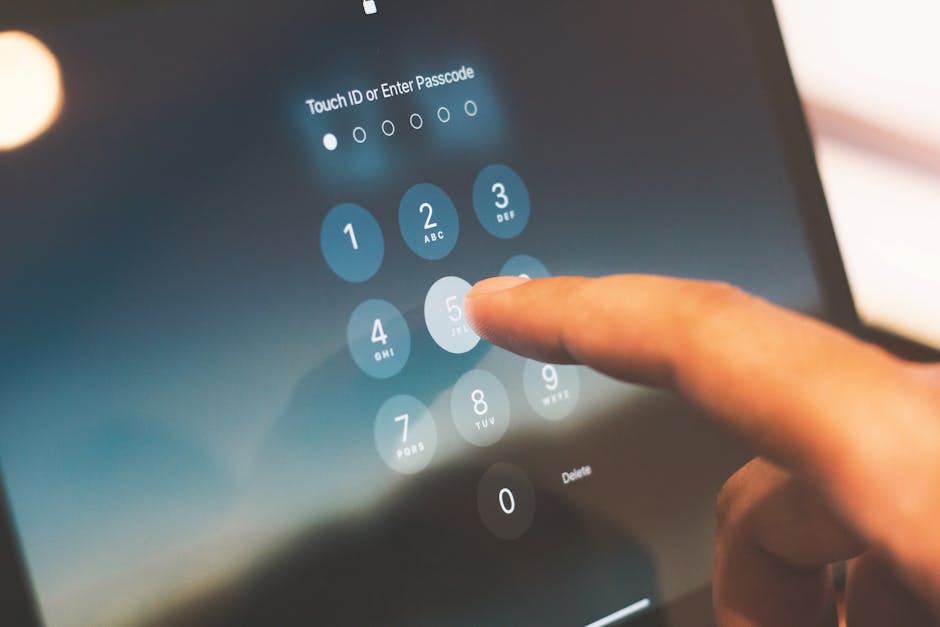
Similarly, your mouse movements and touchscreen gestures are rich sources of behavioral data. The speed at which you move your cursor, the path it takes (straight line versus meandering curve), how quickly you click, the pressure you apply on a touchscreen, the angle and speed of your swipes – all contribute to this intricate profile. Do you scroll smoothly or in jerky bursts? Do you tend to hover over certain elements before clicking? These micro-interactions, often subconscious, are incredibly consistent for an individual. Companies use this data not just to identify you, but also to infer your emotional state, level of engagement, or even detect if you're a bot rather than a human user.
The primary driver behind the adoption of behavioral biometrics is often framed as security and fraud prevention. Banks, e-commerce sites, and other high-security platforms use these methods to continuously authenticate users in the background. If your typing pattern suddenly changes drastically during a banking session, it could flag a potential account takeover attempt, even if the correct password was entered. This "continuous authentication" is presented as a user-friendly security measure, eliminating the need for frequent password re-entries or multi-factor authentication prompts. However, the same technology that enhances security can also be repurposed for pervasive, non-consensual tracking and profiling.
"Behavioral biometrics is the ultimate passive surveillance. It doesn't ask for your data; it watches you generate it, unconsciously, with every interaction." - Kevin Mitnick, Former Hacker and Security Consultant.
The implications for privacy are profound. Unlike traditional identifiers like passwords or even device fingerprints, your behavioral biometrics are incredibly difficult to change or disguise. You can't simply clear your "typing history" or "mouse movement cache." Your unique interaction style is an inherent part of you, making it a persistent and powerful identifier that operates entirely outside your conscious control. This means that even if you use a VPN, block cookies, and employ privacy-focused browsers, your unique digital mannerisms could still be used to identify and track you across different websites and applications, effectively creating a "ghost" of your interaction style that follows you everywhere. It shifts the burden of privacy from data points to the very way you exist in the digital realm, turning every interaction into a potential data point for surveillance.
Furthermore, the data collected from behavioral biometrics can be used to infer much more than just identity. Subtle changes in interaction patterns can be analyzed to detect stress, fatigue, or even certain cognitive impairments. While these applications might have beneficial uses in specific contexts (e.g., medical diagnostics), their deployment without explicit, informed consent for general tracking raises serious ethical concerns about surveillance, manipulation, and the erosion of personal autonomy. When companies can analyze not just what you do, but *how* you do it, the line between observation and intrusion becomes incredibly thin, making our every digital gesture a potential window into our minds and identities.