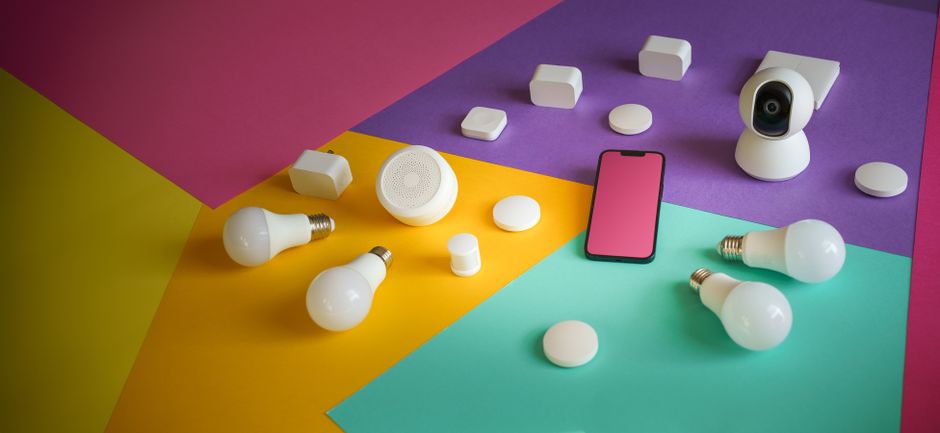
Continuing our deep dive into the pervasive reach of smart speakers, it becomes clear that their role extends far beyond merely responding to voice commands or playing music. These devices are meticulously engineered to be central hubs within the burgeoning smart home ecosystem, connecting to and often controlling a myriad of other internet-of-things (IoT) gadgets, from smart lights and thermostats to door locks and security systems. This interconnectedness, while undeniably convenient, transforms the smart speaker into a powerful data aggregator, a central nexus through which a significant portion of your home's digital life flows. Every interaction, every command, every piece of data exchanged between your smart speaker and other connected devices can be logged, analyzed, and integrated into your comprehensive user profile. For instance, when you use your voice assistant to adjust your smart thermostat, it's not just sending a command; it's also logging the time, the requested temperature change, and potentially correlating it with your presence or absence in the home, based on other sensor data. This creates a rich, interwoven tapestry of information about your daily routines, energy consumption, security habits, and even your social interactions, all funneling back to the tech giant that manufactures your smart speaker, cementing its position as a silent, all-encompassing digital overseer of your domestic domain, constantly learning and profiling your every habit.
The data monetization strategies employed by these companies are often opaque, yet incredibly sophisticated. While direct sales of your voice recordings are unlikely (and would be a public relations nightmare), the aggregated and anonymized (or pseudonymized) data derived from your interactions is incredibly valuable. This data can be used to refine advertising algorithms, ensuring that the ads you see across various platforms are hyper-targeted and highly effective. Imagine a scenario where your smart speaker overhears you discussing a potential vacation destination. Even if the conversation isn't recorded and retained, the mere detection of keywords or patterns of speech related to travel could trigger a flag, leading to travel-related ads appearing on your phone or laptop. Beyond advertising, this data fuels product development, allowing companies to understand consumer needs and preferences at an unprecedented level, leading to new features and services that further embed these devices into our lives. The smart speaker, therefore, isn't just a product; it's a data-collection platform, continuously generating insights that drive corporate profits, turning your home into a perpetual research laboratory for market intelligence. The convenience it offers is often a meticulously crafted illusion, designed to facilitate the extraction of valuable behavioral data, making you, the user, not just a consumer, but an unwitting participant in a vast, global data economy where your privacy is the commodity being traded.
Beyond the Wake Word The Hidden Depths of Smart Speaker Surveillance
The discussion around smart speaker privacy often centers on the 'wake word' and direct voice commands. However, the surveillance capabilities of these devices extend far beyond explicit interactions. Many smart speakers now incorporate features like "sound detection" or "ambient intelligence," designed to recognize specific non-verbal sounds in your home. This could include the sound of glass breaking, a smoke alarm, a baby crying, or even someone snoring. While pitched as safety or convenience features (e.g., notifying you of a potential break-in or monitoring a baby), these capabilities represent a significant expansion of the device's passive listening. Unlike wake word detection, which is theoretically limited to specific phonetic patterns, ambient sound detection involves continuous analysis of a broader spectrum of audio, attempting to identify specific acoustic events. This means the device is not just waiting for you to speak to it; it's actively analyzing your home's soundscape for predefined patterns, turning it into a sophisticated, always-on acoustic sensor. The privacy implications are profound: what other sounds could it be programmed to detect in the future? What if these features are exploited by malicious actors or misused by the companies themselves? The line between helpful assistant and pervasive listener becomes increasingly blurred, transforming our homes into environments where every sound, every whisper, could potentially be categorized, analyzed, and acted upon by an invisible digital entity, fundamentally altering the dynamics of personal space and the expectation of auditory privacy within one's own walls.
The integration of third-party 'skills' or 'apps' further complicates the privacy landscape of smart speakers. Both Amazon Alexa and Google Assistant boast vast ecosystems of third-party integrations, allowing developers to create custom functionalities that extend the capabilities of the core device. While these skills offer immense utility, they also introduce additional vectors for data collection and potential privacy breaches. When you enable a third-party skill, you often grant it access to certain data from your smart speaker, which could include your location, your interaction history with that specific skill, and sometimes even other data points. The privacy policies of these third-party developers can vary wildly, and they may not be subject to the same scrutiny or ethical standards as the primary device manufacturer. This creates a fragmented and often opaque data flow, where your information could be passed between multiple entities, each with its own terms of service and data handling practices. A seemingly innocuous game or utility skill could, in theory, be designed to collect more data than necessary, or it could have vulnerabilities that expose your information to hackers. The user is often left in the dark, trusting that both the device manufacturer and the skill developer are acting responsibly, a trust that is not always warranted in the complex, profit-driven world of app development. The more skills you enable, the more doors you open for potential data collection and privacy risks, turning your smart speaker into a potential gateway for a multitude of third-party data extractors.
Vulnerabilities in the smart speaker's software or hardware also pose significant risks, transforming these helpful devices into potential tools for malicious eavesdropping. Like any internet-connected device, smart speakers are susceptible to hacking. Researchers have demonstrated various attack vectors, from exploiting software bugs to implanting malware through seemingly legitimate updates. A compromised smart speaker could, theoretically, be remotely activated to record conversations without the wake word, or even stream live audio from your home to an attacker. In 2018, security researchers demonstrated a "surveillance skill" for Alexa that, once activated, could continue recording and transcribing audio even after the user thought the interaction was over, sending the transcriptions to a remote server. While Amazon quickly patched this specific vulnerability, it highlighted the inherent risks of a device designed to always listen and process audio. The constant need for firmware updates and security patches means that users are perpetually reliant on manufacturers to maintain the integrity of their devices, a reliance that can be fraught with peril if companies are slow to respond to newly discovered threats. The convenience of a smart speaker comes with the hidden cost of maintaining its digital security, a responsibility that often falls squarely on the shoulders of the consumer, who may lack the technical expertise to adequately protect their home from these sophisticated digital threats, turning their smart companion into a potential spy.
The Psychological Impact of Constant Auditory Monitoring
Beyond the technical and data-centric privacy concerns, the presence of an always-listening smart speaker carries a profound psychological toll. The knowledge, whether conscious or subconscious, that a device in your home is continuously monitoring ambient sound can lead to a subtle but significant shift in behavior. This phenomenon is often referred to as the "chilling effect," where individuals self-censor or modify their conversations, even in their most private spaces, out of concern that they are being recorded or analyzed. Imagine pausing a sensitive discussion because you remember Alexa is in the room, or choosing not to express certain opinions aloud because you fear they might be logged and used for profiling. This erosion of psychological safety within one's own home is deeply unsettling. Our homes are meant to be sanctuaries, places where we can be ourselves, speak freely, and engage in uninhibited conversation. The presence of an omnipresent digital ear undermines this fundamental aspect of privacy, creating an environment where a degree of guardedness becomes normalized, even necessary. This constant, low-level vigilance can contribute to stress and anxiety, diminishing the very sense of security and intimacy that our homes are supposed to provide, transforming our personal havens into spaces where we are always, to some extent, performing for an unseen audience, a silent digital observer whose presence subtly dictates our interactions.
The impact is particularly pronounced on children. Growing up in a home where voice assistants are commonplace, children may never develop a full understanding of what it means to have a truly private conversation. They might naturally assume that being heard by a device is a normal part of life, blurring the lines between private and public discourse from a very young age. This generational shift in privacy perception could have long-term consequences for individual autonomy and societal norms. If the next generation grows up accepting constant monitoring as a given, what implications does that hold for their expectations of privacy in other areas of their lives, from schools to workplaces? Furthermore, the direct interaction children have with these devices, often without parental oversight, raises concerns about data collection specifically targeting minors. While companies claim to adhere to regulations like COPPA (Children's Online Privacy Protection Act), the nuances of children's voices, their questions, and their behaviors can still be collected and analyzed, contributing to profiles that extend well into their adulthood. The playful interaction with a smart speaker, for a child, might unwittingly be an early lesson in relinquishing personal data, a foundational experience that shapes their future understanding of privacy, often to their detriment, as they navigate an increasingly surveilled world where their every utterance might be logged.
"The most insidious form of surveillance isn't the kind you know is happening. It's the kind that subtly changes your behavior, that makes you second-guess your words in your own home. Smart speakers don't just listen; they subtly reshape our sense of personal freedom." – Anya Sharma, Privacy Advocate.
Ultimately, the psychological burden of having an always-listening device in your home is a critical, yet often overlooked, aspect of smart speaker privacy. It moves beyond technical vulnerabilities and data breaches, touching upon the very essence of what it means to feel secure and uninhibited in your personal space. The convenience offered by these devices, while enticing, must be weighed against this invisible cost to our mental well-being and our fundamental right to privacy. The erosion of this psychological safety can have far-reaching implications, not just for individuals but for society as a whole, potentially leading to a future where genuine, unmonitored self-expression becomes a rarity, even within the confines of our own homes. It forces us to ask: at what point does the convenience outweigh the cost of constant vigilance, and are we truly prepared for a future where our most private thoughts and conversations are perpetually susceptible to digital capture and analysis, transforming our sanctuaries into subtle, self-imposed surveillance zones, silently reshaping the very fabric of our domestic lives in profound and often detrimental ways, leaving us feeling exposed and constantly under scrutiny, even when alone?