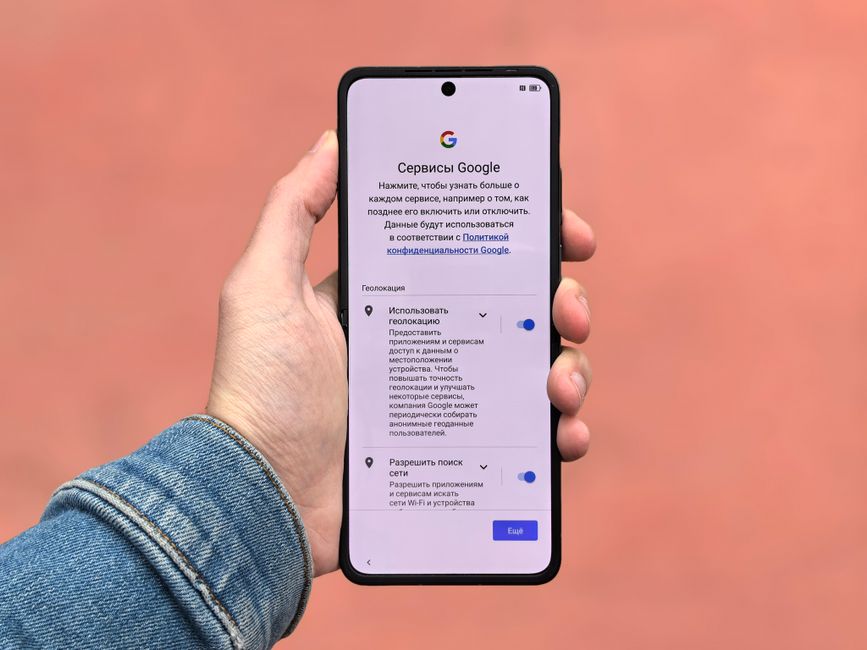
The ubiquity of mobile devices has truly transformed them into the ultimate personal spy, far surpassing anything imagined in earlier eras of surveillance. It’s not just the obvious data points like location or contacts; it's the subtle behavioral cues that these devices capture. Accelerometers track how you move, gyroscopes sense your orientation, and even the pressure you apply to the screen or the speed at which you type can be analyzed to create a unique behavioral biometric profile. This kind of data can be used for fraud detection, yes, but it can also be used to infer your emotional state, your health conditions, or even your cognitive abilities. Consider the implications for insurance companies or employers if they could access such detailed insights into your personal habits and physical well-being without your explicit, informed consent. The lines between what is public and what is private blur considerably when our most intimate devices are constantly broadcasting signals about our very being.
Furthermore, the software development kits (SDKs) embedded within many popular apps represent another significant vector for data harvesting. An SDK is essentially a set of tools and libraries that app developers use to add specific functionalities, like advertising, analytics, or social media integration, to their applications. While convenient for developers, these SDKs often come with their own tracking mechanisms, operating independently of the main app’s stated purpose. This means that even if you trust the app developer, the third-party SDKs they integrate might be collecting and transmitting your data to entirely different companies, often without your direct knowledge or consent. It’s like inviting a friend into your home, and they, in turn, bring along a dozen strangers who start taking notes on your possessions and habits. A study by AppCensus and the International Computer Science Institute found that a significant percentage of apps on Google Play contain trackers from third-party companies, often sharing data with advertising networks, analytics firms, and data brokers.
The constant connectivity of our mobile devices also opens doors for network-level surveillance. Whether you're connecting to public Wi-Fi, your home network, or cellular data, your device is constantly communicating. While secure connections (HTTPS) encrypt much of your traffic, metadata — information about who you communicate with, when, and for how long — often remains exposed. Even the very act of connecting to a cellular network allows your carrier to know your general location, which cell towers you're near, and potentially even the specific websites you visit if they're not encrypted. This network-level data can be aggregated and analyzed to reveal patterns of life, associations, and behaviors that are incredibly telling. It's a foundational layer of data collection that is often overlooked because it happens beneath the surface of our conscious digital interactions, yet it forms a critical component of the overall data harvesting ecosystem.
Social Media's Insatiable Appetite for Your Life
Ah, social media. The digital town square, the photo album, the news source, the connection hub. It's where many of us willingly share the most intimate details of our lives, often without a second thought about the implications. Platforms like Facebook, Instagram, X (formerly Twitter), TikTok, and LinkedIn thrive on user-generated content, but they also thrive on user-generated data. Every post, every like, every comment, every shared photo, every friend request, every group joined – it's all meticulously cataloged, analyzed, and used to build an incredibly detailed profile of your personality, interests, political leanings, relationships, and even your emotional state. These platforms aren't just reflecting your life; they're actively shaping and monetizing it.
The data collection on social media goes far beyond what you explicitly post. It includes your interactions with other users, the time you spend on certain types of content, the ads you click on (or even hover over), and the devices you use to access the platform. Many social media companies also employ sophisticated sentiment analysis tools, using artificial intelligence to gauge the emotional tone of your posts and comments. Are you happy? Sad? Angry? Excited? This emotional data is incredibly valuable for advertisers seeking to target you at your most receptive moments, or for political campaigns looking to tailor their messaging to specific psychological profiles. It’s a level of psychological profiling that would have been unimaginable just a generation ago, now commonplace and largely invisible to the end-user.
Then there's the concept of "shadow profiles." This refers to data collected about individuals who may not even have an account on a particular social media platform. How? Through their friends who *do* have accounts. When your friend uploads their contacts list, for example, your phone number or email address might be swept up, even if you’ve never signed up for that platform. This allows social media companies to build a profile about you, anticipating your potential future engagement or using your data to enhance their understanding of your friends' networks. It's a clever, albeit ethically dubious, way to expand their data footprint beyond their direct user base, demonstrating the pervasive nature of their data collection efforts. This often comes to light when a non-user receives targeted ads or friend suggestions from a platform they've never joined, a truly unsettling experience for many.
The All-Seeing Eyes of Smart Devices
The dream of a connected home, where every appliance and gadget anticipates your needs, is rapidly becoming a reality. Smart TVs, voice assistants like Amazon Echo and Google Home, smart thermostats, security cameras, wearable fitness trackers – the Internet of Things (IoT) is expanding at an exponential rate. While these devices offer undeniable convenience, they also represent a new frontier in data harvesting, often operating right within the intimate confines of our homes. My own experience setting up a smart home system for a relative was a stark reminder of the sheer number of permissions and data-sharing agreements you implicitly consent to, often without fully understanding the long-term implications.
Consider your smart TV. It’s not just a display; it’s a sophisticated data collection hub. Many smart TVs track everything you watch, including traditional broadcast, streaming services, and even content from external devices connected to the TV. This viewing data is incredibly valuable to advertisers and content providers, allowing them to understand your preferences and tailor recommendations. But it goes further: some smart TVs, like those from Vizio which faced a hefty fine from the FTC, have been caught collecting detailed information about *everything* on screen, even if it’s from an external source like a Blu-ray player, then selling that data to third parties. They essentially turn your living room into a research lab, with you as the unwitting subject, providing real-time data on your media consumption habits.
Voice assistants are perhaps the most intimate of these smart spies. Devices like Alexa and Google Assistant are always listening, waiting for their wake word. While companies claim recordings are only sent to the cloud after the wake word is detected, accidental activations happen, and human reviewers have, in the past, listened to snippets of conversations. This raises profound questions about privacy in our most personal spaces. What private conversations are being inadvertently captured? What sensitive information might be revealed? The convenience of asking a device to play music or tell you the weather comes with the implicit understanding that a device with an open microphone is constantly within earshot, and the data it collects is being processed and stored, often by external servers. This is a level of passive audio surveillance that few would tolerate from a human, yet we readily accept it from our smart devices.
Wearable fitness trackers, like smartwatches and health bands, are another prime example of intimate data collection. These devices monitor your heart rate, sleep patterns, activity levels, and sometimes even blood oxygen or skin temperature. This health data, while useful for personal wellness, is incredibly sensitive. Imagine if this data, aggregated and anonymized or not, fell into the wrong hands, or was used by insurance companies to deny coverage or raise premiums. There have already been instances where fitness data has been used in legal cases, such as determining activity levels at the time of an accident. The promise of personalized health insights is compelling, but the privacy implications of having such granular, continuous health data collected by third-party companies are immense and not fully understood by most users. The potential for discrimination based on these digital health footprints is a very real and concerning prospect.