The Silent Stalker on Your Wrist and in Your Pocket
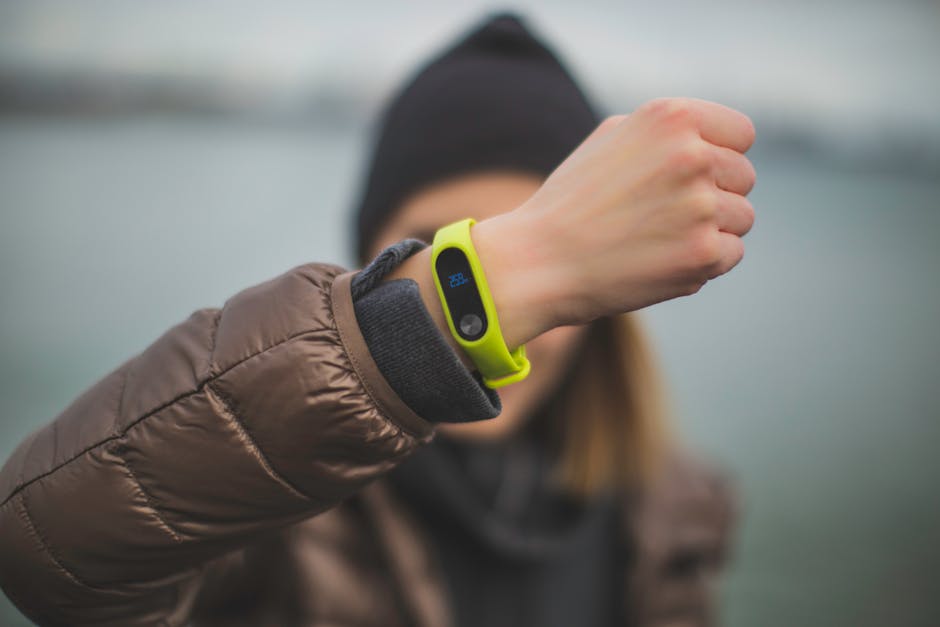
Wearable technology, from fitness trackers like Fitbits to advanced smartwatches from Apple and Samsung, has revolutionized how we monitor our health and stay connected. These devices are worn directly on our bodies, making them uniquely positioned to collect an extraordinary amount of deeply personal and sensitive biometric data. Think about it: your heart rate, sleep patterns, daily step counts, calorie expenditure, blood oxygen levels, and even electrocardiogram (ECG) readings are meticulously logged, timestamped, and uploaded to cloud servers. Many wearables also incorporate GPS, tracking your precise location throughout the day, mapping your runs, your commutes, and even your leisurely strolls. This constant stream of health and location data creates an incredibly detailed digital blueprint of your physical self and your daily movements, a level of insight that was unimaginable just a decade ago. While the stated purpose is to empower users with health insights and motivation, the reality is that this data, once collected, becomes a valuable commodity, often far beyond the user's control or even awareness.
The implications of this pervasive biometric and location data collection are far-reaching and, frankly, a bit chilling. Imagine your health insurance provider gaining access to your sleep patterns, heart rate variability, or exercise habits. While some companies offer incentives for sharing this data, it also opens the door to potential discrimination, where premiums could be adjusted based on perceived health risks or lifestyle choices derived from your wearable data. Beyond insurance, this data could be of immense interest to pharmaceutical companies, employers, or even marketing firms looking to target individuals based on specific health conditions or lifestyle demographics. The detailed location tracking, often aggregated, can reveal patterns of movement that betray sensitive information about your work, your home, your social circles, and even your personal habits. A fitness tracker logging your daily run route could inadvertently reveal your home address, your work location, or even the regularity of your movements. The convenience of having a personal health assistant on your wrist comes with the significant trade-off of offering up a continuous, intimate stream of your biological and geographical existence to an opaque ecosystem of data collectors and brokers, with little guarantee of how that information will be used or protected in the long run.
Your Smart Home is an Open Book of Your Life
The vision of a smart home, where lights adjust automatically, thermostats learn your preferences, and security cameras offer peace of mind, has largely become a reality for many. Yet, each of these interconnected devices acts as another sensor in a sprawling network, silently collecting data about your daily life. Smart lighting systems don't just turn on and off; they can track your presence in rooms, your sleep-wake cycles (if integrated with circadian lighting), and even your energy consumption patterns. Smart thermostats like Nest or Ecobee learn your schedule, your preferred temperatures, and when you're home or away, creating a detailed occupancy profile that reveals when your house is empty. Smart doorbells and security cameras, such as Ring and Arlo, record video and audio, not just of potential intruders, but of everyone who approaches your property, including delivery drivers, neighbors, and children playing. This visual and auditory data is often stored in the cloud, sometimes indefinitely, and can be accessed by the device manufacturer, and in some controversial cases, even shared with law enforcement without a warrant, raising serious civil liberties concerns.
The true power of this data, however, emerges when these disparate devices are interconnected and their data streams are aggregated. A smart home ecosystem can paint an incredibly precise picture of your daily routine: when you wake up, when you leave for work, when you return, what time you eat dinner, and when you go to bed. It can deduce how many people live in your home, how often you have visitors, and even what activities you engage in based on light changes, temperature adjustments, and sound patterns. This comprehensive behavioral data is gold for advertisers seeking to understand consumer lifestyles, for insurance companies assessing risk, and potentially even for future employers or landlords making decisions based on your perceived stability or habits. The convenience of a home that anticipates your needs comes with the heavy price of sacrificing a significant portion of your personal privacy, transforming your sanctuary into a transparent data-gathering operation. Every tap on a smart switch, every voice command, every motion detected by a camera contributes to a digital shadow profile, constantly updated and refined, revealing the intimate rhythms of your private life to an unseen audience of data brokers and corporations.
Your Car is a Data-Logging Machine on Wheels
Gone are the days when a car was simply a mode of transportation. Modern vehicles, especially those manufactured in the last decade, are essentially rolling supercomputers, packed with an astonishing array of sensors, connectivity features, and infotainment systems that collect a truly mind-boggling amount of personal data. From the moment you turn the ignition, or even unlock the doors with your smart key, your car begins its data collection odyssey. GPS and navigation systems meticulously log every journey you take, recording your precise routes, speeds, and even how aggressively you drive. The infotainment system tracks your radio preferences, your connected smartphone usage, your contacts, and even your in-car conversations if voice assistants are enabled. Telematics systems monitor vehicle diagnostics, fuel efficiency, braking patterns, and acceleration, providing a comprehensive profile of your driving habits. This isn't just about getting you from point A to point B; it’s about collecting an intimate diary of your movements and behaviors, turning your personal vehicle into a powerful data collection platform.
The sheer scope of data collected by your connected car is frankly astonishing, and the implications for privacy are profound. Imagine your insurance company receiving real-time data on your driving habits, potentially leading to dynamic premium adjustments based on how often you speed or brake hard. This data could also be of interest to law enforcement, who might access location history or driving patterns without your explicit consent, especially in the context of investigations. Vehicle manufacturers themselves often collect this data to "improve services," but the reality is that much of it is aggregated, anonymized (or poorly anonymized), and then sold to third-party data brokers, advertisers, and even urban planners. Your car knows where you live, where you work, where you shop, where your kids go to school, and even where you spend your leisure time. This rich tapestry of location and behavioral data, when combined with other datasets, can paint an incredibly accurate and often sensitive picture of your life, making your vehicle not just a means of transport, but a silent, relentless chronicler of your personal existence, with very little transparency about who ultimately owns or benefits from this invaluable information.
Unmasking the Data Broker Ecosystem
At the heart of this pervasive data collection lies a vast, often invisible industry: the data brokers. These are companies whose primary business model revolves around collecting, aggregating, analyzing, and selling personal information. They don't interact directly with consumers; instead, they operate behind the scenes, purchasing data from a multitude of sources, including your smart devices, apps, websites, public records, and even offline sources. They take fragmented pieces of information – your smart TV viewing habits, your wearable health metrics, your car's location data, your smart speaker interactions – and painstakingly stitch them together to create incredibly detailed and comprehensive profiles of individuals and households. These profiles can include everything from your age, gender, income, and marital status to your political affiliations, health conditions, purchasing habits, and even your likelihood to respond to certain types of advertising. The scale of this operation is staggering, with some data brokers holding thousands of data points on hundreds of millions of individuals, essentially creating a shadow identity for almost every person in the developed world.
The insidious nature of data brokers is that their operations are largely opaque, operating in a regulatory grey area in many jurisdictions. You rarely, if ever, directly consent to your data being sold to these entities, nor do you have much recourse to see what information they hold about you or demand its deletion. These enriched profiles are then sold to a wide array of clients: advertisers seeking hyper-targeted campaigns, political campaigns aiming to influence voters, financial institutions assessing creditworthiness, insurance companies evaluating risk, and even employers conducting background checks. The data broker ecosystem is the engine that powers much of the modern digital economy, enabling the personalized experiences we've come to expect, but at the profound cost of our privacy and autonomy. It's a system designed to monetize every digital interaction, every behavioral pattern, and every personal detail, transforming our lives into a continuous stream of marketable data points, all without our explicit knowledge or meaningful consent. Understanding this hidden market is crucial, because it's the ultimate destination for much of the data your smart devices are relentlessly collecting, making you a product in a marketplace you didn't even know existed.