The soft glow of your smart thermostat adjusts the temperature just so, a gentle hum from your smart speaker plays your favorite morning news, and the doorbell camera silently watches over your porch. It’s a scene of modern convenience, a tapestry woven with threads of innovation designed to make our lives simpler, safer, and more connected. Yet, beneath this veneer of futuristic ease lies a chilling question, one that often whispers in the back of our minds but rarely gets the full, terrifying answer it deserves: are these helpful gadgets, these silent sentinels of our homes, actually listening? Are they watching, recording, and perhaps even sharing the most intimate moments of our lives without our explicit, conscious consent? This isn't just a paranoid fantasy; it's a stark reality many of us are only just beginning to confront, a silent invasion of privacy unfolding in the very spaces we consider our safest havens.
For years, as a journalist immersed in the labyrinthine world of cybersecurity and online privacy, I've witnessed firsthand the dizzying pace at which technology integrates into our daily existence. From the nascent days of clunky internet connections to today's seamless, always-on smart ecosystems, the promise has always been greater efficiency, enhanced security, and unparalleled comfort. But with every new smart device we invite into our homes – be it a voice assistant, a security camera, a smart TV, or even an internet-connected refrigerator – we unwittingly open a new window into our private lives. These devices, equipped with sophisticated microphones, high-definition cameras, and an array of sensors, are designed to perceive their environment, to react to our commands, and to learn our habits. The problem, however, arises when that perception, reaction, and learning extend far beyond the parameters we initially imagined, transforming helpful tools into potential eavesdroppers and voyeurs, recording our conversations, our movements, and our very existence in ways that are both subtle and deeply unsettling.
The Ubiquitous Ear and Eye Inside Your Walls
Think about the sheer number of devices in your home that possess the capability to record audio or video. It’s not just the obvious ones like your Amazon Echo or Google Nest Hub. It’s also your smart TV, which often comes with built-in microphones for voice commands and cameras for video calls. It’s your baby monitor, ostensibly for peace of mind, but often connected to the internet with capabilities that extend far beyond simply transmitting audio to your phone. It’s even some smart vacuum cleaners, which map your home's layout and sometimes include cameras for navigation, potentially capturing more than just dust bunnies. This pervasive integration means that our homes are no longer just physical spaces; they are increasingly digital environments, saturated with sensors that are constantly active, always listening for a trigger word, always scanning for movement, always ready to capture a moment, whether we intend for it to be recorded or not. The convenience is undeniable, but the cost, in terms of personal privacy, is something we are only now beginning to truly understand and quantify, often after the fact.
The core issue revolves around what’s known as "always-on" functionality. For a smart speaker to respond to "Hey Google" or "Alexa," it must, by definition, be continuously listening for that specific wake word. While manufacturers assure us that recordings only begin *after* the wake word is detected, the reality is more nuanced and, frankly, more concerning. These devices are constantly processing ambient audio, distinguishing between background noise, casual conversation, and the specific commands they are programmed to recognize. This processing, even if not explicitly "recording" in the traditional sense, involves intricate algorithms analyzing sound patterns, and this data, however ephemeral, is still data. There have been numerous documented instances where these devices have misheard wake words, or activated due to similar-sounding phrases, leading to snippets of private conversations being recorded and, in some cases, even sent to cloud servers for human review or algorithmic training. It’s a subtle distinction, often buried deep within opaque terms of service, but it’s one that carries profound implications for our personal autonomy and the sanctity of our private spaces.
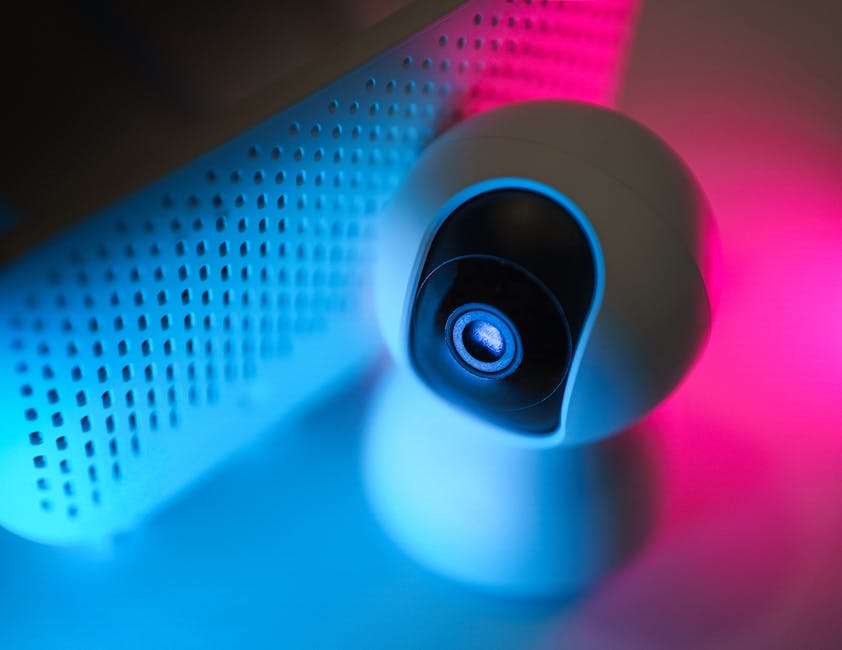
Consider the case of smart security cameras, both indoor and outdoor. Designed to provide peace of mind by monitoring your property, many of these devices offer continuous recording options, motion-activated recording, and two-way audio. While these features are advertised for security, they inherently create a surveillance network within and around your home. Every visitor, every delivery person, every family member moving through a monitored space is captured. The footage is often stored in the cloud, sometimes indefinitely, and accessible remotely. The implications extend beyond mere convenience; they touch upon the fundamental right to privacy in one's own dwelling. We trust these devices to protect us, but in doing so, we often hand over an unprecedented level of access to our personal lives, entrusting it to companies whose primary business model might involve data collection and monetization, not just security provision. It's a trade-off that many consumers make without fully grasping the extent of the data being collected or the potential for its misuse.
The Murky Waters of Consent and Data Collection
The concept of "consent" in the smart home era is a particularly thorny bush, full of hidden thorns and confusing paths. When you set up a new smart device, you're typically presented with a lengthy End-User License Agreement (EULA) and a privacy policy, often hundreds or even thousands of words long, written in legal jargon that few people have the time, patience, or expertise to fully decipher. Within these documents lie the permissions you grant: permissions for the device to collect data, to store it, to process it, and sometimes even to share it with third parties. Clicking "agree" without reading is a common practice, a digital shrug in the face of overwhelming complexity. But this casual click is effectively an open invitation for these devices to become digital archivists of your life, capturing everything from your daily routines to your most intimate conversations, all under the guise of improving service or providing personalized experiences.
"The smart home is a double-edged sword: it offers unparalleled convenience, but at the cost of unprecedented data collection, often without the user's full understanding or consent." – Dr. Sarah Miller, Cybersecurity Ethicist.
The problem is exacerbated by the fact that many of these data collection practices are not immediately obvious. A smart light bulb, for instance, might seem innocuous, but if it's part of a larger ecosystem, it could be reporting your presence, your usage patterns, and even integrating with other sensors to build a comprehensive profile of your household activity. This ambient data collection, often invisible to the user, paints a detailed picture of your life – when you wake up, when you leave, when you return, how many people are in your home, what your energy consumption habits are. This mosaic of data, when combined, becomes incredibly powerful, not just for improving the device's functionality, but for targeted advertising, market research, and potentially, for more nefarious purposes. The lines between what's necessary for functionality and what's excessive for data harvesting are incredibly blurred, and consumers are rarely given a transparent choice to opt out of the latter without sacrificing the former.
Furthermore, the data collected isn't always anonymized or aggregated in a way that truly protects individual privacy. While companies often claim to use anonymized data for research and development, the sheer volume and granularity of smart home data make true anonymization incredibly challenging, if not impossible, to maintain in practice. Researchers have repeatedly demonstrated how seemingly anonymous datasets can be "re-identified" by cross-referencing them with other publicly available information. This means that your patterns of movement, your voice recordings, and your video snippets, even if stripped of your name, could potentially be linked back to you, revealing details about your health, your relationships, your financial situation, and your lifestyle choices. The implications for personal security, identity theft, and even social engineering are profound, transforming our homes from private sanctuaries into open books for those with the right access and motivation.