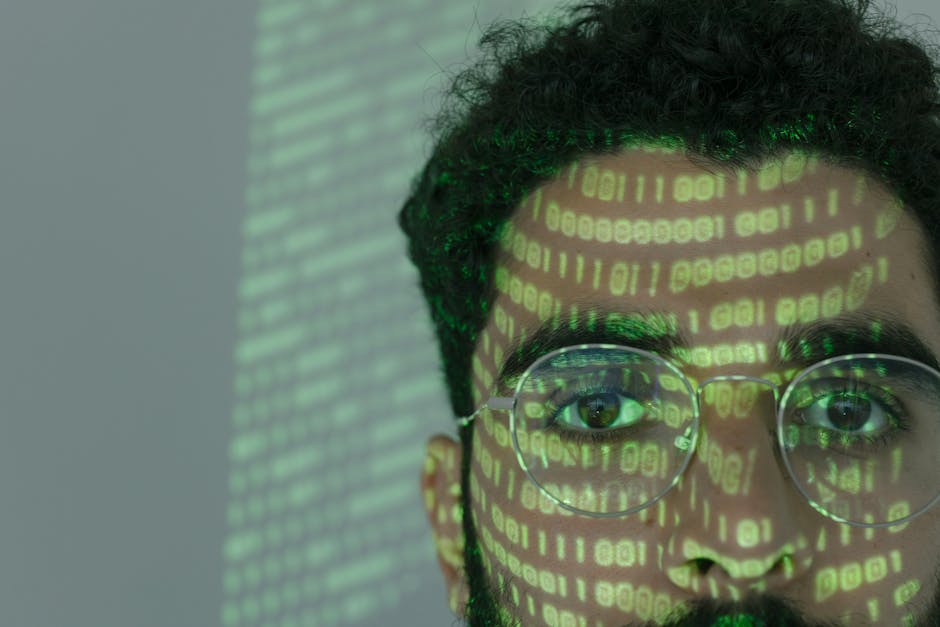
Imagine a vast, intricate network, invisible to the naked eye, yet constantly observing, analyzing, and even predicting your every move. It’s not a scene from a dystopian novel; it’s the reality of our modern digital existence, meticulously engineered by the behemoths we affectionately call "Big Tech." From the moment your alarm clock rings, if it’s a smart device, to the last scroll through your social feed before bed, a silent symphony of data collection is playing out. Every search query, every click, every pause on a video, every item added to a cart, every location ping, every interaction with an AI assistant – it’s all meticulously recorded, aggregated, and distilled into a comprehensive profile of you. This isn't just about showing you relevant ads; it's about understanding your desires, influencing your decisions, and ultimately, shaping your world in ways you might never fully comprehend. It’s an invisible hand, indeed, guiding us through a curated digital landscape while simultaneously tightening its grip on our personal autonomy.
For over a decade, I've navigated the labyrinthine corridors of cybersecurity, online privacy, and network security, witnessing firsthand the relentless evolution of tracking technologies. What began as rudimentary cookies has blossomed into a sophisticated ecosystem of data brokers, behavioral algorithms, and cross-device identification methods that can pinpoint your digital twin with unnerving accuracy. This isn't just theoretical; it's the lived experience of billions, manifesting as that "creepy" moment when an ad for something you only *thought* about appears on your screen, or when your news feed seems to reinforce your existing biases with uncanny precision. Understanding this pervasive surveillance isn't about paranoia; it's about informed citizenship in an increasingly digital world, recognizing the profound implications for our privacy, our democracy, and even our mental well-being. The stakes are incredibly high, and the time to truly grasp the mechanics of this invisible hand, and more importantly, how to loosen its grip, is now.
The Unseen Stalkers in Your Pocket
Every smartphone, tablet, and smart home device we invite into our lives serves as an unwitting informant, a constant stream of telemetry flowing back to distant servers. It’s not just the apps you actively use; it’s the background processes, the location services you might have forgotten were enabled, the sensors detecting ambient light and sound, and even the unique identifiers embedded deep within your device's hardware. Think about the sheer volume of data generated by a single user in a day: dozens of app launches, hundreds of website visits, countless scrolls, likes, and shares, GPS pings every few minutes, voice commands to digital assistants, and perhaps even biometric data for unlocking devices. Each of these interactions, no matter how trivial they seem in isolation, contributes to an ever-growing mosaic that paints an incredibly detailed picture of who you are, what you like, where you go, and even how you feel. This isn't just metadata; it's the raw material for constructing a digital doppelgänger, a predictive model of your future behavior.
The ubiquity of these tracking mechanisms extends far beyond the obvious social media platforms or search engines. Consider the smart TV in your living room, potentially collecting data on your viewing habits and even listening for voice commands. Or the fitness tracker on your wrist, meticulously logging your heart rate, sleep patterns, and physical activity, all of which can reveal deeply personal health information. Even seemingly innocuous utility apps, from weather forecasts to flashlight tools, often request and transmit permissions far exceeding their functional requirements, siphoning off location data, contact lists, or device identifiers. This creates an interconnected web where data points from various sources are correlated and combined, allowing Big Tech companies to form a holistic view of your life that no single entity could achieve on its own. It’s a surveillance capitalist dream, where every aspect of human experience is commodified and monetized, often without our explicit, informed consent.
This relentless data aggregation has profound implications, moving far beyond mere advertising. While targeted ads are the most visible manifestation, the true power lies in predictive analytics and behavioral influence. Companies can infer your political leanings, your financial stability, your health conditions, and even your emotional state, all from your digital breadcrumbs. This information can then be used for purposes ranging from benign product recommendations to more insidious forms of discrimination, such as determining eligibility for loans, insurance, or even employment opportunities. The algorithms, fed by this vast trove of personal data, can subtly nudge your decisions, shape your perceptions, and reinforce existing biases, effectively creating a personalized reality tunnel that can be difficult to escape. The invisible hand is not just observing; it is actively sculpting the choices presented to you, making it increasingly challenging to exercise genuine free will in the digital sphere.
The Golden Goose of the Internet
Why do these tech giants invest billions in developing ever more sophisticated tracking technologies? The answer is simple: data is the new oil, the most valuable commodity in the 21st century economy. The business model of many of the world's most powerful companies is built entirely on the collection, analysis, and monetization of user data. Google, for instance, offers a suite of "free" services – search, Gmail, Maps, Android – but in reality, you're paying with your personal information. This data allows them to sell hyper-targeted advertising, which is far more effective and therefore more profitable than traditional broad-reach advertising. Advertisers are willing to pay a premium to reach specific demographics with specific interests, and Big Tech provides the precision tools to make that happen. This isn't just a side hustle; it's the core engine driving their astronomical valuations and unprecedented influence.
The data economy is a complex ecosystem involving not just the tech giants themselves, but also an entire industry of data brokers, ad exchanges, and analytics firms. When you visit a website, even one seemingly unrelated to a major tech company, there's a high probability that Google Analytics, Facebook Pixel, or a similar tracking script from another ad network is embedded. These scripts collect information about your visit – what pages you view, how long you stay, what you click on – and then feed that data back to their respective parent companies or data brokers. These brokers then aggregate data from thousands of different sources, building incredibly detailed profiles that can include everything from your purchasing habits and political donations to your health concerns and relationship status. They then sell these profiles to marketers, political campaigns, and even government agencies, creating an opaque marketplace for your most intimate details. The sheer scale and secrecy of this industry are truly staggering, making it incredibly difficult for individuals to understand who holds their data and for what purposes.
Moreover, the value of this data isn't static; it increases exponentially when combined with other datasets. A single data point, like a website visit, might not reveal much. But combine it with your location history, search queries, social media interactions, purchase records, and even biometric data, and suddenly a remarkably accurate and predictive model of your behavior emerges. This predictive power is the true "golden goose." It allows companies to anticipate your needs, recommend products before you even know you want them, and even influence your decisions by presenting information in a carefully curated manner. The ability to predict and shape human behavior is an incredibly powerful tool, one that has implications far beyond commercial advertising, touching upon democratic processes, individual autonomy, and the very fabric of society. The relentless pursuit of more data, and more granular data, is driven by this insatiable hunger for predictive control, making our digital lives a constant experiment in behavioral economics.
Beyond the Browser What Else Are They Watching
While web browsing is a significant source of data, the scope of Big Tech's surveillance extends far beyond your Chrome or Safari tabs. Consider the pervasive network of smart devices that increasingly populate our homes and workplaces. Smart speakers like Amazon Echo and Google Home are always listening, not just for their wake words, but often processing snippets of conversation to improve their voice recognition algorithms, or so they claim. Smart thermostats, security cameras, doorbells, and even refrigerators are connected to the internet, often sending data about your habits, presence, and even the contents of your home back to manufacturers and, by extension, their data partners. This creates a deeply intimate layer of surveillance, transforming our private spaces into data collection hubs, blurring the lines between the physical and digital realms in unprecedented ways. The convenience these devices offer often comes at the cost of sacrificing a significant degree of privacy within our most personal sanctuaries.
The apps on your smartphone are another major vector for data collection, often operating with permissions that go far beyond their stated functionality. Many apps request access to your contacts, photos, microphone, camera, and precise location, even when these permissions aren't strictly necessary for the app to function. For example, a simple game might request access to your microphone, ostensibly for in-game voice chat, but could potentially be used to listen to your surroundings. Similarly, many apps collect unique device identifiers, like the Advertiser ID on Android or the IDFA on iOS, allowing them to track your activity across different apps and link it back to your broader profile. This creates a fragmented but ultimately cohesive picture of your app usage, revealing patterns of behavior, interests, and even personal routines that can be highly valuable to advertisers and data brokers. It’s a constant negotiation between convenience and privacy, where the default often favors the data collector.
Even your offline movements and real-world interactions are increasingly being brought into the digital fold. Location data, derived from your phone's GPS, Wi-Fi, and cell tower triangulation, can map your daily commute, your visits to specific stores, doctors' offices, or places of worship. This data can then be combined with your online profile to infer even more about your life, such as your income bracket (based on where you shop), your health status (based on hospital visits), or your political leanings (based on rally attendance). Furthermore, advancements in facial recognition technology, deployed in public spaces and even some retail environments, mean that your physical presence can also be logged and linked to your digital identity. This creates a seamless, always-on surveillance grid that transcends the boundaries of your screen, effectively turning every aspect of your life into a data point. The invisible hand, it turns out, has eyes and ears everywhere, constantly expanding its reach into the most intimate corners of our existence.