Unmasking the Pervasive Surveillance of Our Everyday Gadgets
The convenience offered by smart home devices is undoubtedly alluring, transforming mundane tasks into effortless interactions. Yet, beneath the polished interfaces and seamless connectivity lies a complex network of data collection, often operating in the background, out of sight and out of mind. These devices, designed to anticipate our needs and respond to our commands, are simultaneously acting as digital informants, broadcasting intimate details of our lives to distant servers. It's a trade-off many of us have implicitly accepted, but one that demands a much closer examination. Let’s pull back the curtain on seven common smart devices that often act as silent spies in our homes, detailing precisely what data they collect and the broader implications of that collection for our privacy and security.
The Ever-Listening Ear Smart Speakers and Voice Assistants
Devices like Amazon Echo, Google Nest, and Apple HomePod have become ubiquitous, perched on countertops and nightstands, ready to answer questions, play music, or control other smart gadgets. Their primary function, voice interaction, necessitates constant listening. While manufacturers assure us these devices only record and transmit audio *after* hearing a specific "wake word" (like "Alexa" or "Hey Google"), the reality is that they are perpetually processing ambient sound to detect that command. This continuous monitoring, even if local, is a fundamental privacy concern. We've seen numerous instances where these devices have accidentally recorded conversations, sometimes even sending them to unintended recipients or human reviewers for "quality control." Imagine discussing sensitive family matters, financial details, or even intimate moments, all within earshot of a device that could potentially capture and store those sounds.
Beyond accidental recordings, the data explicitly collected by smart speakers is extensive. Every command, every question, every music request, every timer set—it's all logged, analyzed, and often stored indefinitely. This creates a rich profile of your daily routines, your interests, your mood, and even your social circle if multiple voices are recognized. Amazon, for example, has openly admitted to retaining voice recordings indefinitely, using them to train their AI algorithms. Google faces similar scrutiny. This data isn't just used to improve voice recognition; it's fed into vast advertising networks, allowing companies to target you with uncanny precision. Think about how unsettling it feels when an ad pops up for something you only *spoke* about, never typed or searched for. That’s often your smart speaker’s data at work. The potential for misuse, from targeted political ads to surveillance in legal cases, is a very real and growing concern, transforming our homes into unwitting data mines for tech giants.
The Prying Eye Smart Televisions
Modern smart TVs are far more than just screens; they are sophisticated data collection hubs embedded in the heart of our entertainment. Equipped with automatic content recognition (ACR) technology, these devices don't just know *that* you're watching TV; they often know *exactly* what you're watching, across all inputs. Whether it's a streaming service, cable TV, a Blu-ray player, or even a video game console, ACR can identify the content down to the specific show, movie, or game. This data is then often combined with your IP address, geolocation, and device identifiers to create a granular profile of your viewing habits. A prime example of this came to light with Vizio, which settled a lawsuit for $17 million after it was revealed they were collecting detailed viewing data from millions of smart TVs without explicit consent and selling it to advertisers. The company even tracked "demographic information" and "household information" to create "highly specific segments for advertisers."
The data collection doesn't stop at viewing habits. Many smart TVs now include built-in microphones and even cameras, originally intended for voice commands or video calls. These features, if not properly secured or disabled, present significant surveillance risks. While manufacturers claim these are only active when explicitly invoked, the history of tech devices suggests otherwise. Stories of smart TVs being hacked to gain access to their cameras or microphones, turning them into surveillance tools, are not just theoretical concerns. Furthermore, the operating systems of smart TVs, often based on Android or proprietary Linux distributions, can be vulnerable to malware and exploits, potentially allowing malicious actors to siphon off even more data or gain control of the device. The sheer volume of data about your daily entertainment choices, combined with the potential for visual and auditory surveillance, makes your smart TV a formidable digital spy, silently observing your leisure time.
The Digital Doorman Smart Doorbells and Security Cameras
Smart doorbells and security cameras, like those from Ring, Arlo, and Google Nest, promise peace of mind and enhanced home security. They offer the ability to see and speak to visitors, monitor packages, and keep an eye on your property remotely. However, these benefits come with significant privacy trade-offs. These devices are designed to continuously record video and audio, often triggered by motion detection, and upload these recordings to cloud servers. While this is essential for their security function, it means that every person who approaches your home, every delivery driver, every neighbor walking their dog, and even casual passersby are potentially being recorded and their images stored indefinitely on a remote server. The scope of this surveillance often extends beyond your property line, inadvertently capturing public spaces.
The privacy implications are multifaceted. Firstly, the storage of sensitive video and audio data on third-party servers raises concerns about data breaches and unauthorized access. Ring, for instance, faced criticism for allowing employees and contractors broad access to customer video feeds. Secondly, the sharing of this footage with law enforcement is a contentious issue. Companies like Ring have partnered with police departments, allowing officers to request footage directly from users, sometimes without a warrant. This transforms privately owned security devices into extensions of public surveillance networks, eroding civil liberties and raising questions about consent from those being recorded. Moreover, the facial recognition capabilities increasingly being integrated into these cameras present a chilling prospect: a future where every face entering or leaving your property could be identified and tracked, creating a permanent record of who comes and goes from your home, often without their knowledge or consent. These devices, while providing a sense of security, simultaneously open up new avenues for pervasive and often involuntary surveillance.
The Climate Confidant Smart Thermostats
Smart thermostats, such as Google's Nest and ecobee, are celebrated for their energy-saving capabilities and convenience. They learn your schedule, adjust temperatures automatically, and can be controlled remotely. To achieve this, however, they collect a surprising amount of data about your household's comings and goings. Equipped with motion sensors, proximity sensors, and even ambient light sensors, these devices can track when you're home, when you leave, and even which rooms you frequent. They build a detailed occupancy profile of your home, understanding your daily and weekly patterns. This data, combined with temperature preferences and energy usage, paints a very accurate picture of your lifestyle, including when you wake up, when you go to bed, and when your home is empty.
While the primary intent is energy optimization, the aggregation of this occupancy data has broader implications. For instance, an insurance company could potentially use this information to assess risk, perhaps determining if your home is frequently unoccupied for extended periods. Furthermore, if these devices are connected to other smart home systems, the data could be combined to create an even more comprehensive profile. Imagine your thermostat knowing you're away, and that information being accessible to other devices or services. While the data itself might seem innocuous in isolation, when combined with other data points, it can reveal highly sensitive patterns. The constant monitoring of your presence and absence, even for the seemingly benign purpose of saving energy, fundamentally shifts the balance between convenience and the sanctity of your private domestic space. It's a subtle form of surveillance, but one that paints a very clear picture of your household's daily rhythms.
The Illuminating Informant Smart Light Bulbs and Lighting Systems
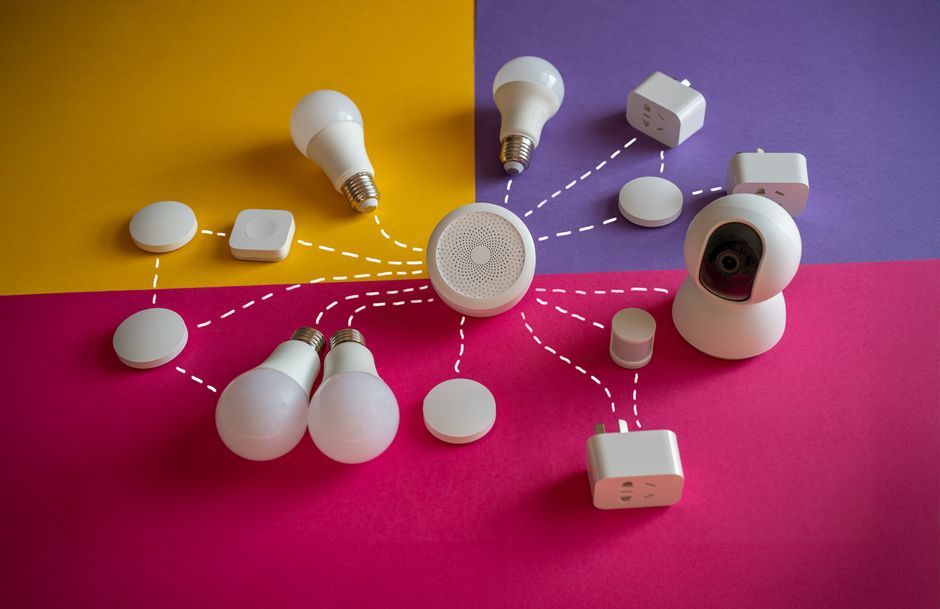
Smart lighting systems, like Philips Hue or those from Wyze, offer unparalleled control over your home's ambiance, allowing you to change colors, dim lights, and set schedules with a tap or a voice command. What many users don't realize, however, is that these seemingly simple devices can also be conduits for data collection. While they typically don't have microphones or cameras, they collect data about your usage patterns: when you turn lights on and off, which colors you prefer, and how long lights remain active. This information, when aggregated, can reveal surprisingly detailed insights into your daily routine, your sleep patterns, and even your presence or absence from specific rooms.
The data from smart lights, usually transmitted to a central hub or cloud server, can be used by manufacturers for various purposes, including product improvement, targeted advertising, and even potentially for third-party data sharing. If you link your smart lights to a voice assistant, the data flow becomes even more complex, integrating your lighting habits with your broader digital profile. Furthermore, the networking aspect of these devices means they are constantly communicating, often creating a mesh network within your home. This network, if not properly secured, can present vulnerabilities that could be exploited by malicious actors to gain access to other devices on your home network. While the data collected by smart lights might seem less intrusive than audio or video, it contributes to the ever-growing digital mosaic of your life, piece by subtle piece, painting a picture of your habits that you might not intend to share with anyone beyond your immediate household.
The Kitchen Confidante Smart Appliances
From refrigerators that tell you when you're low on milk to ovens you can preheat from your smartphone, smart appliances promise to revolutionize the kitchen. However, these connected contraptions also bring a new layer of data collection into one of the most central hubs of family life. A smart refrigerator, for instance, might track your grocery inventory, your purchasing habits, and even your dietary preferences. Some models even include internal cameras that show you what's inside, and while convenient, these images are often stored in the cloud. Similarly, smart ovens and coffee makers log your usage patterns, cooking preferences, and schedules. This data, seemingly innocuous on its own, can be incredibly valuable when aggregated.
Manufacturers often collect this data to "personalize" your experience, offering recipes based on inventory or suggesting maintenance schedules. However, this information can also be shared with third-party partners, including food brands, advertisers, or even health and wellness companies. Imagine your refrigerator data being used to infer your dietary habits, which then informs targeted ads for specific food products or even health insurance policies. The security of these devices is another significant concern. Smart appliances often run on embedded operating systems that may not receive frequent security updates, making them potential weak points in your home network. A compromised smart fridge could, theoretically, be used as an entry point for hackers to access more sensitive data on other devices or to launch attacks against other networks. The convenience of a connected kitchen comes with the caveat of surrendering detailed insights into your consumption patterns and daily routines, turning your appliance into a quiet observer of your culinary and lifestyle choices.
The Playtime Peeper Children's Smart Toys
Perhaps the most disturbing category of silent spies are children's smart toys. From talking dolls that connect to the internet to interactive robots and educational tablets, these devices are marketed as tools for learning and entertainment. However, many are equipped with microphones, cameras, and connectivity features that make them potent data collection tools. Toys like "Hello Barbie," for example, were found to record children's conversations and transmit them to cloud servers for processing, raising immense privacy concerns. Similar issues have plagued other smart toys, where recordings of children's voices and even their images were found to be vulnerable to hacking or improper storage.
The data collected by these toys is particularly sensitive because it pertains to children, who cannot provide informed consent. Voice recordings, conversations, and even personal details shared with these "friends" can be stored indefinitely, potentially accessed by third parties, or even used to create profiles of children's interests and developmental stages. The potential for malicious actors to exploit vulnerabilities in these toys to listen in on children's conversations, track their location, or even directly communicate with them is a nightmare scenario for any parent. The promise of educational engagement and fun often masks severe privacy risks, turning what should be innocent playtime into a potential surveillance opportunity. Protecting children's privacy in the age of smart toys requires extreme vigilance, as these devices represent an unprecedented entry point for data collection into the most vulnerable corners of our homes and families.