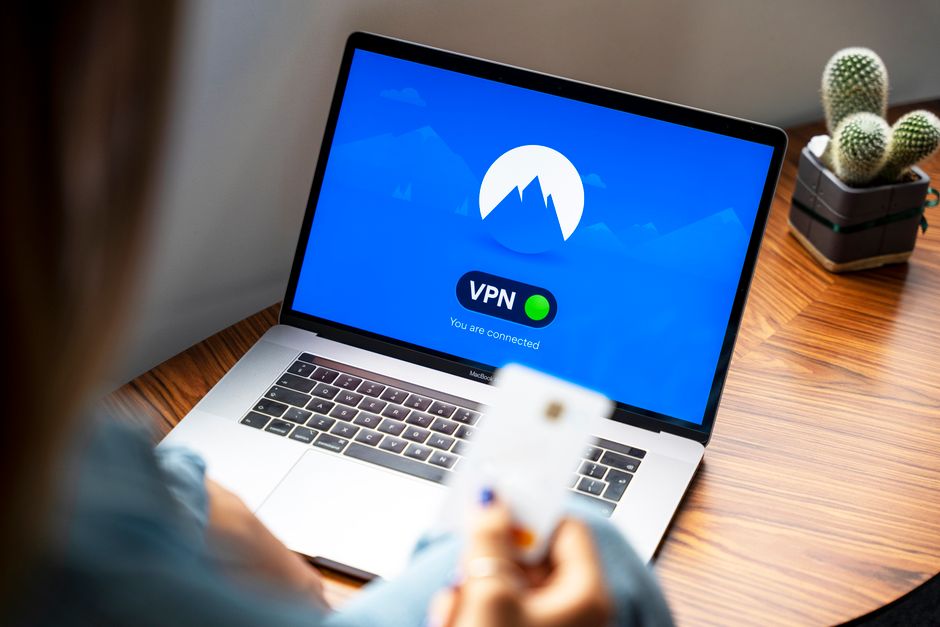
The digital world, once heralded as a realm of boundless freedom and connection, is increasingly feeling like a gilded cage. We log in, we browse, we share, all under the comforting, yet perhaps increasingly false, assumption that our online activities remain our own. For years, the Virtual Private Network, or VPN, stood as the valiant knight in shining armor, promising to shield our internet traffic from prying eyes, encrypting our data, and cloaking our true identities behind a digital veil. It was the go-to solution for anyone concerned about surveillance, censorship, or simply wanting to maintain a semblance of privacy in a world obsessed with data. But lately, a chilling whisper has been circulating among cybersecurity circles, growing louder with each passing breach, each government mandate, and each new revelation about data exploitation: Are VPNs truly dead? Is our 'private' connection no longer safe? It’s a question that strikes at the heart of our digital autonomy, forcing us to confront a sobering reality: the tools we once relied on for protection might be faltering, and the landscape of online privacy is far more treacherous than we ever imagined.
For over a decade, I’ve been immersed in the intricate world of cybersecurity, dissecting VPN services, scrutinizing privacy policies, and tracking the ever-evolving cat-and-mouse game between those who seek to protect our data and those who seek to exploit it. What I’ve witnessed recently isn't a sudden death, but rather a slow, insidious erosion of trust and effectiveness in the traditional VPN model. It’s not about VPNs vanishing entirely, but about the fundamental promise they’ve made to users becoming increasingly difficult to keep in the face of sophisticated adversaries, legal pressures, and even the very companies we entrust with our data. The simple click of a 'connect' button might still change your IP address, but does it truly guarantee the anonymity and security you’re paying for? Many experts, myself included, are beginning to voice serious doubts, suggesting that the era of blind faith in VPNs is over, and a more nuanced, critical approach is desperately needed if we are to salvage any semblance of online privacy.
The Fading Aura of Invincibility
Once upon a time, setting up a VPN felt like donning an invisibility cloak. You’d connect, your IP address would magically change, and suddenly, you were a ghost in the machine, free to roam the internet without leaving a trace. This perception, while comforting, was always a bit of an oversimplification, a romanticized view of a complex technological solution. The early days of VPN adoption were marked by a relatively less hostile digital environment; adversaries were simpler, tracking mechanisms less pervasive, and the legal frameworks surrounding data privacy were still in their nascent stages. Users flocked to VPNs for a myriad of reasons: to bypass geo-restrictions and access content, to secure their connections on public Wi-Fi, or to evade the watchful eyes of their internet service providers and government agencies. The underlying technology, primarily OpenVPN at the time, offered robust encryption, and for a period, it truly felt like a formidable barrier against most common threats.
However, the internet never stands still. It's a constantly evolving ecosystem, and just as defenses become more sophisticated, so too do the methods of attack and surveillance. The adversaries of today are not just individual hackers; they are well-funded state actors, massive data brokers, and sophisticated advertising networks, all armed with cutting-edge technology and an insatiable appetite for information. What worked effectively five or ten years ago might now be merely a speed bump for these entities. The sheer volume and granularity of data being collected, combined with advancements in artificial intelligence and machine learning, mean that even encrypted traffic can reveal patterns, and seemingly anonymous actions can be de-anonymized through correlation. The aura of invincibility that once surrounded VPNs has begun to fade, replaced by a growing awareness of their limitations and the intricate web of challenges that threaten their core promise.
My own journey through this space has shown me firsthand how user expectations often diverge from technical realities. Many users still believe that merely turning on a VPN makes them immune to all forms of tracking and surveillance, a misconception that can lead to a false sense of security. They might confidently browse websites, share personal information, or even engage in activities they wouldn't otherwise, believing their VPN offers an impenetrable shield. This gap between perception and reality is one of the most significant reasons why we need to critically re-evaluate the role of VPNs in our privacy strategy. It's not about condemning the technology outright, but about understanding its true capabilities and, more importantly, its growing vulnerabilities in the face of a rapidly changing digital landscape. The conversation isn't about discarding VPNs entirely, but about recognizing that the simple act of connecting is no longer enough to guarantee safety.
The Shifting Sands of Digital Espionage
The landscape of digital espionage has undergone a seismic shift, transforming from targeted attacks by individual hackers to widespread, dragnet surveillance orchestrated by nation-states and powerful corporate entities. What once felt like the stuff of spy novels is now a daily reality, meticulously documented by whistleblowers and cybersecurity researchers alike. Governments, driven by national security concerns, economic interests, or simply a desire for control, have invested heavily in sophisticated tools and techniques to monitor internet traffic on an unprecedented scale. This includes everything from deep packet inspection (DPI) at internet backbone points to the exploitation of zero-day vulnerabilities in common software. These capabilities mean that even if your traffic is encrypted by a VPN, the metadata—who is communicating with whom, when, and for how long—can still be incredibly revealing, allowing for patterns to be identified and individuals to be profiled.
Consider the infamous revelations brought to light by Edward Snowden, which exposed the vast scope of surveillance programs like PRISM. These programs demonstrated that intelligence agencies could, and did, compel major technology companies to hand over user data, often under gag orders that prevented these companies from even acknowledging the requests. While VPN providers operate under different legal frameworks, the fundamental principle remains: if a government has the legal authority and the technical capability, it will seek to access data. This puts immense pressure on VPN companies, especially those operating in jurisdictions with less robust privacy protections or those susceptible to international intelligence-sharing agreements. The very infrastructure that VPNs rely upon—the internet backbone, the server farms, the underlying operating systems—can all be points of vulnerability if compromised by a determined and well-resourced adversary. The battle for privacy is no longer confined to individual skirmishes; it's a global, geopolitical struggle.
Furthermore, the rise of powerful data brokers and advertising networks adds another layer to this complex problem. These entities collect vast amounts of information about our online behavior, often without our explicit consent or even our awareness. They track our browsing habits, our purchases, our social media interactions, and then aggregate and sell this data to advertisers, insurance companies, and even political campaigns. While a VPN might obscure your IP address from individual websites, it doesn't necessarily stop these trackers from building a comprehensive profile of your activities based on other identifiers, such as browser fingerprinting, unique device IDs, or persistent cookies. The digital breadcrumbs we leave behind are numerous and varied, and a VPN, by itself, is only capable of sweeping away a fraction of them. The illusion of complete anonymity, therefore, is precisely that: an illusion, one that risks lulling users into a false sense of security while their data is silently harvested from multiple angles.
"The internet was built with trust, not security, in mind. We are now paying the price for that foundational flaw." - Bruce Schneier, renowned cryptographer and security expert. This sentiment perfectly encapsulates the inherent challenges we face in securing our digital lives.
The increasing sophistication of traffic analysis techniques further complicates the picture. While a VPN encrypts the content of your communications, it cannot hide the fact that you are communicating, nor can it completely obscure the size and timing of data packets. Researchers have demonstrated that even with strong encryption, traffic patterns can be analyzed to infer information about the user's activities. For instance, the size of video packets might indicate streaming, while bursty, intermittent traffic could suggest web browsing. In extreme cases, and with enough data points, even the specific websites visited or applications used can be inferred. This "side-channel" information, combined with other data points, can chip away at the anonymity a VPN provides. It’s a stark reminder that privacy is not a binary state; it exists on a spectrum, and maintaining it requires a multi-faceted approach that goes far beyond simply tunneling your data through a remote server. The days of a single tool providing absolute, unassailable privacy are, regrettably, behind us.