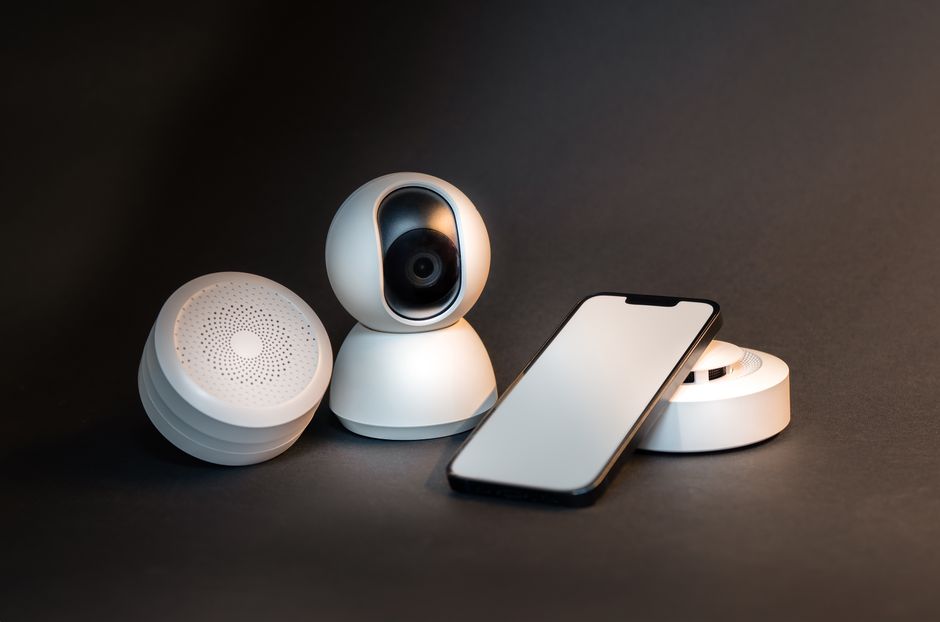
There's a subtle hum in the background of our lives these days, isn't there? It’s the gentle whir of a smart speaker, the soft glow of a security camera’s indicator light, the quiet pulse of a fitness tracker on your wrist. We’ve invited these devices into our homes, onto our bodies, and into the most intimate corners of our existence, all in the name of convenience, efficiency, and a touch of futuristic flair. They promise to simplify our routines, keep us safe, entertain our children, and even monitor our health. Yet, beneath the polished interfaces and reassuring marketing jargon, a more unsettling reality is taking shape – one where these helpful gadgets aren't just serving us; they're diligently observing, recording, and analyzing almost every facet of our lives. They are, quite literally, listening, watching, and learning about you, your family, your habits, and your secrets.
For over a decade, navigating the labyrinthine world of cybersecurity and online privacy has been my professional obsession. I’ve seen the internet evolve from a wild frontier into a meticulously mapped landscape, where every click, every query, and now, every whispered conversation can be a data point. The advent of the Internet of Things (IoT) has dramatically accelerated this transformation, moving the data collection frontier from our screens to our living rooms, bedrooms, and even our bodies. This isn't some far-fetched dystopian novel; it’s the here and now. The very devices we rely on for comfort and control are becoming the most prolific, and often the most overlooked, vectors for exposing our private lives. It's a trade-off many of us unknowingly make, swapping a sliver of personal information for the ability to turn off the lights with a voice command or check who's at the door while we're away. But what if that "sliver" is actually a gaping hole, wide enough for a parade of data brokers, advertisers, and even malicious actors to march through?
The Echo Chamber Effect How Our Smart Speakers Record More Than Just Requests
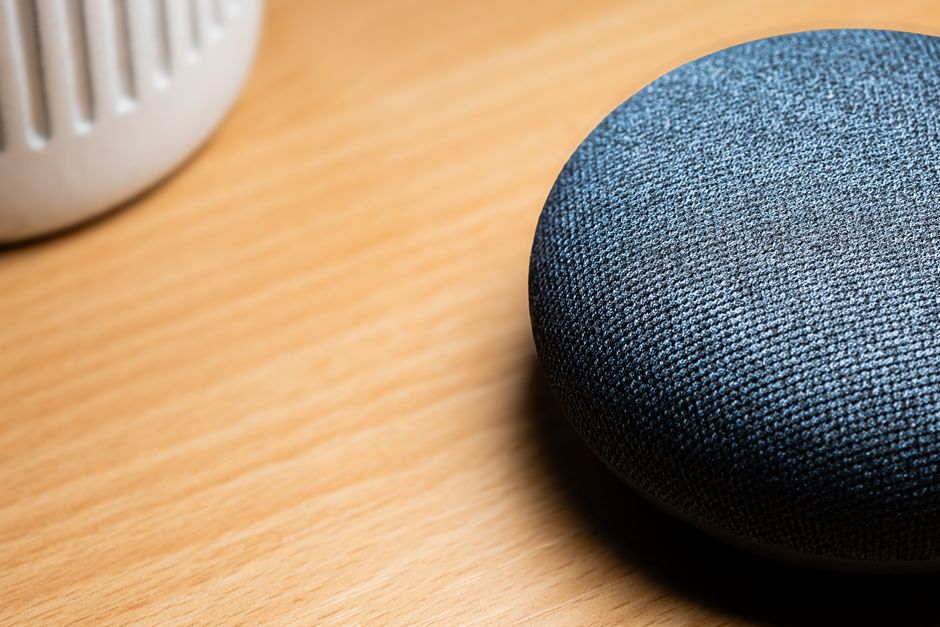
Let's start with the most obvious culprits, the digital assistants perched on our countertops and nightstands: Amazon Echo, Google Home, Apple HomePod. We invite them into our homes, explicitly telling them to listen for our commands, for that magic wake word. "Alexa," "Hey Google," "Siri." These devices are designed to be always on, their microphones perpetually active, sifting through the cacophony of household noise for their call sign. This fundamental design, while enabling instant responsiveness, creates an inherent privacy dilemma. The moment we utter a wake word, or sometimes even when we don't, these devices spring to life, recording our speech, processing it in the cloud, and often storing it indefinitely. Amazon, for example, retains voice recordings until you manually delete them, and even then, transcripts might linger. Google’s policy is similar, creating a vast archive of your spoken interactions, ostensibly to "improve" their services, but also forming a rich tapestry of your personal life.
The privacy policies, those lengthy documents we rarely read, often grant these companies broad rights to analyze and use this data. They state that human reviewers may listen to snippets of recordings to refine the AI's understanding of different accents, inflections, and commands. While the companies maintain these snippets are anonymized or de-identified, the context of a conversation can often be deeply personal, even if the voice itself isn't directly linked to your name. Imagine a medical diagnosis discussed aloud, a financial argument, or a sensitive family secret. These aren't abstract concepts; they are real conversations happening in millions of homes daily, potentially captured and analyzed. In 2019, reports surfaced that Amazon employees were indeed listening to Alexa recordings, some of which contained highly sensitive information, including a possible sexual assault. While Amazon stated these were isolated incidents and that they had safeguards, the mere possibility that a stranger could be privy to such intimate moments is profoundly disturbing. It forces us to confront the uncomfortable truth: our private spaces are no longer solely our own.
Unmasking the Human Element in AI's Learning Curve
The practice of human review isn't unique to Amazon. Google and Apple have also acknowledged using human contractors to listen to recordings from their respective assistants. The rationale is always the same: to enhance the accuracy and natural language processing capabilities of the AI. But this "learning process" comes at a significant cost to user privacy. These human reviewers, often third-party contractors spread across the globe, are exposed to an intimate cross-section of people's lives. While companies claim to implement strict confidentiality agreements and limit the data reviewers can access, the sheer volume of data and the potential for human error, curiosity, or even malice create undeniable vulnerabilities. There have been instances where reviewers have reportedly heard drug deals, domestic disputes, and even children's voices. This isn't just about improving a product; it’s about a fundamental shift in the expectation of privacy within our own homes, a shift that has occurred without a truly informed public consent.
"The microphone in your smart speaker isn't just listening for a wake word; it's a digital ear perpetually attuned to the soundscape of your life, capturing nuances you never intended to share." – Dr. Sarah Miller, Cybersecurity Ethicist.
The problem extends beyond direct voice commands. These devices also record "false positives" – instances where they mistakenly believe they heard a wake word due to similar-sounding phrases or background noise. While these recordings might be shorter, they still capture snippets of unfiltered, private conversations. Imagine discussing sensitive work matters, personal relationships, or even health concerns, only for a device to misinterpret a word and send a fragment of that discussion to a remote server for analysis. These "mistakes" are not always immediately discarded; they are often part of the data stream used to train the AI, adding to the ever-growing profile of your household's acoustic environment. It’s a subtle but pervasive form of surveillance, normalized by the convenience it offers, yet deeply impactful on our sense of personal space and autonomy. We've essentially installed digital stenographers in our homes, and their transcripts are being filed away, sometimes reviewed by strangers, for purposes we only vaguely understand.
The Invisible Audience Ambient Audio Analysis and Behavioral Profiling
Beyond explicit voice commands, a more insidious form of listening occurs through ambient audio analysis. Your smart devices, even when not actively responding to a command, can be designed to detect and process sounds in your environment. This isn't about capturing your words; it's about understanding the *types* of sounds that make up your daily life. Think about it: the clinking of dishes, the laughter of children, the barking of a dog, the distinct melody of a TV show, or the genre of music playing in the background. While companies like Google and Amazon typically state that their devices only process audio locally for wake words and discard it if no wake word is detected, the capabilities of modern audio processing are far more advanced. Research has shown that these devices can, theoretically, identify activities, count the number of people in a room, and even infer emotional states based on vocal tones and background noise patterns. This data, when combined with other information, paints an incredibly detailed picture of your daily habits, routines, and even your emotional well-being.
Consider a scenario where your smart speaker consistently detects the sounds of children playing after school, followed by the distinct audio profile of a specific children's TV show. Later, it might pick up on the sounds of cooking and then dinner conversation. This information, seemingly innocuous in isolation, becomes incredibly valuable when aggregated. Advertisers can infer that you have children and target you with ads for toys, family vacations, or educational products. Insurance companies, in a hypothetical future, might be interested in patterns of activity or inactivity. The data isn't just about what you say; it's about the entire sonic landscape of your home. A paper published by researchers at Northeastern University and Imperial College London demonstrated that smart speakers could, with surprising accuracy, infer activities like brushing teeth, running water, and even the presence of multiple people, simply by analyzing ambient sounds. This capability, whether actively utilized by manufacturers or merely a potential vulnerability, highlights a profound erosion of the privacy of our domestic soundscapes.
The Silent Symphony of Your Life for Sale
The goal of this ambient audio analysis, when it occurs, is often to build incredibly precise behavioral profiles. These profiles are golden nuggets for the data economy. Imagine an advertiser knowing that you frequently watch horror movies based on sound signatures, or that you often host dinner parties based on the increased chatter and clinking of glasses. This level of insight allows for hyper-targeted advertising that feels less like a suggestion and more like an uncanny prediction. It's not just about selling you products; it's about influencing your choices, shaping your perceptions, and ultimately, monetizing your very existence. This kind of profiling can also be used to infer sensitive information, such as your work-from-home schedule, whether you're often alone, or even your sleep patterns if the device is near your bed. The data collected from your smart devices, when cross-referenced with information from your smartphone, browsing history, and social media activity, creates a digital doppelgänger that knows you arguably better than you know yourself.
The chilling part is that this often happens without your explicit consent or even your awareness. The terms and conditions you scrolled past in seconds likely contain clauses that permit the collection and analysis of "usage data" or "diagnostic information," which can be broad enough to encompass ambient audio patterns. We are living in a world where the background noise of our lives is no longer just noise; it's a rich stream of data, waiting to be harvested, processed, and sold to the highest bidder. This isn't just about privacy; it's about autonomy. When companies can predict your desires and influence your decisions based on such intimate data, the line between helpful assistance and pervasive manipulation becomes dangerously blurred. We've effectively given these devices a backstage pass to the theatre of our lives, allowing them to record the entire performance, not just the lines we've explicitly fed them. The sounds of your home, your family, your leisure, and your work are all contributing to a digital ledger that dictates who you are, what you like, and what you might buy next. It's a symphony of surveillance, and you're the unwitting composer.