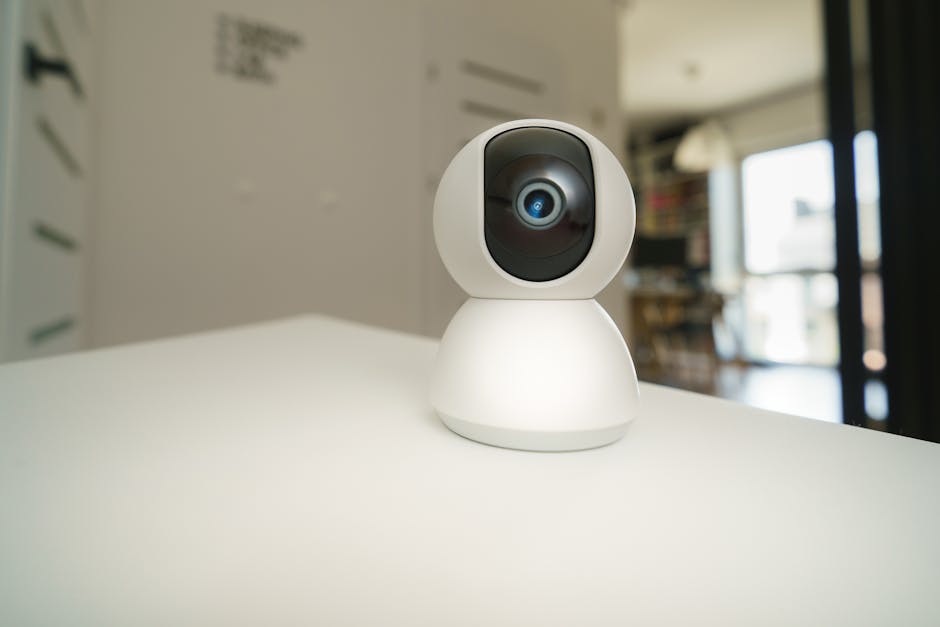
Imagine this: you’re relaxing on the couch, unwinding after a long day, and you casually ask your smart speaker to play some music. It obliges, filling the room with your favorite tunes. Later, you glance at your smart TV, which has been idly displaying ambient scenes, and you walk past your smart thermostat, automatically adjusting the temperature to your comfort. All of these devices, seamlessly integrated into the fabric of your home, promise convenience, efficiency, and a touch of futuristic living. But what if that seemingly innocuous convenience comes with a hidden cost? What if, beneath the sleek interfaces and helpful voice assistants, these very devices are quietly, relentlessly, and perhaps even maliciously, gathering intimate details about your life, your habits, your conversations – essentially, spying on you and your family?
This isn't the stuff of dystopian science fiction; it's the stark reality of our increasingly interconnected world. The Internet of Things (IoT) has exploded, saturating our homes with gadgets designed to make life easier, from smart light bulbs and security cameras to robot vacuums and even intelligent refrigerators. Each of these devices, while offering undeniable benefits, also represents a potential data collection point, a tiny digital eye or ear that, by design or through vulnerability, can compromise your most sacred space: your home. The sheer volume of data being collected – everything from your daily routines and energy consumption to your conversations and visual environment – is staggering, and the implications for your privacy and security are profound, often extending far beyond what most people realize or are comfortable with.
The Silent Sentinels How Smart Devices Became Data Miners
For years, the promise of the smart home was pitched as the ultimate evolution of domestic living – a place where technology anticipates your needs, streamlines chores, and enhances comfort. We readily embraced smart speakers like Amazon Echo and Google Home, believing their convenience outweighed any minor privacy concerns. We installed smart doorbells and security cameras, trusting them to protect our perimeters. We bought smart TVs that offered endless entertainment options, often unaware that these devices were doing more than just displaying pretty pictures; they were actively profiling our viewing habits, preferences, and even listening to our living room chatter. This isn't merely about targeted advertising, though that's certainly a part of it; it's about a fundamental shift in the relationship between technology and personal autonomy, where our physical spaces are increasingly becoming digital surveillance zones.
The core issue lies in the business model underpinning many of these devices. While we pay an upfront cost for the hardware, the true value for many manufacturers and their partners lies in the continuous stream of data they can extract from our usage. Every interaction with a smart speaker, every motion detected by a camera, every show watched on a smart TV, every temperature adjustment on a thermostat – it all gets logged, analyzed, and often, monetized. This data, aggregated and anonymized (or so they claim), paints an incredibly detailed picture of your life, which can then be sold to advertisers, used for product development, or even shared with third parties under opaque terms of service that very few consumers actually read or comprehend. It’s a subtle, insidious form of data harvesting that occurs continuously, often without any explicit notification or consent beyond the initial setup.
Consider the smart TV, for instance. Many modern smart televisions come equipped with Automatic Content Recognition (ACR) technology, which can identify what you're watching, whether it's broadcast TV, streaming services, or even content played from external devices. This data is then sent back to the manufacturer and often to data brokers. Furthermore, some smart TVs have microphones for voice control, which, while convenient, introduce the potential for ambient listening. Remember the infamous 2015 incident where Samsung’s SmartTV privacy policy explicitly stated that if your spoken words included "personal or other sensitive information, that information will be among the data captured and transmitted to a third party"? While companies have since updated their policies and clarified their practices, the underlying capability and the potential for misuse remain a significant concern for anyone serious about their privacy.
The Unseen Threats Why Your Home Network Is a Prime Target
Beyond the intentional data collection by manufacturers, there's an even more ominous threat: the vulnerability of these devices to external attacks. Many smart devices, especially cheaper models or those from less reputable brands, are rushed to market with inadequate security measures. They often ship with weak default passwords, unpatched firmware, and insecure communication protocols, essentially leaving a wide-open back door for cybercriminals. Once a single device on your home network is compromised, it can serve as a beachhead for attackers to gain access to your entire digital ecosystem, potentially impacting your computers, smartphones, and even sensitive financial data. The interconnectedness that brings convenience also brings a magnified risk, turning your smart home into a potential security liability.
The sheer volume and diversity of IoT devices make securing them a complex challenge. Unlike traditional computers or smartphones, which receive regular security updates and have robust operating systems, many smart devices lack the infrastructure for consistent patching. Manufacturers often abandon support for older models, leaving them permanently vulnerable. This creates a vast, sprawling attack surface that is ripe for exploitation. We've seen real-world examples of this, from hackers gaining access to baby monitors and speaking to children, to criminals leveraging smart cameras to spy on unsuspecting homeowners, and even using compromised smart appliances to launch massive distributed denial-of-service (DDoS) attacks, as was the case with the infamous Mirai botnet that harnessed thousands of insecure IoT devices to cripple major websites.
It's not just about direct hacking either. The data collected by these devices, even if "anonymized," can be de-anonymized with surprising ease, especially when combined with other publicly available information. Location data from a smart tracker, combined with social media posts, can pinpoint your exact movements. Voice data, while seemingly innocuous, can reveal health conditions, emotional states, and even unique biometric identifiers. The amalgamation of these data points creates a digital shadow of your life, a comprehensive profile that can be exploited for everything from highly targeted advertising and identity theft to more sinister forms of manipulation or even physical surveillance. The convenience we crave has inadvertently created a vast, intricate web of data collection points, many of which are inherently insecure, making our homes less private and more exposed than ever before. This article isn't meant to instill fear, but rather to empower you with the knowledge and practical steps necessary to reclaim control and lock down your home network, ensuring your smart devices serve you, without silently serving up your privacy to others.
The journey into understanding and mitigating these risks begins with recognizing the subtle ways our digital lives are being scrutinized. Every tap, every command, every moment of inactivity can be a data point. Our smart thermostats learn our routines, predicting when we'll be home and adjusting temperatures accordingly. Our smart lighting systems track our presence and preferences, illuminating rooms based on our habits. Even seemingly innocuous devices like smart scales or fitness trackers collect highly personal health data, often transmitting it to cloud services with varying degrees of security. This constant stream of information, flowing from our homes to distant servers, forms a digital mosaic of our existence, a detailed blueprint of our lives that, in the wrong hands, could be profoundly damaging. It's a trade-off between convenience and privacy that many of us made unknowingly, or perhaps without fully grasping the long-term implications of our choices in an increasingly interconnected world.
"The biggest privacy threat in the coming decade is not governments, but corporations and the Internet of Things, because they know everything about you, and they can influence you in ways you don't even understand." - Bruce Schneier, renowned security technologist and author.
This sentiment from a leading expert underscores the urgency of the situation. While we often focus on government surveillance, the corporate collection of personal data through IoT devices is arguably more pervasive and less transparent. Companies operate under different legal frameworks, often prioritizing profit over privacy, and the sheer volume of data they accumulate creates an irresistible target for cybercriminals. Furthermore, the lack of standardized security protocols across the diverse IoT landscape means that consumers are often left to navigate a confusing maze of settings, updates, and privacy policies, making it incredibly difficult to ensure true protection. The responsibility, therefore, falls squarely on our shoulders to educate ourselves and take proactive measures to safeguard our digital lives, transforming our smart homes from potential vulnerabilities into fortified digital sanctuaries. The good news is that while the problem is complex, the solutions are often straightforward and within reach for anyone willing to invest a little time and effort.
We've reached a critical juncture where the allure of smart technology must be balanced with a robust understanding of its inherent risks. It's no longer enough to simply plug in a device and assume it's secure or that its data collection practices are benign. As digital citizens, we have a responsibility to question, scrutinize, and ultimately control the flow of information emanating from our homes. The battle for privacy in the digital age is fought not just in legislative chambers or corporate boardrooms, but right within the walls of our own houses, where every smart gadget plays a role. By understanding the mechanisms of this pervasive data collection and the vulnerabilities that exist, we can begin to implement effective strategies to lock down our home networks and reclaim our digital sovereignty, ensuring that our smart devices truly serve us, rather than becoming unwitting agents in the erosion of our privacy.
The Invisible Data Harvesters Lurking in Your Living Room
Let's pull back the curtain on how these seemingly benign devices are actually engineered to be incredibly efficient data-gathering machines. It’s not just about a microphone listening for a keyword; it’s a sophisticated ecosystem of sensors, algorithms, and cloud services working in concert. Your smart speaker, for instance, isn't just waiting for "Alexa" or "Hey Google." It's constantly listening, processing ambient audio, and sending snippets of that audio to cloud servers for analysis, even if only to determine if you’ve uttered its wake word. While companies claim these snippets are discarded if no wake word is detected, the very act of constant listening and transmitting raises significant privacy flags. These devices become a permanent, always-on auditory tap into the most private spaces of your home, and while the intent might be benign, the capability for surveillance is undeniably present and, at times, alarming.
Beyond audio, consider the visual data. Smart doorbells and security cameras are designed to capture video, often with motion detection capabilities, meaning they record whenever activity is sensed. This footage, often stored in the cloud, can provide a continuous stream of information about who comes and goes from your home, when you leave for work, when your children return from school, and even the habits of your neighbors. While the primary purpose is security, the secondary implication is a constant visual log of your life, accessible not just to you, but potentially to the device manufacturer, third-party contractors, and, in cases of compromise, malicious actors. The data isn't just visual either; many cameras include facial recognition capabilities, logging who is in the frame, further enhancing the depth of profiling possible from these devices.
The monetization model for this data is often the core driver behind such extensive collection. Companies invest heavily in research and development to create these smart devices, and while hardware sales provide an initial revenue stream, the ongoing value comes from the data. This data can be used to refine AI algorithms, improve product features, and crucially, to build incredibly precise profiles of users for targeted advertising. Imagine your smart TV knowing exactly what genres you prefer, what time of day you watch, and even what emotional responses certain content evokes, then sharing that with advertisers who can then bombard you with hyper-specific ads on other platforms. This creates a feedback loop where your every interaction contributes to a more accurate, and potentially more invasive, digital representation of yourself that is constantly being refined and exploited for commercial gain, often without any direct benefit to you.
Beyond the Glitch The Real Threat of Compromised Smart Devices
While intentional data collection is a significant concern, the threat of compromised smart devices introduces an entirely different, and often more severe, set of risks. Many IoT devices are developed with a focus on functionality and speed to market, often at the expense of robust security. This leads to common vulnerabilities such as default or easily guessable passwords, unpatched firmware, and insecure network protocols. When a smart light bulb, a security camera, or even a smart refrigerator has such a flaw, it becomes an open door for hackers to not only access that specific device but potentially to pivot and gain control over your entire home network. The interconnectedness that makes these devices "smart" also makes them a single point of failure, a digital Achilles' heel for your entire home.
The consequences of a compromised smart device can range from annoying to catastrophic. At the lower end, a hacker might simply use your smart speaker to play loud music in the middle of the night or mess with your smart lights. However, the potential for more serious harm is substantial. Imagine a hacker gaining access to your smart security camera, not just to watch your home, but to disable it, creating a window for a physical break-in. Or consider a scenario where your smart thermostat is hijacked, not just to waste energy, but to cause damage to your HVAC system or create uncomfortable living conditions. Even more alarming is the potential for these devices to be weaponized as part of a larger botnet, like the Mirai botnet that leveraged thousands of insecure IoT devices to launch massive DDoS attacks, effectively turning your personal gadgets into unwilling participants in cybercrime.
A particularly chilling aspect of IoT vulnerabilities is their potential to facilitate advanced persistent threats (APTs) or even nation-state level surveillance. Because many IoT devices are always-on and often operate with minimal user interaction, they can be ideal platforms for covert operations. A compromised smart device could act as a persistent listening post, a proxy for other malicious activities, or even a staging ground for attacks against other networks. The lack of visibility into the security posture of many of these devices, combined with the difficulty in patching them, means that a vulnerability discovered today could remain unaddressed for years, providing a long-term foothold for adversaries. This transforms the "smart home" from a convenience into a potential national security concern, where personal devices become unwitting pawns in a much larger geopolitical game.
The Murky Waters of Third-Party Data Sharing
Even if your devices aren't actively hacked, the data they collect rarely stays solely with the device manufacturer. The business of data brokering is a multi-billion dollar industry, and your smart home data is a highly valuable commodity within it. Terms of Service agreements, often hundreds of pages long and filled with legal jargon, typically grant manufacturers broad rights to share, sell, or license your data to a plethora of "third parties," which can include advertisers, analytics firms, marketing partners, and even insurance companies. This means that the intimate details of your daily life, from your sleep patterns to your preferred TV shows, can end up in the hands of entities you’ve never heard of, for purposes you never explicitly agreed to or even imagined.
The lack of transparency in this data-sharing ecosystem is one of its most problematic aspects. You might buy a smart vacuum cleaner from Brand A, but the data it collects about your home's layout and cleaning schedule could be shared with Analytics Firm B, which then sells aggregated data to Furniture Retailer C, who then uses it to target you with ads for new sofas. You, the consumer, have no direct relationship with Firm B or Retailer C, and certainly no explicit consent was given for your home's blueprint to be used in this manner. This opaque web of data sharing creates a fundamental power imbalance, where corporations profit immensely from your personal information while you remain largely unaware of how your data is being used and by whom.
Furthermore, this data isn't just used for commercial purposes. In certain jurisdictions, law enforcement agencies can compel companies to hand over smart device data without a warrant, or with minimal legal oversight, particularly in cases of suspected criminal activity. Your smart speaker recordings, your security camera footage, or even your smart car's GPS data could be used as evidence against you or someone in your household. This raises serious questions about civil liberties and the erosion of the expectation of privacy within the home. The convenience of these devices suddenly feels far less appealing when you consider that they could potentially be used to build a case against you, turning your personal technology into an involuntary witness for the state. This underscores the critical need for proactive measures to control and secure the data flowing from your smart devices, transforming them from potential liabilities into tools that genuinely serve your best interests and protect your privacy.
The landscape of IoT data collection and sharing is a constantly evolving labyrinth, with new devices and new data monetization strategies emerging all the time. It's a Wild West scenario in many respects, where regulations often lag far behind technological advancements. This means that as consumers, we cannot rely solely on manufacturers or governments to protect our privacy. We must become our own digital guardians, proactively auditing our devices, understanding their capabilities, and implementing robust security measures to ensure that our smart homes don't become unwitting accomplices in the erosion of our personal data sovereignty. The steps we're about to outline are not just technical procedures; they are acts of digital self-defense, empowering you to take back control of your home network and, by extension, your privacy in an increasingly interconnected and data-hungry world.
Fortifying Your Digital Perimeter A Strong First Line of Defense
The first and arguably most crucial step in securing your smart home is to segment your network. Think of your home network as a house. You wouldn't let strangers wander freely into your bedroom or study, would you? You'd confine them to the living room or a designated guest area. The same principle applies to your smart devices. Many IoT gadgets, particularly those from less reputable brands, are known to have security vulnerabilities or to communicate with external servers in ways that might compromise your privacy. By isolating them on a separate network, you create a digital "guest room" for these devices, preventing them from accessing your main network where your sensitive data resides – your computers, smartphones, and network-attached storage (NAS) drives.
The simplest way to achieve this segmentation is by utilizing your router's guest network feature. Most modern routers offer the ability to create a separate Wi-Fi network that is isolated from your primary network. This guest network typically provides internet access but restricts communication with other devices on your main LAN (Local Area Network). This means that even if a smart light bulb or a cheap IP camera on your guest network is compromised, the attacker won't be able to easily jump to your computer or access your personal files. It's a straightforward yet incredibly effective security measure that acts as a robust firewall between your potentially vulnerable IoT devices and your critical data, significantly reducing the attack surface for cybercriminals looking to exploit weaknesses in your smart home ecosystem. Setting this up is usually quite simple and involves just a few clicks in your router's administration interface, making it an accessible first line of defense for almost anyone.
For those with a bit more technical savvy, or a larger number of IoT devices, consider implementing Virtual Local Area Networks (VLANs). VLANs take network segmentation to the next level, allowing you to create multiple, completely isolated networks on a single physical router or switch. This means you could have one VLAN for your smart security cameras, another for your smart speakers, and yet another for your smart appliances, all separate from your main personal network. This granular control offers superior security, as it limits the potential blast radius of any single compromised device. While setting up VLANs requires a more advanced router and some networking knowledge, the peace of mind it offers in terms of isolating potentially vulnerable devices from your core network assets is invaluable. It’s an investment in time and perhaps a bit of hardware, but it ensures that your digital perimeter is as strong and compartmentalized as possible, keeping your sensitive data locked away from the more exposed elements of your smart home.
Your Digital Keys Protecting Every Door and Window
One of the most common, yet easily preventable, security blunders in the smart home realm is the use of weak, default, or reused passwords. Every single smart device, from your smart speaker to your Wi-Fi enabled coffee machine, is a potential entry point into your network, and each one needs to be secured with the digital equivalent of an impenetrable lock. Many devices come pre-configured with generic passwords like "admin," "password," or "12345." These are not just weak; they are universally known and are the first credentials hackers will try. Leaving them unchanged is akin to leaving your front door wide open with a "welcome" mat for burglars. The very first thing you must do after setting up any new smart device is to change its default password to something strong and unique, a step that is often overlooked in the rush to enjoy the new gadget's convenience.
But it's not just the devices themselves; your router, the central hub of your home network, is perhaps the most critical component to secure. Its default login credentials, often printed on a sticker on the router itself, are also notoriously weak. Changing your router's admin password to a robust, complex passphrase is non-negotiable. Furthermore, your Wi-Fi network password (the one you use to connect devices to your internet) must also be incredibly strong. Opt for a WPA2 or, even better, WPA3 encryption standard if your router supports it, and create a password that is at least 12-16 characters long, incorporating a mix of upper and lowercase letters, numbers, and symbols. Avoid using personal information, common words, or easily guessable patterns. A strong, unique Wi-Fi password acts as the primary barrier preventing unauthorized access to your entire network, keeping out opportunistic hackers who might try to piggyback on your internet connection or launch more sophisticated attacks.
Managing dozens of strong, unique passwords for all your smart devices, streaming services, and online accounts might seem daunting, but this is where a reputable password manager becomes an indispensable tool. Services like LastPass, 1Password, or Bitwarden can generate incredibly complex, random passwords for each of your accounts and devices, store them securely in an encrypted vault, and even automatically fill them in for you. This eliminates the need to remember dozens of intricate passphrases, allowing you to use truly unique and robust credentials for every single login without the cognitive burden. Additionally, wherever available, enable Two-Factor Authentication (2FA) or Multi-Factor Authentication (MFA) on your smart devices and their associated cloud accounts. This adds an extra layer of security, typically requiring a code from your phone or a biometric scan in addition to your password, making it exponentially harder for unauthorized individuals to gain access, even if they manage to compromise your primary password. It's a small extra step that provides a monumental boost in your digital security posture.
Staying Ahead of the Digital Curve Regular Maintenance for Maximum Security
In the fast-paced world of cybersecurity, new vulnerabilities are discovered constantly. Just like a car needs regular oil changes and tune-ups, your smart devices require consistent attention to their software, specifically through firmware updates. Firmware is the embedded software that controls your device's basic functions, and manufacturers regularly release updates to patch newly discovered security flaws, fix bugs, and sometimes even introduce new features. Neglecting these updates is like leaving a known security vulnerability unaddressed, creating an open invitation for hackers to exploit weaknesses that have already been identified and for which a fix exists. It’s a critical, yet often overlooked, aspect of maintaining a secure smart home, and it’s an ongoing responsibility that falls squarely on the device owner.
The challenge with firmware updates is that they vary significantly depending on the device and manufacturer. Some devices, particularly those from major brands, might offer automatic updates that download and install in the background. However, many others require manual intervention. This often involves logging into the device's companion app, accessing its settings, or even visiting the manufacturer's website to download a firmware file and then manually uploading it to the device via a web interface. It’s a process that can be tedious, but it’s absolutely essential. Make it a habit to check for updates for all your smart devices at least once a month, or whenever you receive a notification from the manufacturer. Prioritize updates for devices that handle sensitive data, like security cameras, smart locks, or network-attached storage, as these present the highest risk if compromised.
Beyond individual device firmware, don't forget your router. Your router's firmware is arguably the most critical component to keep updated, as it controls the entire flow of traffic on your home network. Router manufacturers frequently release security patches to address vulnerabilities that could allow hackers to bypass your firewall, intercept your traffic, or even take complete control of your network. Just like smart devices, some routers offer automatic updates, while others require manual checks and installations. Consult your router's manual or the manufacturer's website for specific instructions. By diligently keeping all your smart device and router firmware updated, you significantly reduce the window of opportunity for attackers to exploit known vulnerabilities, ensuring that your digital defenses are as current and robust as possible against the ever-evolving landscape of cyber threats. It’s a continuous process, but one that provides immense returns in terms of peace of mind and enhanced security.
Reclaiming Your Privacy Taking Back Control of Your Data
Many smart devices, especially those with companion apps on your smartphone, come with a bewildering array of default settings that often prioritize convenience and data collection over your privacy. These settings often grant broad permissions to access your microphone, camera, location data, and even your contacts. Taking control of your privacy begins with a thorough audit of these settings, reviewing exactly what data each device and its associated app is collecting and what permissions it has. This isn't a one-time task; it's an ongoing process, as apps and device firmware can update and sometimes revert or change privacy preferences without explicit notification. It's about exercising your right to digital self-determination, ensuring that your devices are only collecting and sharing the absolute minimum amount of data necessary for their core functionality.
Start by opening the companion app for each of your smart devices. Navigate to the privacy or security settings section. Here, you'll often find toggles and checkboxes that allow you to control data sharing, microphone access, camera usage, and location tracking. For example, if your smart speaker doesn't need to know your exact GPS location to play music, disable location services for that device or its app. If your smart TV is constantly listening for voice commands, but you primarily use a remote, consider disabling the always-on microphone feature. Be ruthless in revoking unnecessary permissions. Apply the principle of "least privilege" – a cybersecurity concept that dictates a device or application should only have the minimum permissions required to perform its intended function. If a smart light bulb app asks for access to your contacts, that’s a red flag; deny it.
Beyond app permissions, delve into the privacy policies of the device manufacturers themselves. While often lengthy and convoluted, look for sections pertaining to data sharing with third parties, data retention periods, and your rights to access or delete your data. Some companies offer specific opt-out options for data collection or targeted advertising within their privacy dashboards. Take advantage of these. While you might not be able to completely stop all data collection (as it's often integral to the device's functionality), you can significantly limit the scope and breadth of what is collected and how it's shared. This proactive approach to auditing and adjusting your privacy settings empowers you to regain agency over your personal information, transforming your smart devices from passive data collectors into tools that respect your boundaries. It’s a continuous effort, but one that yields significant returns in terms of safeguarding your digital footprint and maintaining your peace of mind in an increasingly data-driven world.
The Ultimate Shield Encrypting Your Entire Home's Digital Life
Even with network segmentation, strong passwords, regular updates, and meticulous privacy settings, there's still a layer of vulnerability inherent in how your internet traffic travels from your home to the wider web. This is where a Virtual Private Network (VPN) steps in, but not just any VPN. For comprehensive home network protection, consider setting up a VPN directly on your router. This powerful solution encrypts all internet traffic flowing through your router, meaning every single device connected to your home network – your computers, smartphones, smart TVs, game consoles, and crucially, all your smart IoT devices – benefits from the VPN's protection automatically, without needing individual VPN apps installed on each gadget. It's the ultimate shield, creating an encrypted tunnel for all your digital communications, rendering them unreadable to your Internet Service Provider (ISP), potential snoopers, and even the data-hungry servers of your smart device manufacturers.
The benefits of a router-level VPN are manifold, especially in the context of smart home security and privacy. Firstly, it ensures that even devices that cannot natively run a VPN client (like many smart home gadgets, streaming sticks, or older smart TVs) are automatically protected. Their traffic is encrypted the moment it leaves your home network. This is invaluable for preventing ISPs from logging your online activities, thwarting attempts by third parties to track your usage patterns, and adding a robust layer of anonymity to your entire digital footprint. Secondly, it helps bypass geo-restrictions on content and services for all connected devices, allowing you to access a broader range of entertainment and information regardless of your physical location. But most importantly, it fundamentally changes the privacy posture of your entire smart home, making it significantly harder for anyone to monitor or intercept the data flowing in and out of your connected ecosystem.
Setting up a VPN on your router typically involves a few steps, and while it might sound intimidating, many reputable VPN providers offer excellent guides and customer support. You'll need a VPN-compatible router (many modern routers support OpenVPN or WireGuard protocols, or can be flashed with custom firmware like DD-WRT or OpenWRT to add VPN capabilities) and a subscription to a trusted VPN service. The process usually involves logging into your router's administration panel, entering the configuration details provided by your VPN provider, and then enabling the VPN client. Once configured, all devices that connect to that router will automatically route their traffic through the encrypted VPN tunnel. This means that every smart device, every sensor, every communication from your home to the internet is cloaked in a layer of strong encryption, providing unparalleled privacy and security for your entire digital life. It’s a foundational step towards truly locking down your home network, transforming it from a collection of vulnerable gadgets into a fortress of digital privacy and security, giving you ultimate control over your online presence and the data that emanates from your sanctuary.
Embracing these five simple, yet incredibly effective, steps isn't about fostering paranoia; it's about cultivating a healthy skepticism and taking proactive ownership of your digital privacy. In an era where technology is deeply embedded in every facet of our lives, the responsibility for safeguarding our personal data increasingly falls on us, the consumers. By segmenting your network, fortifying your passwords, diligently updating firmware, meticulously auditing privacy settings, and considering a network-wide VPN, you're not just securing your devices; you're reclaiming your digital sovereignty. This ongoing vigilance transforms your smart home from a potential liability into a truly intelligent and secure environment, one where convenience and privacy can coexist harmoniously, allowing you to enjoy the benefits of modern technology without compromising the sanctity of your personal life. It's a journey, not a destination, but a journey well worth taking for the peace of mind it brings in our ever-connected world.