Unmasking the Digital Dossier Your Home is Building
The true extent of what your smart home is learning about you is often far more invasive than simply knowing when you turn on the lights or what music you enjoy. These interconnected devices, powered by sophisticated artificial intelligence, are creating an incredibly detailed, dynamic profile of your life, a digital dossier that goes beyond mere preferences and delves into the very fabric of your daily existence. It's a comprehensive data portrait, painted stroke by stroke with every interaction, every ambient sound, every motion detected within your personal sanctuary. This isn't science fiction; it's the current reality for millions of households, and understanding its depth is the first step toward reclaiming your digital autonomy.
Let's peel back the layers and examine the specific types of data these devices are voraciously collecting and how AI transforms this raw information into startling insights. Your smart speaker, for example, isn't just a voice interface; it's a sophisticated audio sensor. While primarily designed to respond to commands, its microphones are constantly listening for that "wake word." This constant vigilance means it’s processing ambient sounds in your home. It can detect background noise, identify different voices, discern emotional tones, and potentially even pick up on sensitive conversations – whether about your health, finances, or personal relationships. Imagine a scenario, as has happened, where a smart speaker misinterprets a conversation as a command and records a snippet, then sends it to the cloud for analysis. This isn't merely an inconvenience; it's a profound breach of the expectation of privacy in your most intimate space.
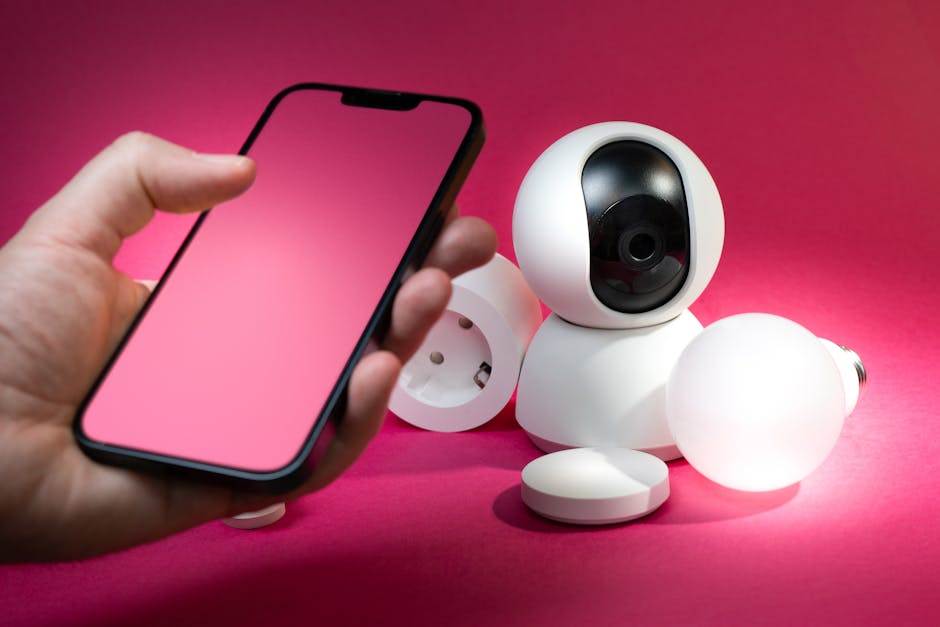
Beyond audio, visual data from smart cameras and video doorbells is perhaps the most immediately disconcerting. These devices, positioned at your front door, in your nursery, or overlooking your living room, capture who enters and exits your home, when packages are delivered, and even the frequency of visitors. Indoor cameras, particularly those with advanced features like pet detection or baby monitoring, can track movement patterns, identify individuals through facial recognition, and record hours of footage of your family's daily life. This visual archive, stored on company servers, can reveal everything from your child's playtime habits to your personal appearance, your home's contents, and even your emotional reactions caught on camera. The very devices meant to secure your home can become conduits for unprecedented visual surveillance, often with retention policies that far exceed what most users would find acceptable.
The Invisible Web of Behavioral Insights
The data collection extends subtly into your routine and habits, often through devices you might not even consider "spies." Your smart thermostat, like a silent observer, meticulously tracks your presence, your preferred temperatures at different times of day, and how these patterns change with the seasons or your lifestyle. It knows when you're typically home, when you're away on vacation, and when your schedule shifts. This isn't just about energy efficiency; it’s about understanding your entire daily rhythm. Similarly, smart lighting systems don't just turn lights on and off; they learn your occupancy patterns, which rooms are used when, and for how long. This aggregated behavioral data, when processed by AI, can infer your sleep patterns, your work-from-home status, your social life (based on how often people are in common areas), and even potential health issues if your routine deviates significantly from the norm.
Even smart appliances are joining the data collection party. A smart refrigerator might track how often its door is opened, what foods you store, and when items are nearing their expiration date. A smart washing machine could log your laundry habits – how often you wash, what settings you use. While manufacturers might claim this data is used to "improve your experience" or "optimize appliance performance," the underlying reality is that it contributes to your comprehensive consumer profile. This profile, rich with detailed behavioral insights, becomes incredibly valuable for targeted advertising, product development, and even for data brokers who compile and sell these granular details to third parties. The innocuous convenience of a "smart" device often masks a sophisticated data-gathering operation designed to monetize your daily life.
"We've moved beyond simple data points. AI in smart homes is about inference – taking seemingly mundane data and deducing incredibly personal facts. It's not just that your smart speaker knows you said 'pizza'; it's that it can infer you're having a party, you prefer pepperoni, and you order every Friday night. That's a profound difference." - Dr. Anya Sharma, AI Privacy Researcher.
A disturbing facet of this data collection is its potential for misuse and the erosion of personal security. Remember the incidents where Ring security cameras were hacked, allowing strangers to speak to children through the devices? Or the reports of Amazon Echo devices recording private conversations and sending them to unintended recipients? These aren't isolated glitches; they highlight fundamental vulnerabilities in a system designed to be always-on and connected. Furthermore, the data collected by these devices can become a target for cybercriminals, who could exploit it for identity theft, blackmail, or even to plan physical intrusions once they understand your routines and home layout. The very intimacy of the data makes its compromise far more damaging than a typical data breach.
Consider the broader implications for societal control and profiling. Insurers could potentially leverage smart home data to assess risk, influencing your premiums based on your inferred lifestyle, sleep patterns, or even how often you cook. Law enforcement agencies, with a warrant or even less, could access this trove of data, turning your home's digital records into a powerful surveillance tool against you. In a less dramatic but equally insidious way, the constant feedback loop of data collection and targeted advertising creates a filter bubble, subtly nudging your consumption habits, your political views, and even your social interactions based on your inferred preferences. The smart home, intended as a personal haven, thus becomes a node in a vast network of information extraction, where your private life is continuously mined for commercial and potentially governmental interests.
The Illusion of Choice and the Profit Motive
The "choice" we're given in this data-driven ecosystem is often an illusion. Companies design their products and services with maximum data collection as the default. Opting out is frequently a convoluted process, buried deep within obscure settings menus or requiring a thorough read of an impossibly long privacy policy. Sometimes, opting out of data collection entirely can even diminish the functionality of the device, making the "smart" features less intelligent or even unusable, thus coercing users into accepting the data trade-off. This dark pattern of user interface design, known as "dark UX," is a deliberate strategy to ensure a steady stream of valuable data, reinforcing the business model that monetizes every aspect of your digital existence.
The underlying motivation for this pervasive data collection is, overwhelmingly, profit. Your data is a valuable commodity. It fuels the targeted advertising industry, allowing companies to present you with hyper-relevant ads that are more likely to convert into sales. It informs product development, helping companies understand consumer behavior and design future gadgets. It’s also a key asset for data brokers who aggregate, analyze, and sell these profiles to other businesses. The promise of "improved service" or "personalized experiences" is often a thin veil over this fundamental economic model. As users, we are not just consumers of smart home technology; we are, often unknowingly, the producers of the data that sustains this multi-billion-dollar industry. Understanding this fundamental economic incentive is crucial to grasping why these companies are so relentless in their data collection efforts and why protecting your privacy requires a proactive and informed approach.