Beyond the Obvious Gadgets The Pervasive Reach of AI in Every Nook and Cranny
When we talk about smart devices, our minds often jump straight to the usual suspects: the voice assistants, the smart TVs, the fitness trackers. But the truth is, the reach of AI-powered data collection extends far beyond these familiar gadgets, infiltrating almost every aspect of our homes and daily lives in ways that are often subtle, sometimes surprising, and always contributing to the ever-growing digital dossier. From the kitchen to the nursery, from the front door to the backyard, sensors and algorithms are at work, quietly observing, inferring, and reporting. This pervasive integration means that even if you meticulously lock down your smart speaker, other seemingly innocuous devices might still be painting a remarkably detailed portrait of your existence, piece by painstaking piece.
The real privacy nightmare isn't just about a single device collecting a single type of data; it's about the aggregation of countless data points from a multitude of sources, all fed into powerful artificial intelligence systems that can connect dots no human could ever hope to. A smart refrigerator tracking your food consumption, combined with a smart scale logging your weight, a smart toilet analyzing your waste, and a smart oven recording your cooking habits, presents a shockingly intimate view of your diet and health. This isn’t just about making your life easier; it’s about creating a comprehensive, predictive model of your behavior, preferences, and vulnerabilities that can be leveraged in ways we are only just beginning to understand.
The Silent Observers Smart Appliances and Home Security
Let's start with the kitchen, often considered the heart of the home. Smart refrigerators, for example, go beyond simply chilling your food. Many models feature internal cameras that allow you to peek inside while you're at the grocery store, but they also track your inventory, logging what you buy, how quickly you consume it, and what you throw away. This data, when combined with insights from smart scales that monitor your weight and smart ovens that record your cooking preferences and temperatures, creates an incredibly detailed profile of your dietary habits, health goals, and even potential food waste patterns. Imagine an AI inferring your health status, your attempts at dieting, or your family's eating schedule based on these seemingly mundane data points.
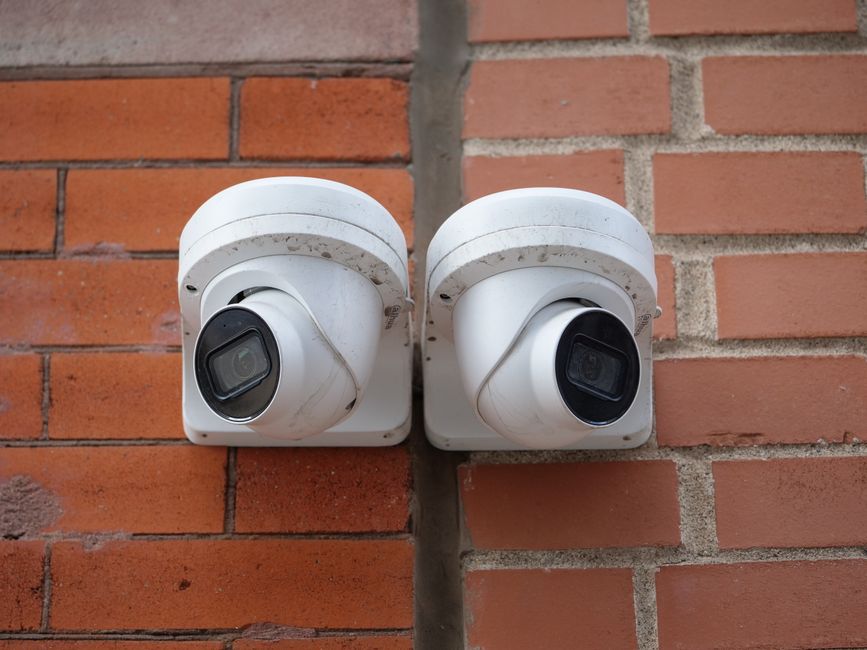
Then there are the smart security devices, the very gadgets designed to protect our homes, which often become significant contributors to our privacy dilemma. Smart doorbells like Ring and Google Nest Doorbell capture video and audio of everyone who approaches your front door, logging timestamps and often using facial recognition (or similar AI-powered person detection) to identify familiar faces. Smart cameras, both indoor and outdoor, record continuous footage, detect motion, and some even offer features like pet tracking or baby crying detection. While the primary purpose is security, the sheer volume of visual and auditory data collected is immense. Ring, for instance, has faced scrutiny for its partnerships with over 2,000 law enforcement agencies across the U.S., allowing police to request footage from users' cameras without a warrant, raising significant civil liberty concerns about pervasive surveillance and the erosion of the Fourth Amendment.
The Cradle to College Data Trail Children's Smart Toys and Education Tech
Perhaps the most disturbing frontier of AI-driven data collection lies in products aimed at children. "Smart" toys, from talking dolls to interactive robots, often come equipped with microphones, cameras, and internet connectivity. These devices, designed to entertain and educate, can record children's voices, learn their preferences, and even engage in "conversations." The Hello Barbie doll, for example, faced widespread criticism for recording children's conversations and sending them to a cloud server for processing, raising fears about the privacy of children's play and the potential for unauthorized data collection on minors. While companies claim these recordings are used to improve the toy's AI and personalize interactions, the inherent vulnerability of children and their inability to consent to such data practices make this a particularly thorny ethical issue.
Beyond toys, the rise of educational technology (EdTech) in schools and homes also presents a significant privacy challenge. From AI-powered tutoring platforms to smart learning devices, these tools collect vast amounts of data on children's learning styles, academic performance, emotional responses to challenges, and even biometric data in some cases. While the intent is to personalize education, the aggregation of such sensitive information, often without robust parental oversight or clear data retention policies, creates a potential goldmine for future profiling. A child's entire academic and developmental trajectory could be mapped and analyzed by AI from a very young age, creating a digital profile that follows them into adulthood, with unknown implications for their future opportunities and privacy.
The Interconnected Web How Seemingly Innocuous Data Points Collide
The true power, and peril, of the AI privacy nightmare emerges not from individual data points, but from their intricate amalgamation. A single piece of information, like your smart coffee maker logging your morning brew time, seems harmless in isolation. But when an AI system can cross-reference that with your smart scale's weight readings, your fitness tracker's sleep data, your smart speaker's news briefings, and your smart car's commute times, a remarkably comprehensive and predictive profile begins to materialize. The AI can infer if you're sleeping poorly, if you're gaining weight, if you're stressed by current events, and how these factors might influence your daily routine and mood.
Consider this hypothetical, yet entirely plausible, scenario: Your smart refrigerator notes you're buying more processed foods. Your smart thermostat detects you're spending more time at home during work hours. Your smart speaker records you asking for comfort food recipes. Your smart TV observes you binge-watching shows late into the night. An AI, correlating these seemingly disparate data points, could infer a period of depression or stress, potentially flagging you as a target for specific advertisements for mood-lifting products, or even, in a more dystopian scenario, impacting your eligibility for certain insurance products if that data were to fall into the wrong hands. This is the essence of behavioral profiling at scale, where AI transcends simple data collection and enters the realm of inference, prediction, and ultimately, influence. Our daily lives are being meticulously documented, analyzed, and understood by algorithms, creating a digital dossier so complete that it knows our habits, our desires, our vulnerabilities, and even our potential future needs before we even consciously recognize them ourselves. This is the profound shift from merely interacting with technology to being constantly observed and interpreted by it.